Showing posts with label Bela Lugosi. Show all posts

Sunday, November 16, 2014

Uncanny Skill


Above is an image from the 1932 Poverty Row murder mystery called The Death Kiss.  It's a black and white film, of course, however -- and no, your eyes are not deceiving you! -- some scenes contain bits of color tinting of the kind seen here. Fire, flashlight beams, smoke, the flash of a gunshot -- these are the sorts of things that director Edwin L. Marin hired artist Gustav Brock to highlight with color.  In this particular film, the choice seems a little arbitrary -- The Death Kiss is not otherwise a stylistically ambitious film -- but it's still effective, in the way William Castle's gimmicks and novelties could be.

But don't take my word for it! The film, which has long been in the public domain, has finally received a proper home video release by Kino Lorber. And judging by the wide variety of image and sound quality enjoyed by the film on this Blu-ray, Kino got there not a moment too soon. The Death Kiss hasn't received much care until now, but if you're put off by the audio/video problems you should probably understand and accept that this disc is as good as The Death Kiss is ever going to get. If you're still bothered, well, it's your loss. The Death Kiss is what some might call a "hoot," a brisk, light-hearted story about murder and low-budget filmmaking.

The film reunites three of the main actors from Tod Browning's Dracula, which had been such a big hit for Universal the year before.  Edward Van Sloan (Van Helsing in Dracula) plays Tom Avery, the director of a film called The Death Kiss. At the beginning of this film, the real one, the one directed by Edwin L. Marin, Avery is shooting the scene that will give the film, his film, the fake one, its title: a woman plants a kiss on a man leaving his hotel -- he doesn't know her, she claims to have found him irresistible, but what she was really doing was marking him as the man the gangsters outside are supposed to kill. And they open fire and he dies. However, it turns out that when the fake gangsters fire their fake guns on the movie set, somebody shot the actor (Edmund Burns) for real, killing him. Was it an accident? One might assume, and certainly that's the best-case scenario, but when the police arrive, tended to by studio manager Joseph Steiner (Bela Lugosi; I can't remember who he played in Dracula), it soon becomes clear that it was murder, with a lot of circumstantial evidence pointing towards Marcia Lane (Adrienne Ames), the actress who delivered the "death kiss" in the scene they were shooting. However, contracted screenwriter Franklyn Drew (David Manners, who played Harker in etc.) is having none of that nonsense, he knows Marcia didn't do it, so with cartoon character/studio cop Gulliver (Vince Barnett) trailing along like a puppy, he sets out to find the real murderer. Drew is kind of a smug little prick, but don't let that hold you back.

It's often said about films that people like that are of a certain age "They don't make 'em like that anymore," even though they do make 'em like that anymore, it's just that the world being different now those films will be somewhat different from their ancestors as well.  However, there actually are movies the likes of which are not made anymore. The Death Kiss is one of them (Murder in the Zoo from 1933 would be another example, but there are many).  Can you imagine a studio film, or even an independent one, making a sincere -- which is in no way meant to suggest "humorless" -- inside-Hollywood film free of meta nonsense (well, almost free, The Death Kiss does have one wink in its arsenal, and it's sort of a clever one) about the on-set murder of an actor, which proceeds to then actually be a murder mystery? Though I'm trying to make the point that the movie they don't make 'em like anymore is very specifically The Death Kiss (or Murder in the Zoo, etc.), I'm now realizing that they may not even make murder mysteries anymore. They make films that have murders in them and sometimes you may not know until near the end who the murderer is, they are something other than -- "more than" it might be claimed, but not by me -- a straightforward murder mystery. The Death Kiss is. So save the genre! See The Death Kiss!

Tuesday, September 17, 2013

Bombastic Ignoramous

"I'm less interested in pointing out ostensible flaws than I am in going where the movie takes me." - Richard Harland Smith

Well excuse me, Richard Harland Smith!

Oh, hello. As you may already be aware, today sees the release on Blu-ray of director Jean Yarbrough’s 1940 Bela Lugosi vehicle The Devil Bat, courtesy of the good people at Kino, and I’ve recently had the opportunity to give it a look. For the second time in my life, as I quickly realized -- I think it hit me that the film wasn’t new to me when Lugosi’s Dr. Paul Carruthers is on the phone, warmly speculating that the family party he’s been invited to might include among its celebrations the engagement of Mary Heath (Suzanne Kaaren) to "that rascal" Don Morton (Gene O'Donnell). This is very early in the film, before, though not long before, we discover that Carruthers plans on slaughtering the apparently nice Heath and Morton families (for whom he has worked, developing new and powerful shaving lotions, and who Carruthers believes screwed him out of a fortune) with his giant mutant bats (okay, we know the bats exist), but even so that kind of sentiment coming out of the mouth of a character played by Bela Lugosi seems alien. I’m sure there are exceptions – I mean, hell, Lugosi even played a good guy now and then – but Lugosi very often played villains who, if they didn’t come by their evil naturally, had nevertheless been driven ‘round the bend long before we meet him. Contrast this with Boris Karloff, who frequently played villains whose descent we get to witness. Anyway, over the years I’ve learned not to trust Lugosi’s smiling face.

Which brings me to a few things, the first of which is sort of the key to where I want to go with this whole post. That is, the way Lugosi delivers the line about the engagement struck me, both times I’ve seen the film, as ridiculous. By which I mean, I laughed at it. Not, I don’t think, with derision, but more with a “Oh, Lugosi sure wasn’t suited for that kind of thing!” attitude. To what kind of thing? you may well ask. Happiness? An emotion we soon learn is a put on anyway. Well, get off my ass, it sounds funny the way he says it. Still, this kind of thing can infect a person, and taint how they engage with a movie, any movie, really, though I submit that horror and science fiction films of a certain vintage, and usually made for a certain budget, are the most likely to suffer at the hands of the infected. The process of watching such movies, and the early days of the revival of Ed Wood probably began the popularization of this, often seems to be one of presumption followed by a need for quick and relentless confirmation. If The Giant Claw is not bad enough, then your seventy-five minutes has just been wasted. And it naturally follows that whatever might actually be good or interesting about The Giant Claw might easily be missed because it is not why we're watching the film.

And this seems like a good time to refer back to the quote that opened this post. I know Richard, and I think of him as a friend -- how I think of him is immaterial -- and this quote, which comes from his excellent commentary track included on the Kino's The Devil Bat disc, is a more baldly-stated version of a philosophy that has been clear in his writings for Movie Morlocks and his superb yet now sadly mostly inactive blog Arbogast on Film. The philosophy, as best I can express it, is "Don't start a movie with your fists up." Or with a smirk on your face, is maybe better. This way of watching a film is not something I'm immune to. I mentioned The Giant Claw before, and I don't honestly know if there is anything good or interesting about it, because when I saw it I wasn't looking (that bird is something else, though). I mean, it can be a great deal of fun, and movies can also be a great deal of fun for all the wrong reasons. Many who lean towards the Smith/Arbogastian side of things can get so wound up about it that they're unable to enjoy Mystery Science Theater 3000, and that's not the kind of life I want for myself. But some years ago, at his blog Cinema Styles, Greg Ferrara, another friend of mine and of Richard's, hosted a blogathon, back when people did that sort of thing, called The Spirit of Ed Wood Blogathon. The idea there was not to have any illusions about Wood's talent, or to burn your leg with a hot needle any time you thought of laughing at something ridiculous in Bride of the Monster, but rather to celebrate the intent and the passion, and even the clumsiness. The Doing Of It, whatever it might finally look like. Otherwise you can find yourself not being amused by the content of an ineptly made film, but by its very existence.

And maybe it's not actually as inept as the hype, or "hype," has led you to believe. The Devil Bat, Richard strongly argues, is not inept. This being a Poverty Row production, it is cheaply made, but that's not the same thing. It was made by a crew of professionals (and by the way, a not entirely brief digression: Richard's commentary is of the "film historian" stripe also favored by your Eddie Mullers, your Tom Weavers, your Steve Habermans, and so forth, by far my favorite type, and as such is something of a juggling act between cast and crew biographies, necrologies, film analysis, and sidenotes. The connections, in a six-degrees kind of way, that Richard unearths between The Devil Bat and The Three Stooges, The Red Skelton Show, Notorious and lots of other stuff proves, if any more proof was needed, that the early days of the studio system in Hollywood was a crazy goddamn time. Richard also makes a point that might make "What was the first slasher film?" types throw up their hands in despair) who weren't delusional about what their job was in this particular instance, but tried to use their experience and imagination to make the best out of their limited budget, an admirable way of going about things that can lead to Cat People or it can lead to, well, The Devil Bat, which I do not, as it happens, like as much, or rather sincerely like as much, as Richard does. The film is structured around the deaths of the Heaths and the Mortons, so that outside of Lugosi and the the wise-cracking journalist pair (Dave O'Brien and Donald Kerr) who come in to investigate, all the characters are related, or betrothed, and yet the deaths register as nothing much at all. This heedless, ever-forward kind of filmmaking can be thrilling, but in a story like this kind of begs the audience to scoff -- it matters to no one onscreen, so why should it matter to me?

Though why is that kind of narrative base-touching all that matters? Richard, who doesn't entirely agree with me about this emotional, or emotionless, depending who you ask, facet of The Devil Bat, would argue that the baby should not be thrown out with the bathwater. And he's right. Nowadays, audiences, particularly the vocal online sort, will throw out that baby and then piss all over it for far less. Prometheus leaps to mind unbidden, and the cries of "But a guy who was a space zoologist..." and "If I was a space robot I would never..." that swarmed, smothered, and torched that film's chances to be seriously engaged with by anyone other than loony-bird "apologists" such as, well, myself. Hitchcock, were he still alive and making movies, would, in the face of the Plot Hole Condemnation Affiliate and the Two-Dimensional Character Persecution Affinity, say something like "Fuck this shit." You get the idea, I think, but my point is the kind of dismissal that Richard argues against is spreading and taking new forms, hiding as sophistication within the bodies of Glenn Kenny's "know-somethingish" types, who, quite frankly, plague us, and whose most distinguishing characteristic is that they walk into a film believing that they know better than the film itself what the film is, and what it's goals are. Or they bring with them a mental checklist of what a film is supposed to be, and if all those boxes aren't ticked, brother, you better watch out (Coppola's Twixt is a recent victim of this, but more on that, and this is a promise I can actually keep, later). This even applies to Ed Wood, which was the idea behind Greg's blogathon. I'm a bit dubious about the levels to which some people have taken their appreciation of Wood -- if he was something other than incompetent, I've yet to notice it -- but if Glen or Glenda? is only hilarious to you, then you didn't sit down with the goal of actually watching a movie. This does not mean that Glen or Glenda? isn't hilarious. It also doesn't mean that the "you" in my previous sentence has never applied to me. It has, and often. But boy is that experience becoming emptier and emptier.

So anyhow, that's the pile we're buried in, and it's left to The Devil Bat to fight its way out. Not liking the film as much as Richard doesn't mean I don't take his point, both in general and as it pertains specifically to The Devil Bat. Lugosi, Richard says in his commentary, is on point throughout. That's true. It's up to the viewer to understand where that point is located.

Wednesday, February 6, 2013

There Is No Other Way

If your first viewing experience of White Zombie, Victor Halperin’s 1932 voodoo horror classic starring Bela Lugosi, is through the recent Kino Blu-ray release, then brother or sister, you don’t know what a gift you’ve been given. I first saw the film a few years back, from a Netflix copy of one of the many, many bootlegs that have been circulating for decades, bootlegs of prints that have been stomped on, crumpled up, had cigarettes put out on them, and probably also peed on. The image and sound were both so bad that I found this brisk, atmospheric, and thoroughly enjoyable 69-minute film kind of tough to sit through. Well, I’ve watched it again now on Blu-ray, and the difference is something close to the neighborhood of jaw-dropping. And by the way, if this disc does provide you with your first viewing, you should know that it contains two transfers: one is the as-pristine-as-we’re-probably-ever-gonna-get version I watched, and another that is described on the box as “raw.” Having not had a chance to look at that one yet, I couldn’t tell you precisely what you’d be in store for with it, but I’d have to guess even that one looks better than any previous video release, or “video release,” of White Zombie up until this point.

As for the film itself, well, what’s not to like? It’s quite basic, plot-wise, as you’d both expect and hope from a film that’s barely more than an hour long. You got your dewy couple, Neil and Madeleine, played by John Harron and Madge Bellamy, who are about to get married in Haiti, and plus Neil is set to take a job offered by Beaumont, a wealthy plantation owner played by Robert Frazer. What they don’t know is that the plantation owner has his eyes set on Madeleine, he loves her desperately you see, and he’s been in contact with an evil wizard or witch doctor or something named Murder Legendre, played by Lugosi, who uses some mysterious potion to, he claims, raise the dead – turn them into zombies – and make them do his bidding. Probably before going any further, I should point out again that Lugosi plays a character here whose first name is “Murder.” I don’t recall anything in the film that implied this was a boyhood nickname, which means his mom probably held her freshly born son in swaddling clothes, close to her breast, beaming at this new life she and her loving husband had created, and said “Let’s call him Murder!” Or it was from a baby name book or something. Either way, I can practically hear the schoolyard taunts: “Haw haw haw, yer name means to deliberately and maliciously take the life of another human being! Haw haw haw!” “Aw geez, lemme alone, you guys!” Etc. What chance did he have, is my point.

So, Beaumont conspires with Legendre to feed some of his zombie poison to Madeleine, which they succeed in doing. Hence, she is the “white zombie,” Legendre’s other zombies being native to Haiti. As I say, it’s all very brisk and to the point, and quite beautifully shot. Or it alternates between ordinary, let’s-get-this done shooting, and atmospheric beauty. Check out, for instance, the classic camera move through Legendre’s mill, populated entirely by blank-faced and silent zombies, which is about as good as this sort of thing gets, by which I mean it’s great. And while Frank Thompson, who provides a commentary track to the Kino disc, is kind of down on all of the acting in the film that was not provided by Lugosi, I think he’s being a touch unfair (a line is flubbed by John Crawthorn in a scene with Harron, and it's rolled with by both actors, which at the very least shows professionalism). Frazer’s rather good, I think, and one of the best scenes in the film involves Frazer and Lugosi sitting at a table, late in the film, and…well, this is sort of a turning point in the story, but suffice it to say, Frazer’s asked to sell something very specific here, and he sells it. Lugosi, too, and the thing about Lugosi that I find interesting is that he was frequently at his best when he was in extremis. That can mean in the emotional high-wire sense of, say, the end of The Black Cat, or it can mean the very far end of the scale of evil, which he’s at least very close to here, in his role as a voodoo witch doctor named Murder. In all honesty, I don’t tend to think very much of Lugosi – in my experience, his performance in Bride of the Monster isn’t a far cry from the work he put into most of his films. But in these early days (and in his rather sad performance in The Body Snatcher, which is a different sort of thing), he could do evil without breaking a sweat. If Karloff’s villains often had a moral complexity to them, even just a smidge, Lugosi was more likely to play a fairly uncomplicated form of horrible, and he did so with a lot of confidence, and if not actual glee, then at least a fair enough simulacrum. One of the results of this kind of performance by Lugosi is that it’s that much more satisfying for the audience when whoever Lugosi’s play has that smug, satisfied, blood-sucking grin wiped off his stupid evil face. Which is bound to happen eventually.

White Zombie is also, of course, known as the first zombie film, or anyway the first zombie film anybody knows about. As everybody knows, these zombies, and also the zombies in Lewton and Tourneur’s I Walked With a Zombie, and others, are closer to the traditional, and original, voodoo zombie myth than what we all now automatically think of when we hear the word “zombie.” I’m still unclear how it happened, that Romero fully intended his creatures to be called and thought of as ghouls, because eating the flesh of the living is the kind of thing that ghouls do, but now they're called zombies anyway, even though eating the flesh of the living is NOT the kind of thing that zombies do. As a result, the voodoo zombie film is pretty much finished, outside of a few shots here and there, most prominently by Wes Craven with The Serpent and the Rainbow. This is a shame. Thanks a lot, nerds.

Sunday, October 23, 2011

The Kind of Face You Slash - Day 23: His is the Lightning-Flash, His is the Deep Salt Sea

In A Grief Observed -- a book that, as you read it, you feel like you shouldn't be allowed to read -- C. S. Lewis writes: "Someone said, I believe, 'God always geometrizes.' Supposing the truth were 'God always vivisects'?" As it happens, this desolate questioning of the God Lewis has spent much of his adult life believing and serving, and will come to again, rather neatly summarizes the plot of The Island of Dr. Moreau, H. G. Wells's bleak, even black-hearted tale of mad science, torture, and transformation.

You can pretty much choose your parallel: either the animals, transformed by the mad Dr. Moreau, via vivisection, into near-human monstrosities go from believing Moreau is essentially God, until his death makes them question everything he'd taught them in order to control their naturally savage instincts ("Not to eat Flesh nor Fish; that is the Law. Are we not men?"), before our narrator, Edward Prendick, picks up Moreau's thread of deification and restores the creatures' need to worship in order to save his own skin (not that you can blame him) only to see things go one step beyond Lewis and revert back to dumb savagery; or Prendick sees his view of civilized humanity smashed again and again, until even the everyday world he finally returns to seems populated by people just shy of animalistic wildness, but managing to achieve a kind of peace in the end -- one brought on by voluntary solitude, mind you, but you take what you can get.

Or the novel can be both of these things, and in fact is. The Island of Dr. Moreau is astonishingly rich, in other words, despite being quite short. This richness is a bit backloaded, occurring almost entirely in the later portions of the book as the full ramifications, both immediate and philosophical, of Moreau's obliviousness become clear.

But he was so irresponsible, [Prendick writes of Moreau] so utterly careless. His curiosity, his mad, aimless investigations drove him on, and the things were thrown out to live a year or so, to struggle and blunder and suffer; at last to die painfully.

This might double as a description of human existence, depending on how bad you feel about the whole thing. Wells explains the book, which he also called "rather painful", this way:

The Island of Dr. Moreau in an exercise in youthful blasphemy. Now and then, though I rarely admit it, the universe projects itself towards me in a hideous grimace. It grimaced that time, and I did my best to express my vision of the aimless torture in creation.

God, or the absence of God -- or the idea of God, or the idea of the absence of God -- is everywhere in The Island of Dr. Moreau. The lives of Prendick, Moreau, and Moreau's drunken, angry assistant Montgomery are only preserved by Moreau's ability to make his cast-off creations believe that he, Moreau, is their maker, which is true enough, but also their God, and their punisher. The Laws (spoken famously, in a somewhat altered form, by Bela Lugosi in the controversial 1932 film version Island of Lost Souls) that Moreau has taught to his creatures each has, as its core, an attempt to thwart natural, instinctive animal behavior. This is his entire reason for conducting these vivisections (which, by the way, is the no-longer-allowed practice of dissecting a still-living animal), but he also knows the moment those laws are questioned, or more likely the moment the "creeping Beast flesh", Moreau's description of the slow return of his failed creations' natural behavior, which process is the reason Moreau considers every experiment up to the novel's action to be a failure, obliterates whatever he's tried to make the Beasts believe, is the moment his neck is well and truly on the line. And so it eventually proves, of course, so that at one point in the novel, God, from the perspective of Montgomery's domesticated butler creature M'ling, or the Ape Man, or the Hyena-Swine, or the Dog Man, or the Sayer of the Laws, is well and truly dead.

This idea would not particularly impress Prendick, whom, in a moment of anger, Montgomery calls a "logic-chopping, chalky-faced saint of an atheist". This revelation, as it were, comes a little bit out of a blue, and renders his subsequent attempt, a mostly successful one, to deify himself in place of the deceased Moreau unquestionably cynical. But it's pretty clear that at this point its claim to be Jesus (which is essentially what he does for Moreau, too, telling the Beasts that Moreau is not dead but has cast off his body and ascended to heaven; yet Prendick remains on Earth to preach on his behalf, so it gets muddled if viewed from a strictly Christian point of view, a choice of reading that is, to say the least, unnecessary) or die. The events of the novel, and life in general, have already destroyed any spirituality of Montgomery, the one man who may have possessed any going in, because I think it's safe to assume the ruthlessly rational Moreau had room in his mind to only think about vivisection and transformation. Late in the novel, Montgomery, who has already confessed to Prendick that he was basically shanghaied by Moreau one drunken night after medical school, rages against the cosmos:

"This silly ass of a world...What a muddle it all is! I haven't had any life. I wonder when it's going to begin. Sixteen years being bullied by nurses and schoolmasters at their own sweet will, five in London grinding hard at medicine -- bad food, shabby lodgings, shabby clothes, shabby vice -- a blunder -- I don't know any better -- and hustled off to the beastly island. Ten years here! What's it all for, Prendick? Are we bubbles blown by a baby?"

Tell Prendick something he doesn't know. Typically in books or stories like this, our straight-edged narrator is little more than a dull witness, marshaling all the considerable good within him to perform heroic acts when the narrative calls for it. Prendick is rather different, and in the early pages of The Island of Dr. Moreau his life is one of a man suffering one cruelty after another. Barely surviving a shipwreck to be picked up by a ship that happens to be carrying Montgomery and M'ling, as well as a new batch of animals picked up by Montgomery for Moreau's experiments, back to Moreau's island. It is Montgomery who nurses Prendick back to health, but when Montgomery and his animals come into conflict with the ship's drunken captain, Prendick's desire to help his savior serves only to turn the captain on him, so that when they reach port, the captain orders off the ship and into a dinghy. Moreau, who has arrived to collect Montgomery and his specimens, notices an imploring look from Montgomery on Prendick's behalf, and coldly says to Prendick "Can't have you."

This episode actually ends with Prendick writing "I prayed aloud to God to let me die," which calls into question Montgomery's labelling of him as an atheist, though when that time comes Prendick doesn't argue the point. Regardless, this moment, of Prendick suddenly alone and friendless, only a strong tide away from being lost at sea, is one of the novel's most painful. The island's few natives eventually take pity on him, but I feel like the damage has already been done. Prendick is well on the path that will lead him to view all humanity is little more than savage, pitiless seekers of only their own gratification. What he finds on the island certainly won't do anything to weaken that view, and anyway how different from the fearsome Hyena-Swine, who Prendick will come to view as his personal enemy, is that drunken captain? Or Moreau? Or Prendick himself, even, who barely ever acts to help the creatures being so mercilessly tortured -- and for what? -- by Moreau, and by his own admission only cares about it because he can hear the animal screams:

The crying sounded even louder out of doors. It was as if all the pain in the world had found a voice. Yet had I known such pain was in the next room, and had it been dumb, I believe -- I have thought since -- I could have stood it well enough. It is when suffering finds a voice and sets our nerves quivering that this pity comes troubling us.

This, it must be said, conforms to the cynic's appraisal of humanity pretty cleanly. But who says Prendick exempts himself anyway? After he's made it back home and has chosen to remove himself from as much of mankind as he can possibly manage, so that he will no longer have to see barely-human citizens of London "with tired eyes and eager faces like wounded deer dripping blood", it's entirely possible that this choice was made not just to be alone for his own sake, but to remove opportunities for himself to behave too callously or with too much self-interest. He even admits as much:

And even it seemed that I, too, was not a reasonable creature, but only an animal tormented with some strange disorder in its brain, that sent it to wander alone, like a sheep stricken with the gid.

By the end, The Island of Dr. Moreau seems to be far more Prendick's novel, to actually be about him, than it did during the long middle stretches of terror and mystery, and of Moreau's long, diseased rationalizations. The novel drags Prendick's spirit down, down, and down, until only isolation can restore it to any degree ("But this is a mood that comes to me now -- I thank God -- more rarely."). C. S. Lewis would chart his slow, painful return to a sort of peace, as well ("Didn't people dispute once whether the final vision of God was more an act of intelligence or of love? That is probably another of the nonsense questions.") Lewis's God is perhaps Prendick's Beasts: the central question through which they each grapple with the more tactile bits of their normal lives.

* * * * * *
In the various screen adaptations of Wells's novel, the beasts are apt to take center stage. This is only natural, and even desirable in terms of screen drama. It is a function of first person narration, which is what Wells employs, that unless your narrator is constantly in the thick of things, a certain amount of action is going to be missed, and in the case of The Island of Dr. Moreau it's rather surprising how much of that action happens off-stage. This would defeat the entire purpose of the best screen adaptation of the novel (well, I haven't seen the TV version from 1977, but I don't mind assuming in this case), 1932's Island of Lost Souls, directed by Erle C. Kenton and starring Charles Laughton, Bela Lugosi, Richard Arlen and "The Panther Woman" (now that's showmanship). The film, which will be released for the first time on DVD, or home video of any kind, by Criterion this coming Tuesday, is one of the more alarming horror films of the pre-Code era, with its air of almost cackling sadism, as personified by Charles Laughton's superb and properly vile take on Moreau, its, at times, near-merciless violence, and also its, you know, blatant hint of bestiality. The Panther Woman -- actually Kathleen Burke -- ain't there for nothin'.

The Panther Woman would have to be the film's equivalent of Wells's puma, which is the creature Moreau is working on, and whose screams Prendick can't block out until he's moved to sort-of act. But in the novel, the puma would really rebel and vent its rage violently (the puma was a female, by the way) while the Panther Woman is more content to fall in love with Edward Parker (née Prendick, I suppose), which is exactly what Moreau wants, or he wants what that will lead to. "Perverse" maybe doesn't exactly cover it. Of course, Kathleen Burke looking the way she does calls into question how one gets there from a panther via vivisection, but one could reasonably ask the same question of the novel -- despite Wells's insistence that that stuff was based on at least theoretical fact -- and those Beasts aren't even that hot.

Island of Lost Souls is pretty gleeful about its whole way of being, or maybe "heedless" is the better word. Although this would be far from unheard of today, the way this film off-handedly dispatches of its lone source of comic relief is actually pretty shocking. It's hard to relieve comically when that's how you're treated. The film is also gorgeous, perhaps predictably so, with Karl Struss manning the camera, so that the whole thing, the island and Moreau's compound, has a King Kong-esque level of depth, the jungle in which the story unfolds possesses a genuine, leafy thickness. It's all just wonderfully brisk and weird and full, boiling Wells down and extracting the pulp, a process that Wells evidently objected to like it was vivisection or something, publicly deriding the film as coarse or vulgar or some such thing. Which it is, at least vulgar, but Montgomery occasionally railed against Prendick for not being vulgar enough, and who knows? It might have done him some good.

Friday, March 25, 2011

There's No Hope for Me to Die

.
While I freely admit that among the classic Universal monster movies The Wolf Man is far from the best, I also happen to think it gets a pretty unfair rap as a low-rent pretender. Among the things I especially like about that film, which was directed by George Waggner, is Lon Chaney, Jr.'s portrayal of Lawrence Talbot as a lovable lug, kind of a pleasant meathead, whose reaction to the bizarre and terrible turns his life has taken is to be scared out of his mind. There's a pathos to that which eschews the high tragedy aims of movies like Frankenstein for a more blue collar approach -- instead of tragic, The Wolf Man goes for sad.
.
So on that level at least, I take The Wolf Man kind of seriously, and could probably become a bit defensive about it, should the situation warrant it. My viewing today of Frankenstein Meets the Wolf Man (d. Roy William Neill) might be that situation. The problem is that this is a direct sequel to The Wolf Man, picking up four years after Talbot's death at the merciful hands of his father. In attempting to rob Talbot's grave, two no-goods sweep away the wolfsbane covering his body, said wolfsbane being the one thing keeping Talbot dead. So now he's not dead anymore, and he's still a werewolf. And, rather intriguingly, the plot of Frankenstein Meets the Wolf Man centers around Talbot's quest to die, for good.
.
After linking up again with Maria Ouspenskaya, the gypsy from the previous film, Talbot begins to track the story of Dr. Frankenstein, who apparently had mastered the powers of life and death. And here I'll not that Frankenstein Meets the Wolf Man is more or less a direct sequel to James Whale's Bride of Frankenstein as well, with similarly injurious results. The Wolf Man and Bride of Frankenstein end on notes of real heartbreak, which the makers of this later film -- director Neill, producer Waggner, screenwriter Curt Siodmak, who also wrote The Wolf Man -- basically scribble out by reviving not only Talbot, but, obviously, Frankenstein's monster (no Dr. Frankenstein, though, he's still dead, replaced by glaze-eyed Ilona Massey as his daughter, Baroness Elsa Frankenstein). In other words, the two deaths from those films that mattered the most no long matter. Or I guess that depends on how seriously you take sequels to beloved film, and how easily you're able to separate them if you don't like where the follow up leads you. For my part, I can do that pretty easily, so I'm not overly put out by the sacrileges of Frankenstein Meets the Wolf Man.
.
Instead of being angry for an hour and twelve minutes, I instead took note that this film is to The Wolf Man and the two previous Frankenstein films as The Godfather Part II is to The Godfather, in that, like the Coppola sequel, all the points made by Waggner and Whale are simply half-heartedly underlined by Neill (there's a difference, since Coppola's underlining was quite vigorous). This is not terribly uncommon among sequels, I suppose, but there's something about Chaney's Talbot going from a happy-go-lucky fellow at the beginning of the first film, to a terrified man who wants to be rid of his curse by any means necessary by the end, and then, in the next film, to a man who, no, seriously, really wants this curse taken care of, that put me in mind of Michael Corleone's light-to-dark-to-super-dark journey. So there's that, and then there's Bela Lugosi taking over the role of Frankenstein's monster from Karloff, only to remind the world that whatever his talents, Lugosi was no Karloff, and Frankenstein Meets the Wolf Man's ending, which is so abrupt that you have to wonder if the studio said "The moment you film a castle collapsing, no matter how much left you have to shoot, you must shut down production." That's the only thing that makes any sense, at least.

Thursday, January 27, 2011

The Collection Project: The Sanest Man in the World

.
A telling feature of the Universal DVD set The Bela Lugosi Collection is that of the five films included, four of them also feature Boris Karloff in roles that are as important as, or more important than, Lugosi’s. This is not something you’re likely to find in sets devoted to Karloff – those may feature films in which Karloff takes a supporting role, as in The Strange Door for example, but you won’t find him repeatedly paired with a single actor who has, over the decades, become more respected and beloved than him. Karloff doesn’t get overshadowed, in other words. Lugosi, on the other hand, seems always on the cusp of becoming a camp figure, at least popularly, due to his waning years spent making movies with Ed Wood. For that matter, Lugosi was never as lucky or as good as Karloff – his signature film, Dracula, is nowhere near as good as Karloff’s equivalent Frankenstein – and as a result Lugosi is fading into the background of his own box sets.
.
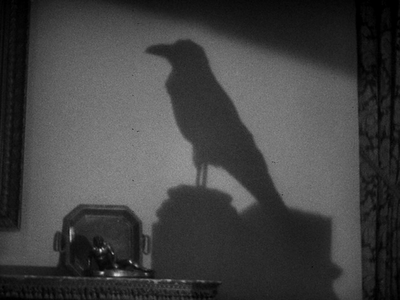
Still, it would be wrong to try to write off Lugosi, or to ignore the fact he and Karloff made a hell of a double act. One of their strongest pairings is in Universal’s The Raven, directed by Louis Friedlander in which Lugosi plays a total fucker named Dr. Richard Vollin, a retired surgeon who, at the film’s opening, is asked by his former colleagues to perform emergency surgery on Jean Thatcher (Irene Ware), who has just been in a bad car accident. Vollin refuses to help until Judge Thatcher (Samuel S. Hinds), Jean’s father, goes to Vollin’s home and begs him in person, and even that’s not enough until Tatcher tells Vollin that he, Vollin, is clearly better than any other surgeon, his colleagues included. So Vollin performs the surgery, saves Jean, and promptly falls in love with her because, for all his coldness he is, as he tells Jean, “a god with the taint of human emotions”, although if you ever met the guy you might be forgiven for failing to notice that last bit. Vollin is, in truth, a hateful, venomous, violent sociopath, who is also an avid collector and, it turns out, consistent misreader of Edgar Allan Poe.
.
Obviously, that title – The Raven, I mean – should tip anyone off to some sort of Poe connection in the film, and it is part of a short cycle of Poe films that Lugosi made. But The Raven is fascinating in that instead of taking Poe’s simple poem of Gothic mourning and inflating it absurdly to somehow encompass mad science and shambling monsters, which is the kind of thing that Poe must be used to by now, it instead uses Poe’s fiction, and the abuse of it, as the basis for Villon’s madness. Admittedly, this abuse takes the form of a torture room in which Vollin has recreated a number of lethal devices described in Poe's fiction, an idea which has been hammered into the ground over the past several decades, but here Vollin goes out of his way to assume an affinity with Poe that betrays a complete misunderstanding of what Poe was about. Vollin gets off on Poe's violence in a way Poe himself never did.
.
Vollin's love for Jean develops quickly, but really gets moving when she invites him to see her perform. She's a dancer, and her current routine is one she calls "The Spirit of Poe", and involves balletic flailing on her part while some guy reads "The Raven" out loud. It is, quite frankly, a pretty doofy bit, but it cements Jean's place in Vollin's black and shriveled heart. Curiously, this routine at times also calls to mind the climactic ballet in Darren Aranofsky's Black Swan, though with the psychosis coming from outside so that Jean becomes the raven in Vollin's mind, as opposed to Nina becoming the black swan in her own.
.
This flip matches to another flip, this time relating to Val Lewton and Robert Wise's The Body Snatcher. In that film, Henry Daniell's ice-blooded doctor sloughs away his guilt over the illegal procuring of bodies for his experiments, and the nefarious ways in which those corpses become corpses, onto Boris Karloff's Mr. Gray, who actually carries out the murders. Gray knows what's up, and knows how the Daniell character rationalizes his transgressions, and further has a lot of fun poking at the doctor's consience. Meanwhile, in The Raven, Karloff again plays a killer, an escaped con named Bateman who seeks out Vollin in hopes that Vollin can "change his face", not only to make him unrecognizable to the authorities, but because Bateman hopes Vollin can erase his ugliness, which he believes to be the source of his wickedness. In The Body Snatcher, Lugosi appears briefly as a drunk who sniffs out the deal between the doctor and Gray, and has to be done away with -- it's a very good scene, with Karloff plying Lugosi with booze (I especially like Lugosi's fuzzy attempt to bat away Karloff's hands as he gets closer). In The Raven, when Vollin's surgery makes Batemen uglier so that he can blackmail him into assisting him with a wild scheme to torture and murder both Jean and Judge Thatcher, Karloff becomes not only Bateman, but Daniell's doctor, in his attempt to hide from his own guilt, and Lugosi's drunk from The Body Snatcher in his inarticulate helplessness. Lugosi's Vollin, then, assumes the form of Gray the puppetmaster, keeping his face hidden and hands clean until the point of no return. He's perhaps somewhat less self-aware than Gray, however, considering that he claims all this torture and murder will ultimately result in his becoming "the sanest man in the world." Which, by the way, must have some claim to being one of the greatest lines of all time.
.
The fact that The Raven predates every movie I've just compared it to is worth noting, as is the fact that it belongs to that glorious cluster of horror films from the 1930s that not only had the courage of their convictions when it came to dealing with their feverish Gothic trappings, but positively wallowed in them. Director Friedlander packs this thing with wall-filling shadows and mad cackling and drooping candelabra -- it's Gothic simply because its Gothic, not because it sees some snarky camp value in the form. If I may, I'd like to wear my old-fogey hat for a moment and wonder why pure Gothicism has been lost while most other forms of horror and suspense have found their unsullied way back to the big screen. This is the case in America, at least (Spain seems to found a rich vein of the stuff in recent years), with only Neil Jordan's somewhat underrated Interview With a Vampire embracing such imagery more-or-less sincerely.
.
Anyway. The Raven is a treat. Occasionally absurd (Jean's car accident, which sets everything in motion, seems to have been caused by her desperate fear of detour signs) but easy on comic relief, something I can usually do without in such films, it's a jolt of pure, manic, old Hollywood-style horror, wearing its armchair psychology on its sleeve while somehow, at the same time, making it serve the characters and the emotion. And the moral of it might just be: Don't project yourself onto what you read. Sometimes I have no clue why I would ever want to watch any other kind of film.

Sunday, July 25, 2010

The Collection Project: Rotten Blood

The half-assed way in which certain classic films pay homage to their literary source material always both amuses and confuses me. In my experience, the zenith for these sorts of references was reached in Rouben Mamoulian's Dr. Jekyll & Mr. Hyde, in which the narrator and protagonist of Robert Louis Stevenson's original story is heard being greeted off-screen, but then never appears, and is never mentioned again. Similarly, in Universal Studio and Robert Florey's 1932 adaptation of The Murders in the Rue Morgue, Edgar Allan Poe's brutal and bizarre chronicle of a series of murders which, it is learned, were perpetrated by an orangutan, Poe's detective, C. Auguste Dupin, is both dismissed and represented in the form of the medical student hero named Pierre Dupin (Leon Ames, credited here as Leon Waycoff). Why Pierre? What was wrong with, at least, Auguste?

At least he's there, though, while pretty much the rest of Poe's story is gone. In the film, Poe's idea gets strained through Universal's apparent obsession with mad scientists, in this case appearing in the form of Bela Lugosi as Dr. Mirakle, a carnival showman and secret experimenter in the field of human/ape genetics. He works in the carnival for money, but his passion is finding a human female whose blood is as compatible with Erik -- Dr. Mirakle's ape -- as he can possibly find. This quest leads to the kidnapping of women, the injecting of ape blood into those women, and the eventual disposal of the women's bodies after they've died from having ape blood injected into them. After noticing the positive reaction Erik had to her when she attended their carnival performance, Mirakle soon has his eyes on Camille (Sidney Fox), believing that she will have the kind of blood he so desperately needs. As Camille is Dupin's girlfriend, the source of Mirakle's downfall is not hard to root out.

At 61 minutes, The Murders in the Rue Morgue has no more plot to summarize. The strange thing about the film is that as goofy as it is on paper (and sometimes on film, considering that Erik is presented in shadow and long-shots as a man in a vague, catch-all ape suit, and in close-up as a real chimpanzee, by way of stock footage, and referred to as a baboon), it's hard to say the film ever really steps that far wrong. It looks gorgeous, thanks to the basically infallible Karl Freund, who pulls cinematographer duties here, and it's also full of the kind of strange, and possibly not always intentional, subtexts that frequently marked Golden Age horror movies. For instance, if you check out that image posted at the top, you might see in it some of the dark sexuality that often found its way into these films, where young women in peril frequently also ended up being women bound up and strapped down.

That's Arlene Francis, by the way, and her character, and her introduction, adds a fuzzy class element to the proceedings. Dr. Mirakle finds her on a Paris bridge, watching in horror as two men engage in a knife fight (presumably over her) that ends with both their deaths. Mirakle then swoops in, pegging her as his next guinea pig, only to find later that the contents of her veins aren't what he's after. As she hangs there in his lab, near death, Mirakle rages at her, calling her blood "rotten", and "as black as your sins!" Francis's character is listed in the credits as "Woman of the Streets", and Camille is of a noticeably higher social tier than she -- so what, exactly, are Mirakle's criteria for his blood? To Mirakle, Erik, his ape, is every bit as human as these people he so despises, but perhaps, following a thought process that might be considered counter-intuitive in a person who would think like this in the first place, the people from whom blood should be poached, the people who most closely resemble our nearest animal neighbors, are the people live farthest from the wild.

Then, of course, there's the Scopes Monkey Trial, which would have been a mere seven years old when Florey's film was released. Poe's story (which was first published in 1841) could be seen to be about the dangers of a non-human pretending to be human, having learned only the most superficial behavior from a distance. As this danger leads to violent death (and one of Poe's uncomfortably imaginative murders does make its way into this film), Poe's orangutan could be a stand-in for amoral, sociopathic killers throughout history. But Poe would not have had Darwin available when he wrote his story, and while Darwin is not mention in the film, Dr. Mirakle does tell his carnival audience that humans are descended from apes like his friend Erik. These remarks are met with cries of "Heresy!" and, indeed, Mirakle is not only never able to prove his own lunatic version of Darwin, but he eventually meets his end at Erik's hands. The Scopes trial didn't sit terribly well with everybody, after all, as you might be aware. Then again, Erik still has his eyes on the decidedly human Camille, and hauls her along on his frantic escape, which, you know, sort of brings to mind Cooper and Schoedsack's King Kong, which was, at the time, still a year away.

It's amazing what they used to be able to cram into 61 minutes, isn't it?

Followers