Showing posts with label Films. Show all posts

Sunday, January 10, 2010

The List (Offered Without Apology, but with Some Explanation)

.

You know what's a stupid number? 100. Anything that's divisible by both 25 and 4, really, is sort of pointless. But beyond that, 100, like 10 before it, is an entirely arbitrary number at which to top out our lists of "best" and "favorite" things. This point, self evident though it should be, was really driven home for me when Glenn Kenny put together his Best of the Decade list. His list ran to seventy titles, and pretty much everybody seemed pretty cool with that, except one commenter named Mike who said "[t]he perceived value of a list of ten movies is much higher than a list of 50 or 70. 50 movies is boring. Add another 20 just for the sake of more content and it's like forcing a ninety minute film to run 2 and a half hours" and then demanded (really, he did) that Glenn "refine" his list down to ten.
.
Reading that comment, I thought "If 'best of' lists that aren't as lovingly rounded out to numbers that begin with '1' and end with '0' piss off dickweeds like Mike, then there must be something to be said for them." Therefore, my previously announced "100 Favorite Films" list has bulked up to something like 190. Frankly, I stopped counting. I decided it simply made no difference when my list ended, and if I reached a point where I was excising films from the list for no reason other than to hone it down to a preordained number, then the word "favorite" will have become less important than that arbitrary number. And that, my friends, is pure anarchy.
.
So this list is really fucking long. Sorry, but them's the breaks. I do feel pretty comfortable that this list, as it stands now, is as representative of what I consider my favorite films as it's possible for me to make it. In all honesty, some of these films I've only seen once, but they've hung in my memory better than some films I've seen half a dozen times. My definition of the word "favorite" is, I confess, a bit nebulous, and hard to explain, but I'm comfortable with it.
.
Okay, enough preamble. Here's the list:
__________________________________________

10 Rillington Place (d. Fleischer)
2001: A Space Odyssey (d. Kubrick)
7th Victim, The (d. Robson)
.
AI (d. Spielberg)
Air Force (d. Hawks)
Alien (d. Scott)
Amadeus (d. Foreman)
American Movie (d. Smith)
Anchorman: The Legend of Ron Burgundy (d. McKay)
Angel Face (d. Preminger)
Antichrist (d. Von Trier)
Assassination of Jesse James by the Coward Robert Ford, The (d. Dominik)
.
Bang the Drum Slowly (d. Hancock)
Barry Lyndon (d. Kubrick)
Barton Fink (d. Coens)
Bedlam (d. Robson)
Big Night (d. Tucci/Scott)
Big Trouble in Little China (d. Carpenter)
Black Christmas (d. Clark)
Black Hawk Down (d. Scott)
Blade Runner (d. Scott)
Bloody Sunday (d. Greengrass)
Body Snatcher, The (d. Wise)
Bounty, The (d. Donaldson)
Brazil (d. Gilliam)
Breaker Morant (d. Beresford)
Bridge on the River Kwai (d. Lean)
Bridge, The (d. Steel)
Bring Me the Head of Alfredo Garcia (d. Peckinpah)
Broadway Danny Rose (d. Allen)
.
Chinatown (d. Polanski)
Christmas Story, A (d. Clark)
Commitments, The (d. Parker)
Conversation, The (d. Coppola)
Cool Hand Luke (d. Rosenberg)
Crimes and Misdemeanors (d. Allen)
Crucible, The (d. Hytner)
Crumb (d. Zwigoff)
Curse of the Demon, The (d. Tourneur)
.
Dawn of the Dead (d. Romero)
Days of Heaven (d. Malick)
Dead Man (d. Jarmusch)
Dead Man's Shoes (d. Meadows)
Dead Zone, The (d. Cronenberg)
Deliverance (d. Boorman)
Devil in a Blue Dress (d. Franklin)
Dodes ka' Den (d. Kurosawa)
Dog Day Afternoon (d. Lumet)
Dogville (d. Von Trier)
Don't Look Now (d. Roeg)
Double Indemnity (d. Wilder)
Down by Law (d. Jarmusch)
Dr. Jekyll and Mr. Hyde (d. Mamoulian)
.
Ed Wood (d. Burton)
Edmond (d. Stuart Gordon)
Eight Men Out (d. Sayles)
Election (d. Payne)
Elephant (d. Van Sant)
Elephant Man, The (d. Lynch)
Empire of the Sun (d. Spielberg)
Exorcist, The (d. Friedkin)
Exorcist III, The (d. Blatty)
.
Fast, Cheap & Out of Control (d. Morris)
Fly, The (d. Cronenberg)
Frankenstein Must Be Destroyed (d. Fischer)
Freaks (d. Browning)
Frenzy (d. Hitchcock)
Friends of Eddie Coyle, The (d. Yates)
.
Gimme Shelter (d. Maysles bros.)
Glengarry Glen Ross (d. Foley)
Godfather, The (d. Coppola)
Gone Baby Gone (d. Affleck)
Goodfellas (d. Scorsese)
Gosford Park (d. Altman)
Great Escape, The (d. Sturges)
Groundhog Day (d. Ramis)
.
Heat (d. Mann)
Heavenly Creatures (d. Jackson)
High and Low (d. Kurosawa)
Hombre (d. Ritt)
Homicide (d. Mamet)
Horror of Dracula (d. Fischer)
Hour of the Wolf (d. Bergman)
Hustler, The (d. Rossen)
.
Ice Harvest, The (d. Ramis)
In a Lonely Place (d. Ray)
Inglourious Basterds (d. Tarantino)
Invasion of the Body Snatchers (d. Kaufman)
.
Jackie Brown (d. Tarantino)
Jaws (d. Spielberg)
.
Kill Bill (both) (d. Tarantino)
King of Comedy, The (d. Scorsese)
King of Kong, The (d. Seth Gordon)
.
Lady Eve, The (d. Sturges)
Last Detail, The (d. Ashby)
Last Night (d. McKellar)
Last of the Mohicans, The (d. Mann)
Le Cercle Rouge (d. Melville)
Let the Right One In (d. Alfredson)
Life and Death of Colonel Blimp, The (d. Powell/Pressburger)
Life Aquatic, The (d. W. Anderson)
Little Shop of Horrors (d. Oz)
Long Good Friday, The (d. Mackenzie)
Lord of the Rings (d. Jackson)
.
Mad Love (d. Freund)
Magnolia (d. P. Anderson)
Maltese Falcon, The (d. Huston)
Man Who Shot Liberty Valance, The (d. Ford)
Manchurian Candidate, The (d. Frankenheimer)
Manhunter (d. Mann)
Martin (d. Romero)
Master and Commander (d. Weir)
Miami Blues (d. Armitage)
Mighty Wind, A (d. Guest)
Miller's Crossing (d. Coens)
Mishima: A Life in Four Chapters (d. Schrader)
Mist, The (d. Darabont)
Modern Romance (d. Brooks)
Mr. Death (d. Morris)
Mulholland Dr. (d. Lynch)
Mystery of Kaspar Hauser, The (d. Herzog)
.
Nashville (d. Altman)
Network (d. Lumet)
Night of the Hunter, The (d. Laughton)
Nights of Cabiria (d. Fellini)
Ninth Configuration, The (d. Blatty)
No Country for Old Men (d. Coens)
Nosferatu - Phantom der Nacht (d. Herzog)
.
Office Space (d. Judge)
Once Upon a Time in the West (d. Leone)
One False Move (d. Franklin)
Out of the Past (d. Tourneur)
.
Panic in the Streets (d. Kazan)
Pan's Labyrinth (d. Del Toro)
Passion of Joan of Arc, The (d. Dreyer)
Phase IV (d. Bass)
Picnic at Hanging Rock (d. Weir)
Prestige, The (d. Nolan)
Prime Cut (d. Ritchie)
Psycho (d. Hitchcock)
Punch-Drunk Love (d. P. Anderson)
.
Rampage (d. Friedkin)
Real Life (d. Brooks)
Rear Window (d. Hitchcock)
Red Shoes, The (d. Powell/Pressburger)
Right Stuff, The (d. Kaufman)
Rio Bravo (d. Hawks)
Road Warrior, The (d. Miller)
Rome, Open City (d. Rossellini)
Rosemary's Baby (d. Polanski)
Rushmore (d. W. Anderson)
.
Sansho the Bailiff (d. Mizoguchi)
Serpent's Egg, The (d. Bergman)
Seven Samurai (d. Kurosawa)
Seventh Continent, The (d. Haneke)
Shaun of the Dead (d. Wright)
Shining, The (d. Kubrick)
Sideways (d. Payne)
Simple Plan, A (d. Raimi)
Some Came Running (d. Minnelli)
Spy Who Came in From the Cold, The (d. Ritt)
Steel Helmet, The (d. Fuller)
Straw Dogs (d. Peckinpah)
Sunset Boulevard (d. Wilder)
Sweeney Todd (d. Burton)
Sweet Hereafter, The (d. Egoyan)
Sweet Smell of Success, The (d. Mackendrick)
.
Taking of Pelham 123, The (d. Sargent)
Tall T, The (d. Boetticher)
Targets (d. Bogdonavich)
Team America: World Police (d. Parker)
Testament of Dr. Mabuse, The (d. Lang)
Texas Chainsaw Massacre, The (d. Hooper)
There Will Be Blood (d. P. Anderson)
Thing, The (d. Carpenter)
Thing from Another World, The (d. Hawks/Nyby)
Third Man, The (d. Reed)
This is Spinal Tap (d. Reiner)
Three Amigos (d. Landis)
Topsy Turvy (d. Leigh)
Tropical Malady (d. Weerasethakul)
True Grit (d. Hathaway)
.
Unbearable Lightness of Being, The (d. Kaufman)
Unbreakable (d. Shyamalan)
Unforgiven (d. Eastwood)
United 93 (d. Greengrass)
.
Vanishing, The (d. Sluizer)
Videodrome (d. Cronenberg)
.
Waiting for Guffman (d. Guest)
Whirlpool (d. Preminger)
White Heat (d. Walsh)
Why Does Herr R. Run Amok? (d. Fassbinder/Fengler)
Wicker Man, The (d. Hardy)
Witchfinder General (d. Reeves)
.
X - The Man with X-Ray Eyes (d. Corman)
.
Yakuza, The (d. Pollack)
.
Z Channel (d. Cassavetes)
Zodiac (d. Fincher)

--------------------------------------------------------------------------------------
Please tell me how stupid my tastes are in the comments section.
--------------------------------------------------------------------------------------
UPDATE: To anyone who cares, last night I was trying to remind myself why I didn't include There Will Be Blood, and I couldn't. So I've added it.

Tuesday, March 3, 2009

Here are Three Short Reviews

I'm going to very quickly review three movies I saw recently. There's no time to explain why!

The Messengers - d. the Pang Brothers - I can understand why, in horror films, babies are frequently the only people who can see the ghosts. Babies are innocent, and ghosts feed on innocence, and babies believe in wonder and magic and so forth. That all makes perfect sense to me. But why is it the babies are never scared? In this movie, the family getting haunted find themselves in that particular mess because, like so many troubled people before them, they chose to deal with a family trauma by buying an abandoned farm, and Ben, their baby, sees dessiccated, corpse-like people crawling along the ceiling like spiders. What does Ben do? He smiles and points. Yeah, okay the Pang Brothers, I got news for you: babies and other young children scare really easily. My niece became terrified one time when I took her into a corn maze and she saw a teenager dressed in a gorilla suit. So why does this Ben kid have such superhuman courage? Anyway, there was more to the movie, but I didn't like any of that stuff, either.

Paranoid Park - d. Gus Van Sant - I've written elsewhere about my admiration for Van Sant's Elephant, so I had reasonably high hopes for this film, about a teenage skateboard punk who accidentally kills a railroad security guard, and has to weather the guilt and panic that follows. Paranoid Park shares many of the same stylistic and thematic interests as Elephant, and also has much of the earlier film's power to spellbind with minimalist acting and the treatment of the mundane in classical terms. But I have a hard time with a film that deals with a young man who has killed another human being, which then ends up being about that young man ridding himself of guilt, as opposed to owning up to what he's done. Oh, so you purged your soul by writing down your feelings, did you? Perhaps the family of the man you killed would like to read them. Oh, you burned the pages? Well, never mind! Can't be helped!

Gomorra - d. Matteo Garrone - Described simply, this film comes across as a mix of Rome, Open City and City of God -- and I'll bet that's just how they pitched it, too! -- but in truth Gomorra is too well-observed, too quietly disturbing and moving to be quickly tossed off like that. It tells three stories about people within or on the fringes of Italy's Camorra criminal organization: two young, idiotic scumbags who want to take a piece of Camorra's slum turf for themselves; an old-time bagman used to the peaceful aspects of his job who finds himself in the middle of the violence when everything becomes unhinged; and a tailor and entrepeneur, one of whom tries to make too much of himself outside of Camorra's control. Violent, shocking, often beautifully acted, and featuring some of the most striking photography of slums and tenements I've seen -- the buildings where these characters live look like state prisons that have been opened to the public -- this is an excellent film, made by Garrone at great personal risk. If you can catch this in theaters, do it. Otherwise, it's currently On Demand as well, so check it out. This is mesmerizing stuff.

Monday, February 16, 2009

It's About Time

Finally, Peter Yates's adaptation of George V. Higgins's masterful crime novel The Friends of Eddie Coyle is coming out on DVD. This thing has been in some sort of loony-bird home video purgatory ever since there was such a thing as home video, but I've come to learn that you can count on Criterion to untie all those knots for us, and they've come through yet again.

It's been more than a few years since I read Higgins's novel, but I still remember parts of it vividly, and how the spare prose and uncommonly on-target dialogue made me think that Higgins had to be describing what the world of low-level, half-assed garbage criminals was really like (and maybe he was, and maybe he wasn't, but Higgins was an attorney general and mob prosecutor before becoming a writer). And the film is just as good. Apparently, as someone who has seen Yates's movie, I'm a member of a pretty elite club. I caught it (with commercials and apparently edited for content, although I don't think there's much content to be edited out) a long time ago on Bravo, back before that channel chose to switch focus from airing old movies and instead run shows about what life is like up there on those fashion runways you're always seeing on TV. Yates got everything right, and the casting of Robert Mitchum and Peter Boyle in the leads is so perfect as to be inevitable.

This will be released on May 19. Seek it out. And read the book while you're waiting for the DVD. I mean, what the hell, right?

Thursday, February 5, 2009

If You've Ever Seen a One-Trick Pony Then You've Seen Me

Towards the end of Darren Aronofsky and writer Robert Siegel's The Wrestler, one character makes a decision, and then another character makes a decision based on the first one. Both decisions are of a sort that I've seen made by many, many characters in many, many movies, so at this point in the film I was thinking, "Wait...is The Wrestler going to be that kind of movie!?" The answer to that question turned out to be "Well, it is and it isn't." But mostly isn't.

Up until my brief moment of distress, I thought that The Wrestler was pretty terrific. In the role of Randy "The Ram" Robinson, a professional wrestler who is way past his prime and finding himself wrestling in venues that alternately reminded me of local independently-run gymnasiums and dog-fight arenas, Mickey Rourke is absolutely astounding. I don't think it's going too far at all to say that if, for some bizarre reason, Mickey Rourke had turned down this role (and he's done things far more bizarre than that) then this movie could not have been made. Oh, they would have found somebody else, I'm sure, and they would have made a movie, but they wouldn't have been able to make this movie. Who else is so physically perfect for this role? Rourke is middle aged, he's ruggedly powerful, and he looks all beat to hell. Add to that the fact that, when the mood strikes him, he can act his balls off (literally), and you realize that any other casting choice would have been a step down. The Wrestler isn't just a career performance; it is the reason Rourke was put on this planet.

And Siegel and Aronofsky (and Rourke) have constucted so many wonderful moments in this film, so many small details are gotten just right -- among my favorites include the Ram's taste in gifts, and the moment when he invites a neighbor kid over to play Nintendo. The Nintendo scene features some of Rourke's best acting the entire film, as he struggles to follow the kid's end of their conversation because he not only is too old to know what kids like anymore, but the kid is talking into his bad ear ("Have you heard of Call of Duty 4?" "What? 'Call it Duty Four'?"). I also loved the scene where the Ram, at his weekday job at a grocery store, is first made to work behind the store's deli counter. When have you ever seen such a job presented in a film where the character doing the job actually enjoys it? Where it's been presented as anything but a soul-crushing endeavor fit only for those not fortunate enough to live in a city? Granted, Rourke's boss (played by stand-up comic Todd Barry) is an asshole of the movie-boss variety, but this particular scene is so terrific, and so unusual, and so funny, without ever feeling less than natural, that I was pretty much completely on-board with the film by that time. The rest of The Wrestler could have been about the Ram working the deli counter, as far as I was concerned.

Still, the film is great when it deals with his wrestling career, too. The film depicts pro wrestling as something that only a lunatic would want to take part in, but it does so without condescending to the people who actually do take part in it. The Ram has an easy friendship with his colleagues, those who work in the ring and out, and his conversations with them have the kind of flow that shop-talk between two or more people who've worked in the same profession for many years always has (even if you get the sense that, sometimes, the Ram would rather just be left alone). And all these guys are professional. They want to do their jobs well -- in the locker room after a particularly brutal match, the doctors who tend to the Ram know what they're doing, and they're dialogue with the Ram is brief and considerate (it's brief because they have work to do). None of the scenes that include or somehow revolve around wrestling devolve into depicting the kind of ostentatious grime (with one possible exception, a scene about an autograph signing, but I have to say that part felt dead-on to me, too) that most films add because they think that's how certain people live, even though the filmmakers have not actually gone out to find out what the truth is. I got the sense that Aronofsky and Siegel know whereof they speak.

But the story moves on, and becomes, as I indicated before, a little rote. The Ram's relationship with his estranged daughter (Evan Rachel Wood) and his stripper friend Cassidy (Marisa Tomei) begins to follow a very familiar pattern. And the Ram's specific crisis in the film starts to dovetail a little too neatly with Cassidy's. Despite all the beautiful build up, and all the meticulous attention to the details of the life and career of haggard, middle-aged pro wrestler, The Wrestler suddenly became ordinary. Well made, and beautifully acted, but ordinary. And then it ended, and the ending is about as perfect as you could hope for. Siegel and Aronofsky were following a familiar pattern so they could give us something unfamiliar, uncompromising, and deeply moving.

I'd be lying if I didn't point out that, for me, a sizable amount of the ending's power comes from the Bruce Springsteen song that plays over the closing credits. Never before have I felt that a song that isn't even played over a particular scene added so much to the overall emotional impact of a film. But Springsteen's song (which I quote in this post's title) does just that, and when people in the theater where I saw The Wrestler started getting up in the middle of it, I got frustrated. "Why are you leaving??" I thought. "The movie's not over until this song is over!" What can you do? People are morons. Anyway, I thought of closing this review by quoting the song's refrain, but that would be unfair to anyone who hasn't seen the film yet. It would be the same as giving away the ending.

Saturday, January 24, 2009

That Old Hag Hates My Ass

Having just returned from seeing Clint Eastwood's Gran Torino, I'm wondering if I should let it sit for a while, think about it a little more, turn it over. "Think about what?" I ask myself. I've listened to and read the criticisms that this film has received since its release -- it's old-fashioned, some of the acting's not up to par, Clint Eastwood can't sing, even that the whole film is "embarrassing" -- but my gut reaction right now is that none of those complaints hold an ounce of water. This was a profoundly emotional film for me, to the point where the critics who howl at Eastwood's sincerity and plain-spoken approach to the material (one thing this film is not is subtle) make me genuinely angry, and make me think that they are not to be trusted. I wouldn't trust them to remember to pick me up some Gator-Ade, let alone accurately describe and judge Eastwood's latest film.

So maybe I should let Gran Torino sit for a little while longer, but I guess I'm not going to, because here I am, already on the second paragraph. Which is around the time that I'm supposed to offer up a brief synopsis of the film, which I probably don't have to at this stage of its release, but here it is. Eastwood plays Walt Kowalski, a bigoted Korean War vet whose wife has recently passed away. Living by himself in a run-down suburb of Detroit, he watches his neighborhood fill with Hmong immigrants, as well as Hmong gangs, and he watches his grandchildren behave like uncaring animals at their own grandmother's funeral. In short, from where he sits (on his porch, with his dog, drinking Pabst Blue Ribbon), he's seeing everything he values slipping away.

One night, one of the his younger Hmong neighbors, a quiet kid named Thao, tries to steal Walt's prized 1972 Gran Torino, as part of the initation into a Hmong gang (headed up by his cousin) that he actually wants no part of. Walt chases the kid off with his rifle, and a few nights later busts up a fight between Thao and the gang that spills from the neighbors' lawn into his own. As the rest of the immigrant community in Walt's neighborhood actually can't stand these punks any more than Walt can, he is thereafter seen as something of a minor hero, though his liberal use of epithets like "zipperhead" and "gook" cause his coronation to be fraught with tension. Still, Walt's racism, repellent as it is, is revealed to be of the casual, habitual variety, and not the virulent, to-the-bone type -- we learn this because Walt grows to like his next door neighbors (one small detail I liked is the fact that, when Walt's benign nature starts to show itself early on, it's always after he's had a few drinks), particularly Thao, who does odd jobs for Walt to amend for trying to steal his car, and Thao's sister Sue, a very bright young girl who doesn't merely shrug off Walt's slurs, nor does she fire some of her own right back, which is the typical Hollywood method of melting the hearts of genial racists. Instead, she shows that she understands the kind of old man Walt is, and that he is actually a good person who through a mix of anger that is both justified and unjustified -- so much of both that he can no longer tell the difference -- has found his preferred way of living and thinking stuck in the past, and he is in no mood to do any tweaking.

If all of this sounds a little schematic to you, that's because it is. And there's more: Walt has a very bad cough, the gang is going to keep hassling Thao until somebody does something about it, Walt's priest wants him to go to confession, and so on. But had Gran Torino been made in the late 50s, early 60s, the simple, direct and open-hearted storytelling that is being derided in some quarters, would be pointed to as what used to be so great about American movies, and isn't it sad that filmmakers these days consider it unhip to be that old-fashioned. In other words, these critics seem to bemoan the absence without actually wishing for the return.

I've also heard some claim that Gran Torino is, at times, laughable, which is an odd complaint to make about a film that is trying, and succeeding, to be funny at least half the time. Walt flings around his slurs to a truly ridiculous degree, peppering his sentences with them the way most people these days use "like" or "fuck". Of course, when he takes Thao to his local barbershop, run by John Carroll Lynch, to teach him to talk like a man, Thao calls the barber a "dago prick", because that's what Walt just called him. Walt, however, warns the kid that he could get into serious trouble using that kind of language around a stranger.

Where the film really finds its place is in Walt's bitterness and sadness and guilt. He is not a happy man, he doesn't much like himself, and he knows that he doesn't have much time left. He is haunted by his war experiences, and though he claims to be at peace with himself, that peace really just involves him sealing himself away from everyone else, to the greatest degree possible, so that he can quietly drink his beer and smoke his cigarettes and pet his dog. The moment in the film that has been played up in commercials, when Walt, holding his rifle, growls "Get off my lawn" really kind of sums it up. That phrase by this time is an old joke used to evoke any old, unfriendly guy that the unoriginal funny-man spouting the cliche' has ever known, but has not actually known, and has never spoken to. Gran Torino's theme really has less to do with race than it does with the old notion that there's a lot more to people than what you think you know about them, because you're not that smart, and neither am I, and neither is Walt.

Oh, and yes, Clint Eastwood sings briefly at the end, and he doesn't have a very good voice. But I can't help but wonder if he did have a strong voice, would that moment have been so moving? I don't believe it would have been.

Tuesday, January 20, 2009

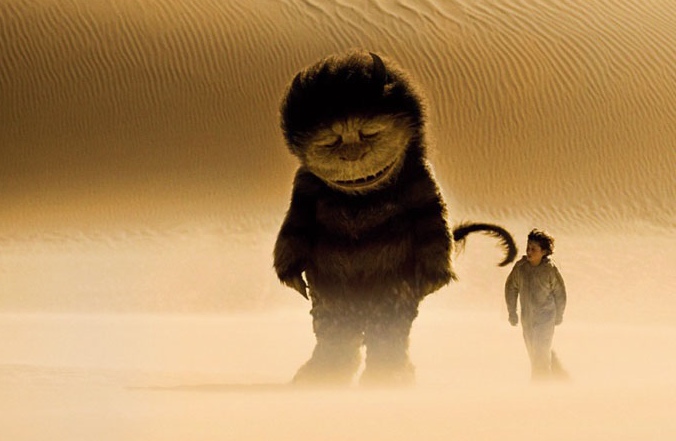
Max and One of His Friends

From /Film, where you can find a bit more.

Monday, January 19, 2009

Theme Song by Trini Lopez

What I wanted to do today is write a post about the casual, snarky, thoughtless immorality of the film There Was a Crooked Man, and how it relates to similar deficits -- which most people claim aren't there -- in Bonnie and Clyde, both films, not incidentally, having been written by David Newman and Robert Benton. But I don't think I can quite make that thesis hang, for a couple of reasons. One is that I haven't seen Bonnie and Clyde in a really long time, so I would have a hard time being specific, and two, I can't quite convince myself that what I found so off-putting in There Was a Crooked Man wasn't so much immorality as it was a kind of low-brow, juvenile nihilism.

But make no mistake: There Was a Crooked Man is a lousy movie. Directed by Joseph L. Mankiewicz -- a long way from All About Eve at this point -- this Western stars Kirk Douglas as Paris Pittman, a no-good thief and killer who somehow manages to routinely steal from people designed by the filmmakers to be seen as more obectionable than he. Not the least of his victims' crimes is, of course, that they're rich, but they're also smug, and they live in big houses like jerks. Pittman, on the other hand, is insouciant, and "funny", disdains authority, and he likes to bone chicks. This film was made in 1970, so with those last two facts Benton and Newman were already halfway towards winning sympathy for their anti-hero from the target audience, that target audience being college kids who hated cops and were tired of being hassled all the time.

Pittman gets arrested for the robbery that begins the film, and finds himself in prison with a motley group of misfit ne'er-do-wells portrayed by, among others, Burgess Meredith, Warren Oates, John Randolph and Hume Cronyn (by the way, I didn't realize Cronyn played the character Dudley until the end credits. Cronyn is essentially doing an impersonation of Paul Lynde here, and the whole time I was watching this I was thinking, "That's not Paul Lynde, that's the other guy." I don't know who I thought the "other guy" was, but apparently it was Hume Cronyn). A sheriff who pops up early in the movie, and later goes on to become warden of the prison where most of the film takes place, is played by Henry Fonda, and Fonda embodies a kind of "progressive" law enforcement philosophy, in that he wishes that all the other policemen and prison officials would quit acting like cartoon villains all the time. I'm with him on that, but Kirk Douglas likes to point out to Fonda that he may think he's a good man, but he's not, because he's going to allow a young prisoner (played by Michael Blodgett) to be hanged even though the death he caused was accidental. That kind of deck-stacking plotting and self-righteous dialogue being delivered by a murderer was a specialty of aggressively edgy, pseudo-satirical genre films of the time period, and while those films grubbed for applause from those in its audience who sympathized with the filmmakers worldviews, I promise you that if any member of that audience tried to act out that worldview at the expense of, say, Robert Benton, David Newman or Joseph L. Mankiewicz, the pigs would be summoned, but quick.

So, anyway, as you probably guessed, a prison break is planned and carried out, and here's where I get into some trouble. Douglas's behavior during the prison break is villainous in such a way that I have a hard time believing that the filmmakers condone it, or even believe it's fun. Now, I'm also not saying that, up until this point, the filmmakers had been condoning murder in any way, but certain killings are portrayed as being, at best, the cost of doing business for someone like Pittman and his cronies, and plus, the victims aren't such great people either! But towards the end of the prison break, I feel like Benton and Newman want the audience to at least believe that Pittman has crossed a line, and I'm even willing to consider the argument that this line-crossing is intended to make the audience reflect on the fact that they've been rooting for this murderer for two hours, and that maybe they shouldn't have been. Add to that the fact that Pittman's fate is delivered with an air of comeuppance, and I have to concede that while it's all clumsily handled, and the movie isn't any good anyway, and I don't really buy the best-case scenario I just laid out, it is, at least, something.

And then, of course, we get a little epilogue that informs us that while murder may be wrong, stealing is encouraged. Two steps forward, one step back. At best.

Tuesday, January 13, 2009

Announcing a New Series: Overshadowed!!

It's a sad truth about humanity that each of us who can claim membership to that reasonably noble species occasionally spends too much of our time angrily disagreeing about things like politics and board game rules. Being among the finer examples of the race we know as "human", I can often be found, at my paper-strewn desk, or in front of giant blackboard on which I have been feverishly scribbling, trying to find new ways to connect people to each other so that we can forge strong social bonds and march forward, together, into a new world free of strife and anger and violence. And -- good news! -- I have found another patch of common ground on which to toil, because I think there's one thing we can all agree on: sometimes, movies are based on books.

With that fact in mind, I have decided to carefully construct a new series of thought-pieces (or "blog posts") that will revolve around cases in which the book upon which a particular film has been based has been sadly ground into the dirt along the March of Time, while the film goes on to everlasting fame and glory. Or, if you will, the book has been "overshadowed" by the film.

So, in the coming weeks and months, I will be reading some of these books, watching or re-watching the films, and then pouring my heart, soul, and other things too, probably, into writing about my experience. The idea of comparing books to their film adaptations is obviously in no way a new one (Jonathan and Marilyn, to name but two, have already been doing this), but I think my focus is narrow enough to be considered kind of original, and plus you have the whole "building social bonds" and "global bliss" thing that I'm also trying to cram in there.

If you are one of the three people who might have read my previous post (before Marilyn stole the Internet), you may recall that I mentioned something about my Devoted Legion following along with this project -- in other words, reading along with me in order to better take part in the discussion. You should all, indeed, feel free to do so, but this isn't actually a book or movie club, so don't feel obligated. I guess what I'm saying is, if you hate peace, then don't bother. If, on the other hand, your heart beats human blood and your soul has not baked to a cinder, here is a short list of the first few books/films I plan on tackling:

Monkey Planet (AKA Planet of the Apes) by Pierre Boulle


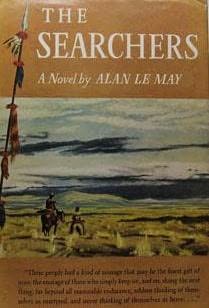
The Searchers by Alan Le May


The Hustler by Walter Tevis


And I'm open to suggestions. I have others planned, like Cool Hand Luke and The Verdict, but I'd want to spread out the Paul Newman stuff as much as I can, so anything else you might like me to read/watch, please drop a comment in my Comment Box, won't you? And let's stick to obscure, nearly forgotten books. I think it's safe to say that, for instance, Gone With the Wind is better known as a film than as a book at this point, but only because people don't read anymore. As far as books go, that one is still pretty famous.

Okay, yay, a project, and so forth! The first post, which will be about Planet of the Apes, will go up within the next week or two. After that, who knows? I'll get to it when I get to it, but I'll announce it as early as I can, for those who want a head's up.

Good day to you.

Saturday, December 20, 2008

There'll Be Nothing to Laugh at This Time

On February 11, 1969, one of horror cinema's most interesting filmmakers died at the age of 25. His name was Michael Reeves, and during his short life he made three features: The She Beast (1966 - known as Revenge of the Blood Beast in the UK); The Sorcerers (1967); and Witchfinder General (1968). The She Beast is available to rent from Netflix, and Witchfinder General was released on DVD by MGM earlier this, but The Sorcerers, despite starring Boris Karloff, is still unavailable in America, and has, in fact, never been available here. It seems to never turn up on cable, and although it has had a DVD release in England, that has since gone out of print.

I can't pretend to have any interest in the intricacies of the legal mudpit into which the video rights for this film are sunk -- whatever the story is, it would no doubt anger and bore me in equal measure. All I care about, especially after checking out Witchfinder General for the second time in about a decade and finding it to be absolutely terrific, is the damn film itself. I just want to see The Sorcerers. It seems like such a small thing to ask of the universe.

Well, the universe finally gave me the thumbs up on this one. My wife and I own a region-free DVD player, though we've put its primary selling point to almost no use up to now. But while dicking around on-line the other day, I found a copy of the out-of-print UK DVD of The Sorcerers for sale at an extremely reasonable price. Click, click, done. The movie arrived today, and I finished watching it about an hour and a half ago.

Boris Karloff plays Professor Marcus Monserrat. At the beginning of the film, he is trying to drum up business for his hypnotism business, which has fallen on hard times, we learn from Monserrat's wife Estelle (Catherine Lacey), since a reporter started poking around, and printed some unflattering things about Monserrat. As a result, the Monserrats are in dire financial straits, and are just barely scraping by. Even so, subsisting seems to be a secondary concern for the old couple -- Prof. Monserrat has another project brewing that he's finally ready to test out. He's built a machine that, when attached to a person and turned on, will subsequently give both of the Monserrats the power to control the thoughts and movements of the test subject whenever they want to. The sort-of-hard-to-buy point, and ultimate function (according to Marcus), of this machine is to allow elderly invalids to experience full, exciting lives vicariously through those young people who agree to connect themselves to such customers, via the professor's machine.

They need a volunteer for their test, and both Marcus and Estelle agree that a prime candidate would be a young person who has become bored with the free-living ways of the late 1960s. They find such a candidate in Mike Roscoe (Reeves favorite Ian Ogilvy), who Marcus runs into one night, and who, it must be said, is talked into taking part in this mysterious project incredibly easily. Once the experiment has been successfully conducted, Mike is sent away by the Monserrats, who marvel at the physical sensations they experience -- running water on their skin, cuts on their hands -- as their young surrogate goes about his daily business. But Estelle wants a bit more. She's tired of living off next-to-nothing, and wants to get back a little of what she and her husband lost, before turning the machine to its more altruistic uses for which Marcus built it. Marcus doesn't like the idea, but concedes to his wife, because he can see how unhappy she is. So they use Mike for some cheap, essentially harmless thrills. And still, Estelle wants more, she wants things that her husband finds horrifying, but her will, and her control over Mike, is stronger.

It's funny: when I first heard of The Sorcerers, I wanted to see it because of Boris Karloff. Later, more recently, I wanted to see it for Karloff, and because Reeves made it. But while Reeves does a fine job with unusual material, and Karloff -- solid as ever -- is the marquee name, and Ogilvy is ostensibly the hero of the story, the film belongs to Catherine Lacey. I don't believe I've ever seen her before, but her performance is about as creepy as anyone could possibly want it to be -- Reeves gets more mileage out of quick shots of her grinning face than most horror filmmakers can manage out of an hour and a half of beheadings. Estelle's turn from seemingly ordinary, but grinded-down, old woman to blood-crazy thrill-killer happens pretty damn quickly, but by keeping everything as simple as he can, Reeves makes it possible to believe that Estelle can go that route. All that needs to happen is that Catherine Lacey has to be able to play it, and good God, does she play it. She plays it big when she has to, while throwing in odd, skin-crawling little touches here and there to make the character seem like she really draws breath, my favorite being the moment when, after forcing Mike to do something particularly awful, Estelle slumps over in exhausted laughter, her forehead resting on her clenched fist, as if she were suddenly overcome with relief after hours of intense worry. But again, Reeves helps things along: his decision to follow up a sequence involving a night full of violent frenzy with Estelle spending the morning after in bed, hammered on a bottle of gin, was a brilliant one.

As I believe I hinted earlier, this movie is not without its flaws. The machine Monserrat built makes very little sense (and I don't mean scientifically, because who cares about that?), and there seems to be a gap between what the Monserrat's told Mike about the experiment and its results and how he deals with the aftermath. But the story taps into the same primal idea as Stevenson's The Strange Case of Dr. Jekyl and Mr. Hyde, which, like The Sorcerers deals with, among other things, the question of what keeps most people from doing horrible things to others: morality, or the fear of repurcussions? And while the film's climax may be easy to predict, it's no less effective for that. Above all, though, this film has going for it the Monserrats -- old, feeble, decent and deluded Marcus, and his loving wife of many decades, Estelle, who, one day, is given utter freedom from her fears, and a freedom to indulge her every taste. Marcus is terrified and disgusted by what these tastes turn out to be. Estelle, no doubt, is surprised herself. But she's not disgusted. Far from it.

Saturday, December 6, 2008

Here We Are at the House


So a few days ago, Marilyn -- whose influence on this blog is becoming absolute -- sent me a letter that said "Hey Bill, I'm too a-scared to watch Jennifer Chambers Lynch's film entitled Boxing Helena, probably because it has something to do with being made helpless. You know who should see it is you. Will you see it and write about it? You are handsome. Also, you are smart. Sincerely, Marilyn. PS - You are funny." Flattered by her compliments, I agreed to give Boxing Helena a look-see. I've always been more than keen on Miss Sherilyn Fenn anyway, and Jennifer C. Lynch is David Lynch's daughter, a fact which only increased my curiosity. Sweetening the pot still further was the fact that the film also featured dismemberment and boxing things up and Art Garfunkel. Yes, this was a movie that needed to be watched. Which I did. And this thing is awful.

Julian Sands, it cannot be stressed too highly, stars in Boxing Helena as Dr. Nick Cavanaugh. I dearly wish there was some way to give you some sense of his line readings, but then again maybe the limits of the English language are, in this case, a blessing. Sands is through-the-floor terrible in this film, and I was all set to tear him a new cornhole, because it's high time someone knocked Julian Sands off his pedestal, but then in one scene I noticed he was wearing a hearing aid. This was late in the film, and there had never been any indication that his character was hard of hearing. So I started thinking, "Is Julian Sands deaf? Is that why he's so bad? Am I discriminating against him? Maybe he's actually a really good actor, for a deaf person. But wait, Marlee Matlin's deaf, and she's pretty good. Was she born deaf? Because maybe that's the difference. Maybe Sands..." And so on. I finally decided to err on the side of caution, and I therefore now consider his performance a courageous triumph. I have to add a little toughness to the love, however, and point out that while Sands sure as hell gives Nick Furlong a run for his money, he's still going to have to put in some hard work if he wants to get to the level of Dakota Fanning.

Anyway. Nick Cavanaugh is a brilliant surgeon who, following the death of his mother, has recently inherited his sprawling family home. He has a long-time girlfriend named Anne (Betsy Clarke), but still obsesses over a woman named Helena, played by Sherilyn Fenn. Nick's best friend Lawrence (ART GARFUNKEL!!) gently reminds him that he only spent one night with Helena, and he might want to think about letting it go. You can never ignore the advice of Art Garfunkel and still expect a heavenly light to ever again shine on your soul, but ignore him Nick does, by inviting Helena to a party he suddenly decides to throw.

Helena, meanwhile, is gorgeous. I mean, look:

I'm fucking pretty as shit

But that soft, angelic exterior masks -- wouldn't you just fucking know it -- a cruel and manipulative mind. At the time of Nick's invitation, she's dating Ray (Bill Paxton), and as we meet these two wide-eyed and innocent creatures, they are engaged in the physical act of love, and Helena gets so mad about her phone ringing in the middle of their humping that she calls a halt to the whole procedure. This upsets Ray, as it would anyone, but he tries to gently coax his lover back into his arms by pointing at his wang with both hands and calling it "Daddy". Somehow, this doesn't work, and Helena continues to treat him badly (although, to be fair, Ray does tend to wear mesh shirts and leather pants, and say things like "It's a big night tonight at the club").

Anyhow, Helena, for some reason, accepts Nick's invitation, but the party goes very badly for Nick, ending as it does with Helena leaving with some twerp, and Nick calling Anne "Helena". Not only that, but Art Garfunkel also pretty much bails on Nick. "Fuck it," Art Garfunkel says, and you know what? I don't blame him.

Fortunately for Nick, Helena left her purse at his house, and she calls and asks him -- insluting him even as she asks for a favor! -- to bring it to her at the airport, where she will be catching a plane to Alcapulco. Nick does this, but the purse is absent her address book, so he takes her back to his house so they can both look for it. And this moment gave me my favorite line in the entire film. We get a shot of the car pulling up outside his house, and Nick says: "Well, here we are at the house, Helena. I'm so glad I was able to tell that story in such depth and detail." I swear to God, that line is actually spoken. We're never told what the story is that Nick is referring to, but I, for one, am glad that these two kids were able to have at least one pleasant conversation before the horror begins.

The horror begins when Helena, who really hates Nick and isn't shy about letting him now that, discovers that Nick purposely left her address book behind, and used it to lure her to his house. She is so upset by this that she storms from the house, and about halfway across Nick's front lawn, she turns to face him, while continuing to walk backwards. As people so often do when they're angry at someone who is standing in a doorway, Helena walks backwards for about twenty feet, right out into the middle of the street, where she's run down by a speeding truck. Nick does the only thing he can do, which is to carry her crippled body into his house and cut off her legs and stop going to work so he can make sure she doesn't escape.

Nick and Helena in happier times
This choice of action really makes Helena angry, and the next half hour or so of the film consists of her calling Nick names (she calls him pathetic, she says she didn't enjoy the sex they had together that one time, but, it should be noted, she never calls him a "Sting-looking, Malcolm McDowell-sounding motherfucker", which is just another one of this film's many missteps), while Nick says, "But I love you! I think you're beautiful! Wup, you just tried to choke me. Let's have those arms off." So he cuts her arms off, an action that actually draws Helena closer to this guy, because she's tired of feeling all, you know, icky, and wants to feel the touch of a man again. And considering that Dr. Nick is, ostensibly, a man, why not just go for it? So Helena goes from saying "You're a loser!" to "You're bad at sex!" to "I don't want to be alone!" to "Touch me!" -- this last phrase being spoken in slow motion -- in about twenty-five minutes. Further upsetting my expectations for this film was the fact that there wasn't a single box in the whole damn movie.


In 1993, Boxing Helena fever briefly swept the nation

That's just completely unbelievable, isn't it? There is simply no way anyone could possibly buy how this section of the story unfolds. But that's okay, because everything that happened after Helena got hit by the truck is (SPOILER) a dream Nick's having after falling asleep while waiting for Helena to get out of surgery. He didn't dismember her after all; he just wants to. And also everything you just saw meant precisely jack-shit. I get the feeling that Boxing Helena was hurried into theaters before Lynch could really go to the mat for her original ending, which featured a final title that read "The End...?", but sometimes artists lose the war, and the barbarians end up running the asylum as the Philistines watch Rome burn, or however it goes. But what we have, like Welles's truncated The Magnificent Ambersons, is still a marvelously engaging work of art, a film whose genius makes itself known in spite of those who might wish to hide it. Good night, and God bless.

Wednesday, December 3, 2008

Has He Hurt You? Are You Sad?


Spoilers for the novel Let the Right One In are to be found below!! BE WARNED!!

Where do I begin? The problem with beginning this particular post is that I, quite frankly, don't really feel like jumping headlong into a critique and analysis of John Ajvide Lindqvist's novel Let the Right One In, which has recently been turned into a very highly acclaimed film by Thomas Alfredson and Lindqvist, a movie which everybody in the world seems to have seen, except me. No, I decided to read the novel first -- which is my usual way of doing these things, if it's a novel I especially want to read -- and will now most likely have to wait until the film comes out on DVD to find out how in the sweet name of crap they crammed all 472 pages of this bloated mess of a novel into 114 minutes of screen time.

Okay, I'm being unfair to the novel, and to Lindqvist. One of the ways in which I'm being unfair is that, by saying the above, some might think that I'm implying that Lindqvist isn't at least trying to do something interesting within the sections of the novel that I believe contribute to the bloat and the mess. But he is. He's trying to bring in, and flesh out, the kinds of characters you rarely see in horror novels, such as Stockholm's unemployed and alcoholic fringe dwellers. He wants these characters, and the more stock ones, to live, and he doesn't want their every action to further the main engine of his (admittedly interesting...for a while) vampire story. All well and good, and in fact I wish more horror writers would try this. But damn it, much of it, especially in the last half, is just not very good, and the elements that are relatively new to the genre that Lindqvist is bringing in are simply not very interesting. These fringe dwellers only take on life when they become part of the plot, and even then it gets dicey.

Before going too much farther, I suppose I should write up a brief synopsis of the story. Okay, so, Oskar is an overweight Swedish kid who is mercilessly bullied on a daily basis. Living next door to him is Eli, a twelve year-old girl who he runs into one night in their apartment complex's playground (he had been stabbing a tree, imagining that the tree was one of his bullies). She's quite friendly, and Oskar sees in her the possibility of a sort of emotional freedom. Unbeknownst to him, at first, is the fact that Eli is a vampire, and living with her is a middle-aged pedophile named Hakan, who murders people in order to supply her with blood. Although Hakan does many terrible things, and some unforgivable appetites, he does feel a great deal of remorse, and is beginning to psychologically break down...or, well, break down more, I guess.

So that's the important stuff, story-wise. Part of the problem with the novel must be the translation, by Ebba Segeberg. I don't want to come down too hard on Segeberg, because the art of translation is largely ignored, and I would guess it is also immensely difficult. But there are long stretches of this book where Segeberg simply seems to be unable to find any interesting or evocative English equivelant to what Lindqvist has written (so, actually, maybe it is Lindqvist's fault. Anyway, it's the fault of one of them). Surprisingly, to me at least, Segeberg is able to best find her (his?) stride in some of the novel's humor, such as in this passage, where Lacke, the primary alcoholic fringer dweller, is wondering about the practical aspect of sterilizing the apparently dozens of cats owned by Gosta, the most pathetic alcoholic fringe dweller:

Lacke imagined Gosta getting on the subway with maybe...twenty-five cats. In one box. No, in a bag, a sack. Go to the vet and just pour out all the cats. "Castration, please."

Segerberg can also occasionally nail some of the novel's more poignant moments, such as this bit taken from a note left for Oskar by Eli:

Sorry I broke your music machine. Take the money if you want. I have a lot. Don't be afraid of me. There's no reason for you to be. Maybe you know that. I hope you know that. I like you so very much.

The passages where Segerberg and/or Lindqvist do not nail it are harder to quote, because it has less to do with flat-out bad writing (although there is some of that) as it does an accumulation of teeth-grinding flatness. And this can often come at the worst times, such as in one of the major suspense sections towards the end. But the section I'm thinking of, which deals with one of probably half a dozen returns by Hakan, is so standard issue and over-the-top -- a very bad combination -- that I'm not sure top-notch writing could have really saved it.

Which brings up another point. I haven't seen the film, as I mentioned, but having finished the novel I decided to read two reviews of it, by my good pals Fox and Marilyn. First of all, I'd like to digress briefly and say that Marilyn's review has really renewed my interest in seeing the film, something that reading the novel had dimmed considerably. Second, Fox's review -- which is less enthusiastic than Marilyn's, but still positive -- focuses on an element of the story that I think should have been focused on more in the novel, which is not just the relationship between Oskar and Eli, but the motives of Eli. But that's neither here nor there, because that's still one of the novel's stronger elements. No, what both reviews indicated to me is that many of the novel's particularly ludicrous plot elements appear to have been completely excised from the film (except for, if I'm understanding Fox's review correctly, the stuff about the cats...), such as -- and here are my big SPOILERS -- the nonsensical and unexplained "zombification" of Hakan, and the utterly baffling and pointless revelation that, before she got vampirized, Eli used to be a boy. Whose name was Elias, don't you know, and whose dad(?) de-manned him for what would appear to be purely sadistic reasons, leaving Elias looking like a girl, but also leaving his genital area (that would be the crotch) completely smooth, like, I don't know...a robot.

What in the world is the point of this? Is it simply Lindqvist's way of playing around with the (to me utterly boring) idea that a vampire's sexuality is ambiguous? If so, that's a damn stupid way of going about it, and it also doesn't make any sense because, in the novel at least, any sort of sexual involvement between Oskar and Eli seems off the table due to the complete indifference of both.
Anyhow. I'm still looking forward to the film, because it sounds as though everything that should have been toned down in the novel has been toned down in the film, and everything that should have been cut from the novel has been cut from the film. And there truly is a good story buried somewhere in Lindqvist's book. I just hope the film found it.
---------------------------------------------------------------------------------
UPDATE: On reflection, I'm thinking this post is probably very disjointed. I wrote it way too fast, and had no clear idea of how I wanted to progress from one paragraph to the next. Right now, I'm too tired, hungry and lazy to proof-read and see if I'm correct, so if you read this and agree with me....then I'm sorry, I guess. It's not like I'm charging you money, or anything. Although I probably should.
--------------------------------------------------------------------------------
UPDATE UPDATE: I just added an ending. Of sorts.

Sunday, November 30, 2008

To Inflict Moral Insanity Upon the Innocent

The man pictured above is Arch Hall, Jr., and the movie from which he's pointing that gun at you is James Landis's The Sadist, made in 1963. There has never been, to my knowledge, an official DVD release of the film, but I was lucky enough to have recently stumbled across a fairly high quality DVD of the film, the existence of which seems to be owed entirely to the concept of "public domain". My purchase of the disc coincidentally follows the latest in a long string of tantalizing references to Landis's film that I've encountered over the past year or so, the last of which being Dennis's selection of The Sadist for his Alphabet Meme list.

The Sadist has a reputation for being a particularly nasty and shocking B-movie, and the basic story -- three people on a road trip are terrorized by a giddily violent sociopath -- is one that has been exploited to those very ends countless times (in fact, the list of films that The Sadist resembles both directly and superficially is a long one, and I'll get to that later), so I didn't quite know what to expect. How far did this thing go? After all, 1963 is the same year that brought us Blood Feast, a film that, for all its lunatic incompetence, still shows how extreme the violence in a no-budget B-film could be, even in those days. I hoped that James Landis's film didn't owe its reputation to the same kind of eternal cult tastes that Herschell Gordon Lewis's film did, but Dennis was notably free of wink or snark in his recommendation, so I was quite curious when, earlier tonight, I finally watched it.

The story The Sadist tells is as I described it above, and there's very little to add to that synopsis, apart from the fact that the three people being terrorized -- played by Richard Alden, Don Russell, and Helen Hovey -- are schoolteachers, and friends, who are on a day trip to see a baseball game. Their car is in need of some small repair, and they pull off to a service station in the middle of nowhere, which they soon discover is apparently abandoned, despite the fact that the house to which the garage is connected shows signs of having been recently inhabited. Their unease begins to worsen, and with good cause, because it's around here that Arch Hall, as Charles Tibbs shows up, girlfriend Judy (Marilyn Manning) in tow. Recklessly waving around a gun, Tibbs tells the three teachers that they must repair their car, after which Tibbs and Judy will take the car for themselves. If the teachers do not repair the car, Tibbs will shoot them all.

The first, and primary, influence on this film must have been the true story of Charles Starkweather, a mass murderer who, with his teenage girlfriend Carol Anne Fugate, gunned down eleven people in 1957 and '58. We learn that Tibbs, a young man who even physically resembles Starkweather, has murdered more than one person before meeting the schoolteachers, and Judy, like Fugate, is high school age. Starkweather's story also inspired Terrence Malick's Badlands, and Starkweather's psychology may have inspired, nearly ten years later, another Charles, Charles Whitman, who in 1966 would kill seventeen people, firing upon them from a tower on the campus of the University of Texas. Starkweather's case was very well known across the country, and when you consider that it is still well-known today, it's not a stretch to think it may have been a bit fresh in Whitman's mind when choosing the method by which he would go down in history. And Whitman's case, of course, was at least a partial inspiration for Peter Bogdanovich's masterful Targets, a film in which Boris Karloff, playing a version of himself, opines that his brand of old-fashioned, melodramatic horror was no match for the real-world horrors of Bobby Thompson (the film's fictional stand-in for Whitman). The Sadist, meanwhile, has been labeled a horror film by some, and by Karloff's definition of "horror" in Targets it certainly qualifies.

My concern that The Sadist might follow the example of Blood Feast in terms of both gore levels and general quality were completely unfounded, and because The Sadist is less enamored of its own violence than H. G. Lewis is of the viscera in Blood Feast, while at the same time being far more blunt on the topic, Landis is able to construct moments that function like a kick to the gut. There is little to no actual blood in The Sadist, but I sometimes wondered if there wasn't more. (Pardon me for this long parenthetical interlude, but this phenomenon of thinking a film's violence is more extreme than it really is has effected, I'm told, certain viewers of The Texas Chainsaw Massacre. I don't know if this is really true, but, though it's superficial, Tobe Hooper's film also bears some resemblance to The Sadist, not only in its basic narrative, but also in its, well, sadism. Some thirty years later, the influence of The Texas Chainsaw Massacre is still being felt and noted in films like Wolf Creek, while The Sadist is almost completely forgotten, despite the fact that Wolf Creek so closely resembles Landis's film that it almost functions as an unofficial remake. Which is not the same, he quickly added, as saying Wolf Creek is a rip-off.) I don't really know anything about the cult of fans that has grown around this film, but I have to assume that the scene most often commented upon as news of The Sadist was passed on by word-of-mouth over the years is the film's first killing, an act of violence the camera doesn't flinch from, even though I don't think we quite see what we think we do. But even if we just focus on what we do see, this film is from 1963, and it's presenting the audience with shocking violence that they would have a really hard time laughing about afterwards, like they could with Blood Feast.

One of the things I personally find most fascinating about the time in which The Sadist was released is not just that this was done in 1963, but that it was done in April of 1963. Cultural historians -- at least the ones with whom I have unfortunately had experience -- would be stymied by the chronology of The Sadist's filming and distribution, because, you see, cultural historians apparently believe that everyone born before they were is a total dumbshit, and the dumbshits who were adults in the 1950s and '60s (thereby having survived World War II and the Korean War, among other things) still needed the assassination of John F. Kennedy, in November 1963, to remind them that guns were sometimes used to shoot people in the head, and it was this horrifying act of public murder that allowed for the creation of films like The Wild Bunch and Bonnie and Clyde and so on and so on. I'm sure everyone reading this has seen someone making this kind of connection, but for this connection to work someone needed to tell James Landis, who was on this particular case when Lee Harvey Oswald was still greasing machinery in New Orleans.

Another aspect of The Sadist that shouldn't be forgotten is the fact that the victims are teachers, and Tibbs is, if not actually a teenager, at least still young, and mentally a teenager in some of his behavior. What a great double bill this would be with Rebel Without a Cause! Jim Stark was a fundamentally decent kid who was simply being consistently misunderstood by the adults around him. Charles Tibbs, on the other hand, is plain fucking bad, in a particularly uncomplicated way. Like Merv Griffin, he simply loves to kill. I'm tempted to say that Landis is trying to send the message -- or at least pretending to be alarmist about the topic in the service of his film's financial returns -- that Charles Tibbs is the final result of juvenile delinquency not corrected strenuously enough. But that's not really what the film is about. The film is about what its title says it's about. The Sadist is about the utter lack of empathy that exists in some people. It's about the exact opposite of human decency. It's about Charles Tibbs shooting a man in the head while his next two victims watch, and wait.

Wednesday, November 12, 2008

The Fall

First of all, the internet sucks. Until I break down and by whatever the technology it is that allows me to take images from a DVD and post them on my blog, the internet is so supposed to provide to me every image from every film, making that aforementioned technology moot, and thereby saving me a couple of dozen bucks. But the internet lets me down time and time again. This is a particular shame, because the film -- films, really -- that I wanted to talk about tonight exists and is worth seeing almost entirely because of its imagery.

The film is Tarsem Singh's The Fall. Briefly, it tells the story of a little girl named Alexandria (Catinca Untaru) who is laid up in a Los Angeles hospital in the 1920s with a broken arm. Also there is Roy (Lee Pace), a stuntman who has been badly injured in a stunt gone awry. These two strike up a friendship, and Roy begins telling her a story about five heroes and their quest for revenge against a man named Governer Odious. Alexandria becomes entranced by this story, and the more she becomes involved, the more willing she is to do favors for Roy, such as stealing morphine from the hospital's pharmacy.

Naturally, director and co-writer Tarsem Singh visualizes the story Roy is telling, and that's when we get shots like this:


...and this...

...and so on (that's about the extent of the variety of images from the film offered by the internet). It's absolutely stunning how strange and beautiful this film is, even in its throwaway moments. I haven't seen this confirmed, but throughout The Fall's running time, I kept thinking that Singh must have been deeply influence by Terry Gilliam, and that this is the kind of film Terry Gilliam still wishes he could make (and I think I mean "could" in all senses, but I'm more than willing to give Gilliam's upcoming The Imaginarium of Dr. Parnassus a fair shake).

The Gilliam film The Fall most resembles is The Adventures of Baron Munchausen, and like that film, Singh's film is flawed. And the flaws in both films are quite similar, and largely boil down to a level of whimsy and ill-advised humor in the fantasy sequences that threaten to sink the entire enterprise. But both films, in my opinion, overcome this, and The Fall adds a bracing darkness to its latter sections, which nevertheless at no point remove it from the category of "children's film", which, in truth, is what The Fall is. I think kids -- of which I own zero -- will love this thing. If you do have kids, by the way, The Fall is inexplicably rated R. I'm really at a loss to explain why. Yes, there is violence, and some themes that I guess would be regarded as "adult", but by this criteria, the Lord of the Rings films should have been rated X.

Singh, in case you're not aware, also directed the Jennifer Lopez vehicle The Cell. This movie was widely slammed by critics, and was a commercial flop, a fact which no doubt has a lot to do with the fact that Singh has made no other films until The Fall. If you haven't seen The Cell, you may very well be sneering at the name "Jennifer Lopez", and while I'll admit she's miscast, she's by no means terrible, and besides which...


...and...


I like The Cell, and I've never understood the vitriol directed towards it. Roger Ebert's lonely rave review may be a bit over the top, but it comes closer to describing the film I saw than any other review I've read.

In both The Cell and The Fall, these images are literally fantastic, in that even within their respective films, they're not "real" -- in The Cell, they all appear in the mind of a comatose serial killer, and in The Fall they're the visualization of Roy's story, filtered through the mind of little Alexandria. And, honestly, my own preference is that Singh apply his formidable imagination to a story that is a straight fantasy or horror story, where his images actually exist in the same world as his characters. That, however, is a minor quibble. Everybody bitches about modern special effects, and CGI, and how the art of in-camera effects is dying, and I'm right there with those people (the last fight scene in The Incredible Hulk looked like a video game cut scene). But there are a couple of people who do the hard work of making the fantastic look both gorgeous and real, and Tarsem Singh is one of them. He deserves an audience for that reason alone.

-----------------------------------------------------------------------------

PS - Just a quick word about Catinca Untaru. Her performance in The Fall must be the most charming and deeply believable child performance I've ever seen. And she plays Alexandria as a child. I think Haley Joel Osment's work in A.I. is pretty amazing, but he's obviously not playing a real kid. Untaru is, and she's just incredible. Credit must also be given to Lee Pace, who not only turns in a very good performance, by any definition, of his own, but the vast majority of his scenes are with Untaru, and from what I heard of the DVD commentary, his work in the film involved a lot of improvisation with Untaru, who is not only a child (I'm guessing that, during filming, she was about six years old), but English isn't her first language. So Pace went above and beyond, and it worked incredibly well.

Followers