Friday, October 31, 2008

The Kind of Face You SLASH!!: Day 31 - Everything We're Telling You Here is True

Prior to reading The Man on the Ceiling, I had read four short stories by Steve Rasnic Tem, and not one word of fiction by Melanie Tem. That was a mistake, because this book -- which is part memoir, for lack of a better word, and part novel, also for lack of a better word -- is about them, and their lives together with their five adopted children, and why they write what they write. And what they write, for the most part, is horror. So, not being overly familiar with their fiction before tackling this book was a mistake, but not a fatal one, because despite that I found the book to be absolutely gripping, unsettling, and deeply moving.

The dedication page for The Man on the Ceiling says this:

For our children, who gave us their blessing

The very next page also contains one sentence only:

Everything we're about to tell you here is true

This second line, in one form or another, will pop up again and again throughout the book, although not everything within its pages is actually, literally true. The Tems describe The Man on the Ceiling as a"biography of their imaginations", and that's about as good a way to describe this highly unusual book as any I could come up with. It begins, for instance, with Steve (the book, incidentally, sometimes alternates between his point of view and Melanie's, while other sections are written by them together) describing a car trip with his family, Melanie riding shotgun, and their children piled in the back.

Along the side of the road, as far as the eye could see, the children waited. Some of them were babies, owning nothing but the baskets they were in and their own dirty blankets. Sometimes the older kids -- and by "older" I mean two or three years of age -- would take care of them, holding and singing to them because that came instinctively, feeding them out of other people's garbage cans.

...Outside the car windows the children came in droves. Some had barely escaped house fires: you could see places on their necks bubbled like a plastic toy left on the stove. Some had crawled out of floods or earthquakes, their faces smeared and broken.

...There was no more room in the car. I wanted to stick my head out the window and tell them that, and somehow apologize for it, but frankley there were so many I was afraid...

All of their children, as I said, were adopted: Gabriella, Joe, Veronica, Chris and Anthony. Chris, they tell us, has spent most of his adult life in prison. Anthony died. And it's possible -- though his parents will never know the truth -- that this nine year-old boy committed suicide.

This book is exceptionally difficult to describe. There is no straight narrative line, it bounces from the childhoods of the Tems, to their feelings about Anthony's death, to the future, to a recounting of the worsening Alzheimer's of Melanie's father, to the death of their cat, to their grappling with the man on the ceiling, who follows them wherever they go.

To say that the man on the ceiling is a personification of the fear the Tems feel not only for their children, but for themselves and the disasters that occur within every family at some point, would be accurate, as far as it goes. But the Tems never state that plainly, and it feels somehow wrong for me to do it in their place. This is how Melanie describes her relationship with the man on the ceiling:

The man on the ceiling gives my life an edge. He makes me uneasy; he makes me grieve. And yet he also fills me with awe for what is possible. He shames me with his glimpses into the darkness of human cruelty, and he shocks me when I see bits of my own face in his. He encourages a reverence when I contemplate the inevitability of my own death. And he shakes me with anger, pity, and fear.

Much of the book is like this, which is to say a description of the way the Tems's imaginations shape their experiences and filter into their fiction, although at no point do they explicitly tie their experiences, fears, or losses to any particular novel or story that one or the other of them has written. They never even mention a single title. However, scattered throughout this book are little short stories that each has written to illustrate, or extrapolate from, an idea, as with Melanie's story "Just Her Size", which imagines an encounter she never had with a neighborhood teenager she barely knew when she was a child, who she later learned might have been a pedophile, or in "The Yellow Dog", when Melanie wonders about how her daughter Gabriella must have processed the fact that, as a young girl, she was a witness to the deaths of both the family cat and Melanie's father.

As for Steve, I felt a particular kinship with him. He is a man who lives in an almost constant state of fear and worry -- sometimes a mild form, sounding somewhere in the back of his mind like the background hum of an air conditioner, sometimes clanging like a fire alarm -- that something terrible is about to happen to someone he loves. Hints are given in the book that Steve had a very rough childhood, and I had a very happy one, but I still understand living inside your own head like that. In one of the sections that seems to have been written by both of them, they talk about how, when the fear and worry gets too strong for him, Steve gets into his car and goes for a drive:

The man on the ceiling is out there, on the ceiling of the world, masquerading as a star or a flock of night birds or the wingtip of lights of a doomed plane, just waiting for the right moment to squash itself against Steve's windshield and make him drive off the road or into oncoming traffic, into the path of cars carrying everyone he's ever loved.

Okay, I'm not as bad as all that, but I do understand it. Hell, everyone does, to one degree or another. Some people are just better than others at turning down the alarm.

Steve writes about writing more than Melanie does (though I feel like most of the short stories included here were written by Melanie), and when he does this his prose turns towards the surreal -- which, I'm lead to understand, is not an unusual direction for his fiction to take). And when he writes about his life as a father, he is absolutely heartbreaking:

My baby. You hold their small hearts, their lungs in your hands and it is unimaginable: both their lives and their deaths are unimaginable. How they came to be out of nothing and how this miracle has been put into your undeserving hands to nourish or to fail. Sometimes it brings the absolute best out of people and sometimes the absolute worst. I've seen people snap under the pressure, we've all seen them, dissolving in the presence of a miracle.

Clearly, I've let the Tems write a fair chunk of this post, but I feel as though that's as it should be. The Man on the Ceiling is so completely theirs that to try and interpret or analyze it would be a greivous error. What you do is, you just let the book absorb you into it. And you learn, among many other things, why the Tems write horror. This book is not a horror novel, but it was borne from horror. It doesn't explain why everyone writes horror, nor does it explain why readers such as myself read it (though it comes closer than anything else I've ever read). And quite frankly, to say -- as I very nearly did -- that this book was produced by the horror genre would be to give that genre far, far more credit than it deserves. This book was written by the Tems, and I feel like it would exist, as would their other books, whether the genre existed or not.

-------------------------------------------------------------------------------------

Well, that's it, folks. The end of The Kind of Face You SLASH!!. And thank Christ for that. It's been fun (sometimes), and educational (for me, anyway), and long as shit. And now it's over. And I am never doing this again.

Thursday, October 30, 2008

The Kind of Face You SLASH!!: Day 30 - Very Far from the World of Meaning

Not sure what I wanted to read today, I was in my bedroom, searching through all the books I'd set aside as possible options for this month. Nothing was jumping out at me, until I noticed The Stories of Paul Bowles, which I'd taken from the shelf just a few days ago, because something I'd read about it sparked my interest, and because I felt like I should have considered it for this project.

The piece I read that had sparked my interest was Terry Lamsley's brief essay in Horror: Another 100 Best Books on Bowles's collection Pages from Cold Point. This book was apparently a fairly short one, containing about six or seven stories, all of which, as you would imagine, found in the large collection of Bowles's work I'd taken down. Lamsley briefly describes each of the stories, and then says of Bowles:

He never wrote specifically for the horror genre, but many of his tales are much more strange and disturbing than those by some writers who do. One such, "Kitty", about a girl who wants to turn into a cat, was written for a children's book and rejected by the publisher as being far too gruesome. I have never come across any of his stories in a horror anthology.

Neither have I, and now that I've read a few of them, I'm as perplexed by this fact as Lamsley. I chose three of the stories Lamsley talks about, and one other that, from what I knew of it, sounded particularly suited to this project.

The first two stories are very short, and I'll breeze through them. The first one, "The Hyena" is written as a fable about a stork meeting a hyena at a watering hole. The stork has heard that if a hyena marks you with his urine, you will be forced to follow that hyena wherever her goes. The hyena notes the stork's nervousness, and claims he knows the reason. He tells the stork that the magic powers ascribed to his species are pure fiction, and he and the stork engage in a brief philosophical discussion. This parable about trust -- a description I honestly hesitate to use, because it feels reductive -- has a grotesque ending, one far more jarring in its details than even the darkest stories of its kind I've read in the past.

The next story is called "The Garden", and it deals with a man who over the years has cultivated a beautiful garden outside his home. He takes great pleasure in it, and one day, when he goes inside, his wife notices how pleased he looks and immediately assumes that he's hiding treasure from her. With the help of a local witch, she begins poisoning her husband, in the hopes of weakening his mind enough to let her ply the secret of his treasure from him. This doesn't work, there being no treasure, and he doesn't die from the poison. And this is just the beginning of an unusally rich and disturbing four pages -- it's really amazing how much impact Bowles can fit into so short a length.

The third story is "Allal", and that's the one I felt was most suited to this project. It's about a young man named Allal, who was abandoned by his mother at the hotel where she worked. When he reached a certain age, the owner of the hotel put him to work, but refused to pay him. After a while, Allal moves to town and finds a job. He is ostracized by the locals, who, because his mother abandoned him, refer to him as a "son of sin".

Allal quietly goes about his life, earning his pay, and hating everyone in town, until...

One hot summer evening shortly after sunset he was walking under the arcades that faced the town's main square. A few paces ahead of him an old man in a white turban was trying to shift a heavy sack from one shoulder to the other. Suddenly it fell to the ground, and Allal stared as two dark forms flowed out of it and disappeared into the shadows. The old man pounced upon the sack and fastened the top of it, at the same time beginning to shout: Look out for the snakes! Help me find my snakes!

Allal helps the man and invites him to his home, where he becomes enamored of the snakes -- of one, in particular. He makes up his mind to steal this snake, which he does, after which he attempts to bind his mind and spirit to the animal. His attempts have a different result, however, and Allal finds himself winding through the town in body of the snake.

At first, the reader might assume that this is all a hallucination, because Allal has been eating kif, a kind of drug popular in the Middle East and Asia. But the ending of the story made me wonder. In any case, Bowles's fable-like style is used not only in "The Hyena", but in "The Garden" and in "Allal" as well. Because "The Garden" and "Allal" have no lesson to teach us, as we would expect a fable to do, the effect is somehow more disturbing than if Bowles wallowed in the sun-bleached darkness of these stories. I quoted Lamsley above mentioning a children's story by Bowles that was rejected for being too gruesome. I don't doubt it. Apart from fumbling with certain words and references that are particular to Middle Eastern cultures and ideas, a child would have no trouble reading and understanding either "The Garden" or "Allal" (the more openly cerebral "The Hyena", ironically, would be a much bigger challenge), but doing so would scar them.

Which brings me to the last story, called "The Delicate Prey". This story was particularly singled out by Terry Lamsley as the main reason he chose to write about Pages from Cold Point. He says:

The events [of the story], which I see no point in describing, are related as if from a very great distance, but with absolute clarity, and the reader is led into somewhere dreadful and left there.

Not a bad way of putting it, and I share his reticence about describing the events of "The Delicate Prey". I'll only say that the story is about two leather merchants, brothers, and their young nephew, and about their journey from Tabelbala to Tessalit, and what happens when they meet a friendly man in the desert. "The Delicate Prey" may be the most off-handedly disturbing story I've ever read. A telling detail, I think, of Bowles's style is that the most horrifying violence is often buried one or two sentences into a six or seven sentence paragraph. Most writers would tag such moments at the end of a paragraph as a kind of climax. For Bowles, the violence (which can be extremely harrowing) is simply another thing that happens, like the watering of camels, or the decision to move from Tabelbala to Tessalit.

I had read Bowles before this, when, in college, I had to read The Sheltering Sky, which is still his most famous work. I felt no confidence that I would like that book, or even be able to finish it, but I not only finished it, I found that I'd enjoyed it quite a bit. In other words, it wasn't what I expected. With Bowles's short fiction, I've now had that experience again. I've never read anything quite like these stories. They are merciless.

The Kind of Face You SLASH!!: Day 29 - It's Important that We Talk

Well, this day's not going the way I'd planned. One of my big posts for this month was going to be about Arthur Machen's "The Great God Pan", as well as M. John Harrison's story of the same name -- you know, a compare and contrast kind of thing. Well, before the month had even quite gotten started, someone told me that they thought Harrison's novel The Course of the Heart was an expansion of that short story. I didn't bother verifying this until last night, when I was going to begin reading Machen's story. It would be a little hard to explain to you why this knowledge has put me off reading these two short stories (not forever, just for now), but suffice it to say that for the sake of my own reading interests I want to put them off for another time.

So what do I read now? I haven't decided yet. In the meantime, here's another half-assed post about a few stories that are only about three or four pages in length (I was going to do this today anyway, in addition to a larger post, in order to get the post count to 31). You might remember that the first time I did this I read a story each by Steve Rasnic Tem, William F. Nolan and Chet Williamson. Well, I've decided to stage a rematch, and read another story each by those guys. Last time, Chet Williamson smoked the competition with his terrific "The Assembly of the Dead". Who will win this time!?

First up is Chet Williamson, and his story "Ants". Williamson's not going to repeat his victory, I'm afraid. This is one of those stories about a down-on-his-luck asshole who cheated on his wife, so she divorced him, and now he's poor and has very few pleasures in life. But among those few pleasures is the delight he takes in killing ants. And the ants, as you know without me having to tell you, don't like that, so they take the battle to him. And so on. The copyright for this story is 1987 -- I would have thought this particular horror sub-genre had been exhausted at least twenty years before that. Actually, it probably had, but people kept writing the stories anyway.

Next is William F. Nolan's "Dead Call". Our narrator, Frank, receives a call from his old friend Len. The problem is that Len has been dead for several months. Frank was under the impression that the car wreck that killed Len was an accident, but Len informs him that he is mistaken. Len actually killed himself, because his life was falling to pieces. And, Len points out, isn't Frank going through some pretty rough times himself?

You may be able to tell where this one's going. At three pages, though, I think that's to be expected. It's a pretty creepy little story, though Nolan's dialogue skills are fairly pedestrian. Still, this one's eerie, and it might make you pretty uncomortable if you sit and think about it for too long.

Finally, we have Steve Rasnic Tem's "At the Bureau". It concerns a man who works for a government licensing bureau. The function of this office has changed repeatedly over the many years he's worked there; last time they issued fishing licenses, but they're about to change again. The narrator seems content with his job, even though it's a dead end. There's no room for advancement beyond his current position, and there will be no more raises. His wife wants him to quit. And the guy in the office next door keeps standing in front of the narrator's frosted-glass office door, casting his shadow as he tries to peer in. Whenever the narrator tries to catch him at it, the guy hurries back to his own office.

The twist to all this is pretty bleak and hopeless. I would say this is the best of the three, as it's the most interesting, and it's better written than the other two, though I still prefer Nolan's central idea. But I don't believe these stories were intended to do much beyond sending a brief shiver through their readers, so it's best to end things here...

There will be another, more substantial post later today.

Wednesday, October 29, 2008

The Kind of Face You SLASH!!: Day 28 - The Nightgown Wraiths

Guess what I went and did? I left the book containing today's horror selection at work. Fortunately, I had finished the story, so I can write about it, but unfortunately I don't have it here in front of me for reference. Or to quote from. So this one will probably be pretty short.

The story -- another long one -- is "Mr. Dark's Carnival", by Glen Hirshberg. Hirshberg is what is known as a "rising talent" in the genre: he's in his early forties and has a mere three books to his name, but he's raked in a healthy portion of award for his short fiction, and has earned praise from the likes of Peter Straub, Ramsey Campbell, and others. Campbell, in his introduction to Hirshberg's collection The Two Sams (from which "Mr. Dark's Carnival" is taken), compares him to M. R. James and Thomas Ligotti. Well then.

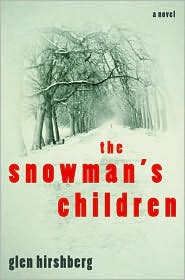
As it happens, earlier this year I read Hirshberg's novel, The Snowman's Children. That novel is more of a coming-of-age thriller -- a genre designation I may have just now coined, but which has a long history anyway -- than a horror novel, but I found it to be pretty skillful and intriguing, if a little too earnest. Hirshberg has really made his name with his short fiction, however, which I've always gathered is firmly and unquestionably horror, so I figured now was a swell time to dive in.

I was hestitant to pick "Mr. Dark's Carnival", as the title seems to hint that it's some sort of reflection on Ray Bradbury's Something Wicked This Way Comes, and, since I've never read that book (I should really stop admitting that sort of thing), I didn't want to read a 40-plus-page story that I wouldn't be able to fully appreciate. But Ramsey Campbell, in his introduction, said that the story deeply explored why readers and writers are drawn to fear, why we seek it out (or something like that), and considering that we're at the tail end of this horror project, I thought the story might be especially appropriate.

So here's what the story's about. In a small town in Montana, a college history professor named David Roemer is winding up his annual Halloween lecture, which deals with a bit of local legend. Back in the day's of America's Western expansion, and before Montana was officially a state, a man named Al...bert? See, this is the problem with not having the book in front of me. Well, whatever. We'll go with Albert. Anyway, a man named Albert Dark took residence in this little town, and became judge. Apparently, for the most part, he was a pretty lenient judge. But on four different occasions, during his many years as judge in that town, posses hauled men who they claimed had committed some sort of crime to Dark's home, demanding swift justice. On each of these four occasions, the judge complied, with the stipulation that before the man was to hang, he would spend his final night in the judge's home, and, when the time came, Judge Dark himself would do the hanging.

From this grew a legend of a place called "Mr. Dark's Carnival", which was actually one of those haunted house attractions that go up around the world every Halloween. This legend is not gone into specifically, beyond the fact that there were apparently unusual invitations to the haunted house issued. But Professor Roemer claims that such a place never existed, that it is in fact only a legend.

Towards the end of his lecture, he gets word that a troubled former graduate student of his has committed suicide. This man's girlfriend, Kate, was also one of Roemer's former students, as well as one of his former lovers. He goes to comfort her, and, long story short, comes across an invitation to Mr. Dark's Carnival. Which he and Kate excitedly attend.

Frankly, I don't quite know what Campbell was on about in his introduction. All this story really explores is why people go to haunted house attractions, which is, if not self-evident, at least uninteresting. As you can probably guess, Roemer and Kate make it to the carnival, and find it far more elaborate and bizarre and intriguing than they'd hoped it would be. And as you can probably also guess, there are really only two ways this thing can end, and, again, neither one is all that exciting. I was really struck by how ordinary this story was. Not bad, just ordinary. This, from Glen Hirshberg, who, of the genre's new breed of talent, is one of horror's most respected torch-bearers. I mean, really, Glen Hirshberg? A haunted house attraction on Halloween that might actually really be haunted?? I just don't know what to say. I enjoyed it. It would be a nice campfire story, if you took out all the stuff that doesn't lead anywhere, which would be about half of it. But "Mr. Dark's Carnival" is the definition of "nothing special".

For instance, the subplot about the troubled ex-student who committed suicide seems poised to supply some unusual pay-off, either thematically or narratively, but all it does is provide the explanation for a rather tired twist at the end. What's ironic about the by-the-numbers quality of this story (which, in all fairness, is not a weakness from which Hirshberg's The Snowman's Children suffers) is that throughout Roemer's journey through the fake-or-is-it haunted house, any time he's not suitably impressed with what he takes to be effects or clever bits of misdirection, he expresses his disappointment about some standard bit of haunted house business that he's seen too many times in his life to count. Was Hirshberg not aware that he was practically begging his readers to make similar complaints about his story? Was that part of his point? I really don't think it was, and I'm left just feeling befuddled.

And remember when I said that one of the drawbacks of The Snowman's Children was that it was too earnest? Well, this next complaint is connected to that, although I'm not sure "earnest" is the right word here. But at one point, Roemer actually says the following:

Walking through a haunted house properly is a lot like making love.

Okay, well, that just about shreds it. If he'd said "Walking through a haunted house properly is a lot like fucking", I might have respected him more.

All right, well, that was a major disappointment, which is an odd thing to say about a story that isn't actually bad. When considered with other horror stories that revolve around Halloween night and haunted houses, it works perfectly well. I was just expecting more. I'm nowhere near done with Hirshberg -- not even close, really -- but I'll adjust my expectations accordingly next time.

Tuesday, October 28, 2008

The Kind of Face You SLASH!!: Day 27 - Dust in the Balance

H. P. Lovecraft and Algernon Blackwood were rough contemporaries -- Blackwood's writing career got started a bit before Lovecraft's -- and the former author was a great admirer of the latter. Of Blackwood, Lovecraft said:

Of the quality of Mr. Blackwood's genius there can be no dispute; for no one has ever approached the skill, seriousness, and minute fidelity with which he records the overtones of strangeness in ordingary things and experiences.

Not only that, but check out that name! Algernon Blackwood! That is friggin' nuts! With that name, Blackwood had, by my count, only two viable career choices: horror writer, or malevolent super-scientist, the kind who rides around in zeppelins, commanding his zombie army via remote control. And it was his real name, too. It's not like he was born "Sidney Loomis", and traded up to "Algernon Blackwood" when he turned eighteen. No, that was his name out of the gate -- although, regrettably, his middle name was Henry.

But anyway. Blackwood's fiction, though it has remained in print (off and on, I would imagine) since his death, never took hold in the popular psyche the way Lovecraft's did. If you want to know why exactly that is, I'm not the guy to ask, although my knee-jerk, horror-snob answer is that Blackwood was by far the better writer. I don't really know what that means, though, and I don't actually believe it. That is, I don't believe that's why Blackwood's work is obscure, compared to Lovecraft; however, I do believe -- based, admittedly, on scant evidence -- that Blackwood was a far superior writer.

Thus far, I've read one Blackwood story (finished mere minutes ago), the nearly-novella-length "The Willows". In it, an unnamed narrator and his friend, known only as "the Swede", are traveling down the Danube by kayak. Due to flooding and fierce winds, they suffer what seems to be a mild shipwreck on a small island somewhere in East Jesus, Hungary. Their kayak is undamaged, they have plenty of provisions, and so, not at all put out, they decide to make camp on this tiny island, which is covered, not incidentally, with willows.

Early on, they they see a couple of fairly strange things. One is an otter, swimming along the river, which, at first glance, they mistake for a human body. Shortly thereafter, they see, in the distance, a man in a boat, who at first seems to be signaling to them, but whose motions they eventually decipher as the man making the Sign of the Cross.

Still dealing with very strong winds, the two men decide to take to the river again the next morning. That night, the narrator takes a little walk, and begins to feel extremely uneasy about the island, the willows, and the general surroundings:

But my emotion, so far as I could understand it, seemed to attach itself more particularly to the willow bushes, to these acres and acres of willows, crowding, so thickly growing there, swarming everywhere the eye could reach, pressing upon the river as though to suffocate it, standing in dense array mile after mile beneath the sky, watching, waiting, listening. And, apart quite from the elements, the willows connected themselves subtly with my malaise, attacking the mind insidiously somehow by reason of their vast numbers, and contriving in some way or other to represent to the imagination a new and mighty power, a power, moreover, not altogether friendly to us.

This "attack" will increase in strength and continue unabated until the end of the story. The narrator -- and eventually the Swede -- begin to see things at night, in the willows, that inspire a kind of awe-struck horror, and they begin to hear a sort of gonging sound that seems to come from everywhere at once, and which "defies description". These incidents, mixed with mysterious damage to their kayak and depletion of their food, works on the men's minds. The Swede appears to be more sensitive to their new, terrifying reality -- to what it is and what it means -- and together the two men come to understand this small island as a kind of intersection of two realities: the world as we know it, and another world, filled with beings whose purpose is grim on a cosmic and metaphysical scale, a scale so large that it is impossible to understand, however much the men might desperately crave understanding:

An explanation of some kind was an absolute necessity, just as some working explanation of the universe is necessary -- however absurd -- to the happiness of every individual who seeks to do his duty in the world and face the problems of life. The simile seemed to me at the time an exact parallel.

This is an essential passage, I think, because it is the core of what Blackwood is writing about, his specific reason for writing horror, which is the great doubt every human being, no matter how confident they are in their own view of the universe, has at some point, that not only is there no benevolent God, but there is no comfort in our existence. There is only pain and horror and despair and meaningless suffering. Everything else is just a mask. Or -- and this may be closer to the point -- if there is a force governing the universe, it is malignant. This is what Thomas Ligotti is writing about, and it's what many claim Lovecraft is writing about as well, although it's hard, sometimes, for me to see it in his work.

And it doesn't matter if you're an atheist (the atheists I know have a much warmer view of the universe than this), and it doesn't matter if you firmly believe in God. It doesn't even matter if your belief in God is some day proven correct. All that matters is that you also sometimes see things Blackwood's way, that you harbor that fear, however mildly, and however rarely. If you do -- and you do -- then "The Willows" will make its mark on you.

Monday, October 27, 2008

The Kind of Face You SLASH!!: Day 26 - Entertainment for a Monster

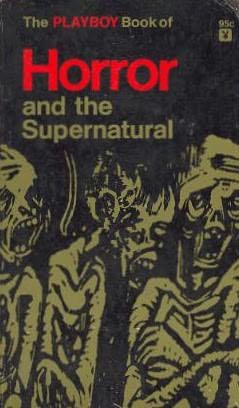
Here's how the editors of Playboy introduce Ray Russell's story "Sardonicus" in the anthology The Playboy Book of Horror and the Supernatural:

Russell's Gothic canon is unique in contemporary fiction. Not since the Romantic novelists of the 19th Century has there been a writer with quite his panache, eloquence and mastery of the art of terror. He is a symphonic writer, unafraid of big emotions and stunning effects, lavishly orchestrated.

Man, the editors of Playboy sure know how to sell a short story, don't they? But wait...according to Kim Newman and Stephen Jones, editors of Horror: Another 100 Best Books (one of those 100 being the Playboy anthology) there was only one editor for the book, and his name was Ray Russell. So I guess what I should have said was, "Man, Ray Russell sure knew how to shamelessly promote himself, didn't he?" (There are actually two Russell stories in this anthology, and his introduction to the second story, "Comet Wine", hilariously begins: "Ray Russell's work is 'Staggering, wholly convincing, filled with the dark powers of life and minds,' according to the tough-minded Virginia Kirkus book review bulletin".)

"Sardonicus" -- a long-ish short story, at 40 pages -- is my selection today, and, to be fair Russell wasn't the only person to have such a high opinion of it. Russell actually was a highly respected horror writer in his time (mainly the 1960s and 70s), and "Sardonicus" was widely anthologized. It was also turned into a famous film by William Castle in 1961, called Mr. Sardonicus (I haven't seen the film, although it's on TCM this Thursday, so I can correct that soon. Still, the more films I admit to not having seen, and the more books and stories I admit to not having read, the more I think I'm not very good at Knowing a Lot About Horror).

Though written in the middle of the 20th Century, "Sardonicus" is told in the style of a 19th Century Gothic thriller. It's about Sir Robert Cargrave, a highly respected physician who specializes in muscle paralysis. One morning, he receives a letter from Maude Sardonicus, who Cargrave once knew (and secretly loved) as Maude Randall, inviting him to visit her and her husband in Bohemia. Cargrave feels that he's in need of a vacation, and he'd very much like to reacquaint himself with Maude, so he hastily agrees and makes the journey as soon as he can.

When he meets Maude, she's just as beautiful as he remembered her, but her once bright and lively personality has had a shadow cast over it. He begins to understand why when he meets her husband, Mr. Sardonicus:

...the gentelman before me was the victim of some terrible affliction that had caused his lips to be pulled perpetually apart from each other, baring his teeth in a continuous ghastly smile. It was the same humourless grin I had seen once before: on the face of a person in the last throes of lockjaw. We physicians have a name for that chilling grimace, a Latin name, and as it entered my mind, it seemed to dispel yet another mystery, for the term we use to describe the lockjaw smile is: Risus sardonicus.

Soon enough, Cargrave learns a couple of important things: one is that "Sardonicus" is not the man's real name. His real name is Marek Boleslawski. As a young man, he raided his newly deceased father's grave to liberate a winning lottery ticket, which he subsequently used to start his fortune. But upon digging up his father, he saw that the corpse's face had twisted into an alarming rictus. The shock, horror (and, probably, guilt over what he was doing) caused Marek's own face to twist and freeze into a mad and repellent grin, which he's suffered with ever since. His inability to pronounce "Boleslawski" due to his new deformity lead him, with bitter and intentional irony, to choose "Sardonicus as his new surname (the problem here, though, is that Sardonicus is an extremlely verbal character, and at no point in the story does he avoid plosives or...uh...whatever "M" sounds are called).

The other thing Cargrave learns is that Sardonicus is a monster. He persuaded Maude to invite Cargrave because, predictably, he wanted Cargrave to cure him, but he eventually threatens both Maude and Cargrave by informing them that should Cargrave refuse, or try and fail, to cure him, a quite horrible form of punishment will rain down upon Maude. Filled with rage and disgust, Cargrave has no choice but to agree.

Ray Russell may have been an arrogant little so-and-so, but this really is a damn good story. Russell occasionally overdoes the Victorian Gothic style, what with his use of words like "thither" and "yestereve", but by and large he gets it right, and "Sardonicus" ends up being an awfully nice -- however unintentional, on my part -- companion to Stevenson's The Strange Case of Dr. Jekyll and Mr. Hyde. The thematic similiarites are strong enough between the two that Russell may have been primarily inspired by Stevenson's novella, but "Sardonicus" is its own crazy entity. And yes, it's kind of a loony story, but he makes it work. You buy into it (even that thing about Marek stealing his dead dad's lottery ticket, which I admit sounds absurd when described glibly, as I did, works perfectly fine, fleshed out and in context). And Mr. Sardonicus himself is a great creation, a memorably, hateful and creepy villain. It would be selfish to ask for more than that.

Russell was apparently not very prolific -- I can only find three titles to his name -- but on the basis of this story I'll be happy to seek out the rest. And by the way, according to Russell's gushing introduction, "Comet Wine" is a sequel of sorts to "Sardonicus", in that the hero is, once again, Sir Robert Cargrave. That's all I need to know.

Sunday, October 26, 2008

The Kind of Face You SLASH!!: Day 25 - A Disgustful Curiosity

If you've never read The Strange Case of Dr. Jekyll and Mr. Hyde, you should know that it's not what you think it is, or at least it wasn't what I thought it would be. I expected something not unlike Frankenstein, where we experienced the story largely through Frankenstein's eyes (except for that great, long section where the creature tells his story). With this novella by Robert Louis Stevenson, I expected the same thing. I expected a first person, or limited third person, point of view focusing on Dr. Henry Jekyll, with, perhaps, occasional shifts so we could see things as Mr. Hyde saw them. Unless I'm much mistaken, this has largely been how the story has been adapted to various other media throughout the decades.

But what about Mr. Utterson? In my edition of the novella, which is 103 pages long, Dr. Utterson is the protagonist, and our source for the narrative, for 70 of those pages (after which point the story makes one of those awkward shifts familiar to readers of Victorian literature, and we get the rest of the story through letters being read by Utterson). What happened to Utterson over the years? Why, in film adaptations, for instance, did he either fall away entirely or become absorbed into another character?

One thing I didn't know about the story (and I don't know if this carries over into any of the films, because I sort of haven't seen any of them) is that it is structured as a mystery, with Mr. Utterson -- friend to Dr. Jekyll -- playing the role of detective.

It's a measure of Stevenson's skill that, even though I knew the solution to his mystery, I still found the book to be pretty thrilling. Utterson is an engaging character, even though he is almost completely free of any of the flamboyant affectations -- he only eats sandwiches, or he must take a nap at precisely noon, or he collects mice -- that would be bestowed on him if the story were written today. In fact, as described, Utterson sounds like a pretty dull guy, but Stevenson makes him live on the page, and that's good enough. And a good mystery is going to be a good story, regardless of your knowledge of the outcome, and that's what we have here.

The last thirty pages, or so, of the novella follows the storyline I expected to be the main thread of the entire novel; this is where we learn about Dr. Jekyll, and what drove him to create a chemical solution which, when consumed, would transform him, body and soul, into a flesh-and-blood manifestation of his darkest desires and impulses. Jekyll's motivation seems to have been a desire to rid himself of guilt, and his rationalization for the whole thing is pretty asinine. Fundamentally, he's a good person, but his desire for (what I gathered to be relatively unshocking) temporal pleasures met resistance in his scolding conscience. Thinking this was all pretty unfair, considering what he had in mind to do on his Friday nights, and believing that all of mankind faced a similar divide in their personalities that could be overcome via the auspices of Science, he set about trying to conquer this problem. After succeeding, he found out that his evil side, Mr. Hyde (why he's called "Mr. Hyde", I don't know) actually had much darker impulses -- completely unfettered by conscience -- than Jekyll ever had during his most shameful hours. So, oops, I guess. But Jekyll actually doesn't have much of a problem with this, because Jekyll is innocent. It's Hyde that did those unspeakable things. Even though, of course, Jekyll chooses to drink the potion, knowing what might happen, and even though he shares the sensory pleasures and memories of Hyde. Not only that, but part of the way Jekyll deals with Hyde's sins is to do his best, as Jekyll, to correct them afterwards. All of which ultimately seems like a highly convoluted and impractical way of going about having a conscience. Put a little more thought behind this, Dr. Jekyll, and this whole nightmare could have been avoided.

Frankenstein suffers from similar problems of logic and reasoning, and I don't care. Both are still fascinating, occasionally brilliant (moreso Frankenstein, but Stevenson has his moments as well) and highly entertaining (moreso Dr. Jekyll and Mr. Hyde). It's famous for a reason, you know.

* * * *

Sorry for the brevity on this one, but I'm not sure there's much that I can say about this book that hasn't been said a million times before.

Followers