Sunday, October 5, 2008

The Kind of Face You SLASH!: Day 4 - Trying to Do Something Positive

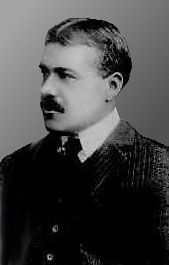
This should give you some idea of the realities of being a prolific, venerable, prize-winning and (perhaps most importantly) in print author of horror fiction: in 2000, or 2001, thereabouts, Ramsey Campbell, in order to supplement his income, took a job as a bookseller at his local Borders bookstore. I found this out when I read the acknowledgements page of the Campbell novel that grew out of that experience, The Overnight. I was stunned, and even alarmed, when I read that. As a reader of, and about, horror fiction, I've always been aware of Campbell's name. If you don't read horror fiction at all, you still know who Stephen King is, and maybe Dean Koontz. If you're a little more aware of the genre, you also know Peter Straub and Clive Barker. But I would think that if all you can manage is a casual interest in horror, you're going to know who Ramsey Campbell is. He's been called a "horror writer's horror writer", he's won many prizes for individual novels and stories, as well as any number of lifetime achievement and Grand Master honors. And he still had to take a seasonal position at Borders.

Campbell's first novel was the strikingly titled The Doll Who Ate His Mother, in 1976 -- I have no idea what kind of a splash that novel made at the time, but I know that now it's held up as something of a classic (and it's a novel I really need to re-read). After several film novelizations written under a pseudonym, Campbell returned in 1979 with his second true novel, the also-strikingly-titled The Face That Must Die. From what I can tell, this novel is still regarded by many as Campbell's masterpiece. Of course, that title instantly conjures up visions of cheap science fiction and horror films from the 1950s and 60s -- perhaps Campbell's novel is about a scientist whose face was blown off in some sort of science-based mishap, and while his body died, his face lived on to destroy all who allowed the accident to occur. The Face That Must Die is sort of a strange title for this novel, because not only is it not like those old films, it's so unlike them that the fact that the title will ring that bell for many of its readers seems not to have occurred to Campbell.
What the novel is about is a man named Horridge, a paranoid loner with a bum leg who lives off his disability checks. He believes the world around him is going to rot, and Horridge blames foreigners, drugs, general permissiveness and, especially, homosexuals for this turn of events. He sees threat and mockery at almost every turn, and cant imagine why no one will do anything about it. Near the beginning of the novel, Horridge comes to believe that he might be able to contribute to the cause. In the papers, he's been reading about a string of murders. All of the victims appear to be homosexuals. Going about his daily business, he has cause to pass by a particular boarding house, and in the window of one of the rooms he sees a man's face. That face matches, as far as he's concerned, the police sketch of the face of the murderer. This is enough for Horridge, and he sets about trying to bring this man to justice, first by anonymously contacting the authorities, and later, when that doesn't work, through more extreme measures.

The face Horridge saw in the window belongs to Roy Craig. Craig is innocent of the murders, and he's also (and I just realized that this is a complete coincidence, used in part, excusably, by Campbell to get his plot moving) a homosexual. When Horridge begins making harrassing phone calls to Craig, the fact that the caller apparently knows about Craig's sexual proclivities weighs on Craig's psyche. But Roy Craig is not the protagonist of this novel, though I suspect he should have been. No, that role belongs to Cathy Gardner, a young woman who works at the local library, and is unhappily married to a drug-abusing pseudo-anarchist named Peter. They live in the same boarding house as Craig, and Campbell follows the unhappiness of their home life to almost the same degree that he charts Horridge's spin from paranoid delusion to murder. Of course, the lives of the Gardners eventually intersect with Horridge's, but Peter is obnoxious, and Cathy is a bit of a limp rag. I liked her far more than Peter, but hers is not an especially interesting head in which to spend time.

In any case, as I said, things eventually turn violent, which brings up two points. One, if this novel is going to be categorized by any genre, the "suspense" label seems far more appropriate to me. There are chases, situations where the reader knows something about a character that other characters sharing the scene don't know, long car rides at night where the driver is being forced by a razor-wielding madman to do his bidding...I guess it all depends on how far you're comfortable stretching the definition of the word "horror". In Peter Bogdanavich's wonderful film Targets, Boris Karloff, playing an aging horror film icon, points to a newspaper headline about a series of sniper killings, and says that his brand of high-toned Gothic horror is can't compare to this new kind of real-world horror. And maybe that was on Campbell's mind when he wrote it, but I have a sneaking suspicion that the The Face That Must Die was labeled horror because of the title, and because that's what Campbell writes, almost exclusively. It's also quite possible that my definition of "horror" is narrower than others.

The other point that the violent content of the novel brings up has to do with, well, violence. Up to this point in my reading for this project, violence as it's portrayed in horror has not been something I could really get into, because the stories haven't lent themselves to discussing the topic, but it's obviously a big subject, especially these days, when, for many people, violence is the point of the genre. The Face That Must Die allows me to kick things off, because, for all my problems with the novel (a little more on those in a bit), I have to say that Campbell excels here. One of the murders involves Horridge bashing in a character's head with a blunt object. Here is just about the extent of Campbell's description of that:

Then he struck until his arm was tired. He could tell he'd done enough, by a change in the quality of the blows.

This does two things: it succesfully forces the reader to imagine the awfulness of what has just been done, and it gives you an idea of Horridge's mind and how it effects his morality, how easily it allows him to kill.

The other murder is, in a way, considerably more violent, but still just as restrained. So many modern horror writers absolutely wallow in the minutiae of the killings they described, and it's gotten to the point where many of these writers have fooled themselves into believing that such writing is an essential part of the genre, even though when they are so diligently cataloguing the viscera, they're almost always aiming for the cheap seats. Now, sometimes that sort of writing is, in fact justified. Not only that, I freely admit here and now that I have been, and will be again, an occupant of those cheap seats. A deliberate occupant. But I don't fool myself about why I'm reading that novel, or watching that film, and I know that what I'm experiencing at those times is far more often than not a bastardization of the genre. If you want to get into why I like that stuff despite what would appear to be some very strong objections to it, well, that will probably be a topic for another post.

So Campbell's on his game in those sections of the book. Where the book falls apart for me is when he introduces the completely superfluous gimmick of giving us the same scene from different points of view. The first time Campbell does this -- which also happens to be the novel's first murder -- it actually plays quite well. But then again, we don't really get the whole scene twice. When the first character's point of view ends (and you can imagine at what point it ends), we switch to the other character. There is no repeat of information. Every other time Campbell does this, however, there's no pay-off. The second murder is written the same way, with the result that Campbell ends up telling the reader things we already knew. Later, Campbell treats us to a lugubrious chase (for lack of a better word) that ends with no confrontation of any sort. Okay, fine, but why does Campbell feel the need to essentially give us the entire anti-climactic chase again? And all told, this takes up between 20 to 30 pages. Absolutely baffling.

Then the book ends with a long, by-the-numbers, but, nevertheless, occasionally hard to follow climactic showdown, and I found myself putting the book down with considerable disappointment. There was a reasonably well-done epilogue that added a bit of a sting to what had just preceded it, but in the end I was left with the same impression of Campbell that I've always had, which is that he's a very talented writer who doesn't recognize his own weaknesses, and who complicates his novels with occasional gimmicks and turgid prose. He would benefit from a much clearer eye.

Friday, October 3, 2008

The Kind of Face You SLASH!: Day 3 - We Mean What You Read

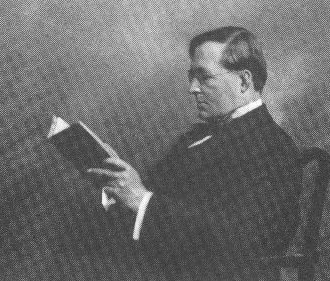
Using the "about the author" page from my Penguin Classics edition of M. R. James's The Haunted Dolls' House and Other Ghost Stories as my only reference (volume two of his complete horror stories), I am able to discover that, in addition to writing the fiction for which he is now famous, James can also boast the following accomplishments: he was a fellow, dean, tutor and provost at various times in his life at King's College, Cambridge; he was the director of the Fitzwilliam Museum in Cambridge; he became the provost at Eton college in 1918, a post he heald until his death in 1936; he wrote several works of scholarship over the years, covering topics such as "biblical apocrypha" and medieval manuscripts; he also wrote an autobiography called Eton and King's, which was published in 1926.

Reading that (and taking special note of the title of his autobiography), you might get the sense that the ghost stories whose fame keeps his name alive, were maybe not the most important thing in James's life. And you'd be right. My understanding of how James got into the ghost story business is that he was an enthusiastic participant in the English tradition of telling ghost stories to family and friends during the Christmas season. Having a fine imagination, and being a skilled writer, James turned out to be especially good at this, and so he took to writing down these stories, and eventually publishing them.

And he did indeed write many very good stories. I commend to your attention, among others, "Casting the Runes", "The Ash-Tree" and "The Mezzotint". But I would also suggest that you don't read too many of these stories at once, because I think you will find, as I did last year, that James's frivolous dealings with the horror genre might become apparent to you. If you're not especially invested in the genre, this probably won't bother you too much, but since I clearly am, I find the sameness of some of these stories, as well as a tendency to tie things up (not always too neatly, thankfully) through expository dialogue to be pretty frustrating. If only he'd cared more! He was so good at this, up to a point, that just a little more emotional investment in these stories could have...what, made them immortal? They already are, and many, many horror enthusiasts consider them among the best stories the genre has ever produced. And I suppose they are. I just wish they'd been written by someone who genuinely considered himself a horror writer.

For today's selections, I have picked James's "The Haunted Dolls' House", as well as another story by a different writer who I will get to shortly. The James story is about exactly what it claims: a man named Chittenden has in his possession a dolls' house of extraordinary quality, which he sells at a very low price -- so low that the buyer would have been suspicious had he not believed he was outsmarting the seller -- to a man named Mr. Dillet. After selling the dolls' house, Mr. Chittenden speaks to his wife:

"It's gone," he said."

"Thank God for that!" said Mrs. Chittenden, putting down the teapot. "Mr. Dillet, was it?"

"Yes, it was."

"Well, I'd sooner it was him than another."

"Oh, I don't know; he ain't a bad feller, my dear."

"Maybe not, but in my opinion he'd be none the worse for a bit of a shake up."

And a shake up is what Mr. Dillet has in store for him, because that night, after he's set up the dolls' house and gone to sleep, he's awoken by strange going's-on within the miniature house. As Mr. Dillet watches, he notices the dolls, who now look simply like tiny people, move about and enact some rather dark schemes. Not all of what goes on there is clear to Mr. Dillet, but it seems pretty clear that a murder, and possibly more than one, has taken place. The next morning, Mr. Dillet commiserates with Mr. Chittenden, does a little investigating, finds out some things, some spoilers happen, and that's it.

If I seem to be arrogantly dismissing a writer who is considered one of the giants of the horror genre, I really don't mean to be. James had great gifts as a writer: he was economical, funny, imaginative, and gave his stories a great sense of strangeness. The problem is simply that by the end of many of his stories, I got the feeling that he would rather be doing other things. He had a full life outside of this genre. This was a hobby to him. He was an expert hobbyist, but a hobbyist nonetheless.

One of his many devotee's is a writer considered to be one of the very best in modern horror, a Liverpudlian named Ramsey Campbell. In the story notes to his collection Waking Nightmares, Campbell talks about being asked to write a traditional ghost story for an anthology:

Now, I was becoming convinced (and still am) that many of today's horror writers are unaware of the traditions of their field. Indeed, one course on writing horror advises its students to avoid learning from the old masters, as if there aren't already too many writers who appear to have read no fiction older than themselves. I therefore welcomed the chance to demonstrate that the techniques employed by M. R. James are as valid as ever.

I'd like to know the name of the person running the course he talks about, so I can punch that person in the stomach. Because, despite my reservations about M. R. James, he was gifted, and much better, in many ways, than the vast majority of horror writers who have succeeded him, especially those working today. Campbell uses the word "techniques", and I'm not sure I can describe this as that, but James at his best (which "The Haunted Dolls' House" isn't) is able to draw the reader along with little mysterious touches to his stories that build both in size and strangeness until the reveal out-bizarres everything that went before, and, hopefully, leaves the reader more chilled by the solution than he was the build-up. Nowadays, the "solution" to horror stories and novels renders all that build-up irrelevent, because the point to which it was all leading is boring, and rote, and a waste of time.

The story Campbell ended up with is called "The Guide", and it's about an old man named Kew who is vacationing in the Suffolk and Norfolk area of England with his daughter and her family. Kew, as it happens, is a great fan of M. R. James, and he spends a fair chunk of his vacation trying to locate a collection of his ghost stories. Oddly enough, he does find a book by James, but it turns out to be a guidebook James wrote to the very area in which Kew is vacationing (James really did write such a book). Seeing this as better than nothing, Kew buys the book, only to find mysterious scribbles in the book's margines:

churchyard on the cliff -- my old parish.

and

There was a man so versed in the black arts that he was able to bide his time until the elements should open his grave...

The guidebook is a very old edition, and Kew begins to wonder if the scribbles, which he gradually finds it easier to decipher, might not have been made by James himself, perhaps as notes to a story he never completed. Using the guidebook, and the clues in the notes, Kew gets his family to drop him off in the area where he believes the aforementioned "churchyard on the cliff" to be located. He meets an innkeeper, finds the church, someone who might be a priest, and something else entirely.

The ending to this story is very unnerving, and I think this is one of the most successful stories I've read by Campbell. I've read a handful of his stories, as well as three novels, and I've always had a hard time with him, because to further my frustrations with this genre, Campbell -- who is incredibly smart about horror -- is twice as sincere about this kind of fiction than James, while at the same time being half the writer. For example, am I the only person who finds this passage more than a little sloppy?

It seemed he had no choice, for his body was audibly withering, a process which dragged his head down to show him what had become of him. Barely in time, his cry awakened him.

Him him him. His his. That whole thing needs to be recast, I think. Or this:

...he let the book fall on the grass, where it fell open at the scribbled page.

Why not, at least, "dropped" instead of "fell"? And I don't think I'm picking nits, here.

I'll get into Campbell more in a day or two. I'll be finished with his novel The Face That Must Die sometime this weekend, and with that novel, whatever I may finally think of it (to be fair, it's very intriguing so far) I will have made the leap into the modern age of horror fiction. And we'll see how that goes.

Thursday, October 2, 2008

The Kind of Face You SLASH!: Day 2 - Have You Found the Yellow Sign?

Robert W. Chambers is remembered -- and I use that word very loosely -- for the five stories that made up his 1895 collection titled The King in Yellow. My 2004 edition of this book is called The King in Yellow and Other Horror Stories, which is misleading in at least two different ways, in that there is no story in the book called "The King in Yellow", and the stories included here beyond the original five are, I'm told, not all part of the horror genre. I'm taking the second part of this on faith, though, because I've only read two of the stories, both from that original group of five: "The Yellow Sign", which I chose because it's famous, as far as Chambers's work goes; and "In the Court of the Dragon", which I chose because it's short, and the title intrigued me.

Judging by these two stories, Chambers was a very talented writer who deserves a bigger audience these days. He's similar to Lovecraft -- at least these horror stories are -- because where Lovecraft wrote about a book called The Necronomicon by the mad monk Abdul Al-hazred, which could be used to summon the Great Old Ones, Chambers has his own ominous and mysterious book called, that's right, The King in Yellow. The exact purpose of this book is unclear from my reading so far, and to me that's a plus.

In "The Yellow Sign", a painter named Scott, who lives in New York and has a platonic relationship with his favorite nude model, Tessie, notices one morning a disturbingly soft and pale looking man standing guard outside of a church located across from Scott's apartment. In the course of the story, Scott will learn to his dismay that Tessie has fallen in love with him, that the church's pale watchman lost a finger apparently more easily than one would think possible, and that both he and Tessie have started seeing this man in their dreams, dreams that revolve around waking death and funerals.When the book The King in Yellow makes its appearance in the story, it does so with no context, at least for the reader, but Scott knows the book:

"What is it?" I asked.

"The King in Yellow."

I was dumbfounded. Who had placed it there? How came it in my rooms? I had long ago decided that I should never open that book, and nothing on earth could have persuaded me to buy it. Fearful lest curiosity might tempt me to open it, I had never even looked at it in bookstores. If I ever had had any curiosity to read it, the awful tragedy of young Castaigne, whom I knew, prevented me from exploring its wicked pages.

Again, this is the first the reader knows of this horrible book, and we've never heard of Castaigne, either.

It is my belief that, by and large, the less the reader learns about the frightening goings-on in a given horror story, the more effective that story is going to be. I was left to imagine a sort of vague history, or meaning, or something, about this book, and about the King in Yellow himself. I couldn't explain that history to you, because it's vague, but it heightened the sense of dread considerably. This is why horror works best in the short story form, and the ignorance of this idea is at least one of the reasons why horror novels have gotten so ridiculously bloated over the years.

"In the Court of the Dragon" is a very short story, and a bit more standard-issue than "The Yellow Sign". It involves a nameless narrator who, while in church one day, appears to be the only person in the congregation to hear the church's organ player switch from traditional playing to a kind of mad discordance. This leads him out of the church, where he begins to see a man, who he believes means him harm, at every turn. We learn that our narrator has a dark past, and that elements from the previous story are at play here, as well.

Two things about this story: the fact that the two stories are unconnected except for this one element, which happens to provide the horror of the story (no fair guessing what this element is), indicates that Chambers had an ambition to link his fiction similar to Lovecraft's; and, the fact that "In the Court of the Dragon" takes place in Paris, and "The Yellow Sign" takes place in New York, implies that none of us are safe...

A curious thing about Chambers is that these five stories make up almost his entire output in the horror genre. He was evidently an extremely prolific writer, and, in his day, a bestselling one. I don't know anything about him beyond that, but it somehow makes these stories feel creepier, as though he were compelled to get this dark vision out of him before he could return to his regular work.

Anyway, this is good stuff. Look for it.

Wednesday, October 1, 2008

The Kind of Face You SLASH! Day 1: Distorted with Epileptic and Reverberant Laughter

Henry James’s The Turn of the Screw is primarily known for two things: being a classic – some would say masterful – example of the traditional Victorian ghost story; and for being a classic – SWSM -- example of a story that only pretends to be a traditional Victorian ghost story, but whose supernatural elements can, in fact, be explained away as the manifestations of the narrator’s broken psyche.

I think it’s a ghost story.

Before I explain why I think that, first let me provide a synopsis: a man named Douglas promises a group of friends, all of whom have been trading ghost stories, that he has a story to beat them all, and it’s true, to boot. It seems he once knew a woman who was hired by a man to be the governess to his niece and nephew, whose parents are deceased. This man was completely indifferent to the well-being of these children – named Flora and Miles – but had just enough sense of responsibility to be willing to pay someone else to care.

And here Douglas hands the reins of the story over to the governess herself, in the form of a letter (a really, really long letter) she sent to him describing the horrific events she experienced during her time at Bly, the house where the children live. Fairly soon, the governess realizes that something’s a bit off around Bly. The children are wonderful – cute, smart, loving, all of that. But she’s become pretty certain that she’s seeing ghosts. She sees them on the grounds at night, through windows, on one of Bly’s huge towers. There are two of them, a man and woman, and when the governess describes their appearance to the housekeeper, Mrs. Grose, she learns that they very closely resemble Miss Jessel and Peter Quint, two former servants of Bly, who, I hardly think I need to tell you, are both dead.

Miss Jessel was the previous governess, and Quint was a clever man who nevertheless had developed a reputation as a man who harbored many dark, perverse secrets, none of which are specified, but which seemed to be largely sexual in nature (and may have included pedophilia). And the two of them apparently had some sort of relationship when they were alive. Add to this the fact that not only is the new governess seeing these two creep around the grounds (and, eventually, the house), but she’s become convinced that both Miles and Flora are seeing them, too, but are hiding this knowledge from her and Mrs. Grose.

So, why do some people who read this novella believe that the ghosts are real, and others don’t? I think the problem begins with syntax. My own experience with the work of Henry James, before reading The Turn of the Screw, was limited to having read Daisy Miller and Washington Square last year. Both of those works were written before James entered his difficult, experimental phase, and the prose of both is fairly straightforward. The Turn of the Screw was written after James started to turn his sentences inside out, but that is only seen in the main part of the story, the part told by the governess in first person. The first part, which is told in third person and describes Douglas’s build up to the main story, is as straightforward as Daisy Miller. But when we get into the governess’s head, the sentences can get a little odd:

The homage of which they were so lavish succeeded, in truth, for my nerves, quite as well as if I never appeared to myself, as I may say, literally to catch them at a purpose in it.

I admit, that one’s a bit tough. Still, I think I understand it: even though at this point in the story the governess is sure that the children are hiding dark and ominous secrets, they are still able to not only present themselves as a pair of wonderful, loving, generous children on the surface, but to do so in way that seems neither forced nor insincere. Elsewhere, James ups the ante with this:


I recollect counting over perfectly the possibilities, reminding myself that nothing was more natural for instance than the appearance of one of the men about the place, or even of a messenger, a postman or a tradesman’s boy, from the village. That reminder had as little effect on my practical certitude as I was conscious – still even without looking – of its having upon the character and attitude of our visitor. Nothing was more natural than that these things should be the other things they absolutely were not.

So, clearly at this point the governess has come to believe that…wait, hold on, what?? Nothing was more natural than that these things should be the other things they were absolutely not?? I…I don’t know what that sentence means. And I’ve given you a reasonable amount of context to allow you to take your own stab at deciphering it. I gave up long ago.

Is this tortured syntax James’s way of clueing in his readers to the fact that all is not well inside the governess’s head? Maybe. Or maybe it’s simply his way of distinguishing her voice from the voice in the novella’s first section. Not only that, but how is the governess able to so closely describe the appearances of both Miss Jessel and Peter Quint, two people she’s never seen before? I also believe that the ending of the story, which I’ll avoid spoiling, is impossible to explain, using evidence provided by James, without taking the supernatural element at face value. Yes, the only people in the room are the governess and the child, and we only get the governess’s point of view. But if what happens isn’t what the governess describes, then what in the world is it? I have come across one interpretation, but it is even more tortuous than that sentence I quoted in italics earlier.

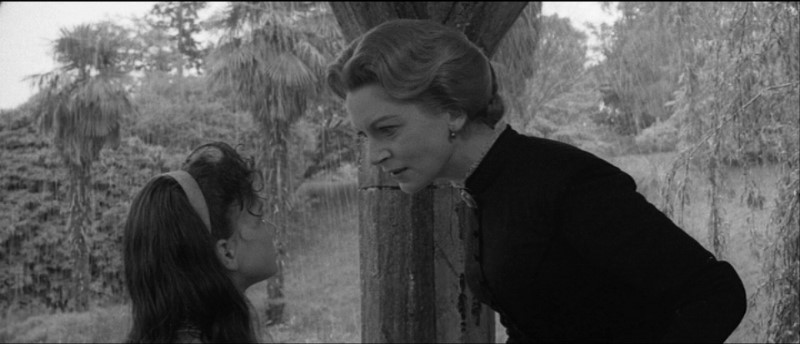
In any event, I thought The Turn of the Screw was fairly strong. A friend of mine, who is much better read in James than I am, actually warned me away from it, but I was able, with a minimum of wincing and rapid blinking, to push my way through it, and I honestly found the last sentence to be pretty devastating. Not only that, but now I can finally watch The Innocents.

-------------------------------------------------------------------------------


H. P. Lovecraft is widely considered to be on of the greatest writers of horror fiction in the 20th century. Whether or not you agree with that, it would be hard to argue that he isn’t one of the most influential. His Cthulhu stories – most of his work falls under that label – are, at least in theory, the essence of horror. They describe mankind as a race whose days are numbered, because the Great Old Ones, the demonic gods who once rampaged through the universe, led by the massive, be-tentacled Chthulhu, are waking up, and when they do they will devour us all. For Thomas Ligotti, a modern horror writer whose work I will be talking about later this month, Cthulhu and the Great Old Ones are metaphors for the utter wastefulness and uselessness of life, as well as the cold, shrieking inevitability of death.

First off, happy Wednesday, everybody. Second, I have to admit that I agree with Ligotti on this. It would be very difficult to read any of Lovecraft’s stories, including “Pickman’s Model” and “The Rats in the Walls” (the two stories ostensibly under discussion here) and not come away with the impression that Lovecraft was a man who had several of what we today might refer to as “issues”.

The problem with Lovecraft, though, is that even though he does have strengths as a writer, his weakness can be incredibly glaring. Take “The Rats in the Walls”, for instance. This tells the story of an American man, our narrator, who buys back his European family home, after the death of his son in World War I and the discovery, by that son, that their family roots run deep and dark, and their history is full of murder and death-cult-based blood orgies. In fact, that the family name itself is feared throughout the continent. And one can easily see why:


Anchester had been the camp of the third Augustan legion, as many remains attest, and it was said that the temple of Cybele was splendid and thronged with worshippers who performed nameless ceremonies at the bidding of a Phrygian priest.

This in itself isn’t really bad, but ten pages of it gets a bit rich. And at fifteen pages, that’s what this story is; that and the narrator, after having settled into his new home with his cat (whose name is so racist I won’t repeat it here), starts to hear the sound of rats scuttling behind the, you know walls. Well, that’s what the story is for ten pages. The last five involves the narrator, his friend, and seven experts plumbing the depths of the basements and sub-basements of this enormous house, all the while their discoveries becoming more disturbing, until we finally get to the moment that displays Lovecraft’s greatest gift: his sense of the awe-inspiring nature of otherworldly, mind-bending, epic horror.

But ultimately, “The Rats in the Walls” didn’t work for me. It was too much of a chore. “Pickman’s Model”, on the other hand, is more successful. The narrator of this story is a member of the Art World (further details are neither forthcoming or needed), and we meet him as he's preparing to describe to his friend why he has severed all personal and professional ties with an artist named Pickman. It all has to do with the fact that Pickman, a "weird" artist, has been churning out one painting after another of a nature so immensely disturbing that not only has our narrator distanced himself from the man and his work, but, we find out, he is merely the latest in a long line of critics, curators and fellow artists to do so. Pickman's work depicts things that could not and should not exist in the real world, but is so skilled at doing so that others have a hard time even looking at these paintings without feeling their minds beginning to snap a little. People tend to go mad pretty easily in Lovecraft stories...

There was one thing called 'The Lesson'- Heaven pity me, that I ever saw it! Listen- can you fancy a squatting circle of nameless dog-like things in a churchyard teaching a small child how to feed like themselves? The price of a changeling, I suppose- you know the old myth about how the weird people leave their spawn in cradles in exchange for the human babes they steal. Pickman was showing what happens to those stolen babes- how they grow up- and then I began to see a hideous relationship in the faces of the human and non-human figures. He was, in all his gradations of morbidity between the frankly non-human and the degradedly human, establishing a sardonic linkage and evolution. The dog-things were developed from mortals!

This story is about seven pages long, so best to end things here, but I thought this story was very strong, more intimate and of a smaller scale than I'm used to from Lovecraft. It plays out in the manner of a Twilight Zone episode, though it obviously pre-dates that show by decades. The other difference between this story and The Twilight Zone is that, on the show, Rod Serling was sincere about his message, whereas Lovecraft has no message to impart, and is instead sincere about the horror.

Tuesday, September 30, 2008

Horror Month: A Prologue

Okay, so, this is how this is going to work: I'm going to read a bunch of horror fiction and then write about it. If you've read my posts talking about this project, then you already knew that, but, unfortunately, that really is what this is going to be.

I say "unfortunately" because while I acknowledge that it would be nice if I could have some over-arching theme, and in fact I made -- and am even still making -- some attempt to group these stories and novels in a manner that will connect them in more specific ways than the simple fact that they all belong to the same genre, that's going to be nearly impossible, I think. This is due entirely to the fact that I haven't read any of these stories and novels before, and so I don't know what their themes are, or how they historically fit into the horror genre, or anything like that. I can read a bunch of stories written during the same basic time period (which I have done for my first group of selections), or that are part of the same horror sub-genre (for instance, I have a novel and anthology of stories that revolve around movies), or I can pair authors, one of whom has influenced the other. And I'm going to do all of that, but it'll still be a crap-shoot, because I won't really know what I'm getting into from story to story, novel to novel.

So, this might turn out to read more like a journal of my experience, and might even devolve into a rant wherein I moan about how this was a really horrible idea. Because, really, horror -- as much as I sometimes love it -- is a terribly frustrating genre. Its full artistic potential is almost never met; writers are too often influenced by bad movies they grew up with, and labor under the belief that ridiculously graphic violence is the same thing as horror.

I don't mean to sound too negative, though. After all, I did my best to pick novels and stories from my collection that I thought I had a better than fair chance of enjoying (though I did pick some less promising stuff in order to write a whole "state of the genre" thing). But I have a love-hate relationship to this stuff, and I don't really know how this is going to work out for me. So, fingers crossed, everybody, because I begin tomorrow.

Oh, and if anybody can come up with a title for this whole business, let me know, because I got nothin'.

Monday, September 29, 2008

Faces of Horror 2


Let’s say it once and for all: Poe and Lovecraft—not to mention a Bruno Schulz or a Franz Kafka—were what the world at large would consider extremely disturbed individuals. And most people who are that disturbed are not able to create works of fiction. These and other names I could mention are people who are just on the cusp of total psychological derangement. Sometimes they cross over and fall into the province of “outsider artists.” That’s where the future development of horror fiction lies—in the next person who is almost too emotionally and psychologically damaged to live in the world but not too damaged to produce fiction.

-Thomas Ligotti


This is the best picture of Ligotti available on the internet. Sorry...

Saturday, September 27, 2008

Followers