Showing posts with label Donald E. Westlake. Show all posts

Monday, May 3, 2010

Affinity #21

.
The Collection Project Film of the Day:
.
For many years, the sole draw for me of the 1986 sort-of-horror-but-mostly-suspense film The Stepfather (d. Joseph Ruben) was the fact that it was written by Donald E. Westlake, creator of the amoral thief named Parker, and author of any number of classic, brilliant crime novels. When I finally saw the film last year, after it was released, at last, on DVD to coincide with a quickly forgotten remake, I can't pretend that I wasn't let down. Though Westlake gets the lone screenwriting credit, it's no secret that Ruben sort of messed with it afterwards, and it's sort of hard not the think that the basically rote thriller elements of the last third came from Ruben, not Westlake (though maybe that's wishful thinking on my part). Not that Ruben doesn't do a good job actually directing the film -- the reveal of that massacred family at the beginning is superb, for instance -- but the more of Westlake's fiction I read, the more I can't help looking at The Stepfather and thinking "if only", "what if", and etc.
.
However, the other thing that happened by the time I got around to watching the film was that I'd become a huge fan of the film's star, Terry O'Quinn, who for the past six years has been mesmerizing on a weekly basis on TV's Lost. O'Quinn is a sublime, effortless actor, and his presence in The Stepfather was almost as big an incentive to watch the film as Westlake's involvement. Unlike Westlake's work, however, O'Quinn's performance is pretty much an unqualified success. The big moment in The Stepfather is towards the end, when Jerry Blake, O'Quinn's character, makes one slip-up while talking to his wife (Shelley Hack) that brings his whole secret world -- as a man who marries into father- and husbandless families, whom he then butchers when his badly skewed, idyllic view of how that family should operate doesn't pan out -- comes crashing down around him. O'Quinn's signature line at that moment ("Waaaait a minute -- who am I here?") is so good, his delivery so beautifully tweaked to expose not only Blake's diseased brain, which we already knew about anyway, but the amount of stuff he keeps in that brain, the stuff he needs to keep straight in order to function, and also the resignation that his plans for moving on are going to have to be speeded up, that the producers of the film, or whoever, did what stupid people always do and blew their film's iconic moment by slapping it on the poster.
.
Oh well. It still works like gangbusters, and represents to me one of the finest moments of writing, but primarily of acting, in the psycho-thriller genre, and further points to what The Stepfather might have been had some people not been concerned that the film as originally laid out to them, before the cameras rolled, didn't resemble closely enough all the movies they were trying to cash in on.
.
Ah, I'm being cynical. Terry O'Quinn is awesome.

Monday, March 1, 2010

Everybody Dies

Of all of Donald E. Westlake's fiction, Levine feels like a bit of a lost book. This is maybe not surprising when you consider that it is, essentially, a series of six long short stories (or "novelettes", which is a term that I don't think anyone really uses anymore, but which Westlake uses to describe these stories in his very interesting introduction to the book) about a Brooklyn plainclothes detective named Abraham Levine. So it's not quite a novel, and not "just" a collection of stories, making it harder, I imagine, for some people to latch onto and categorize. But it's pretty terrific stuff. Abraham Levine is in his 50s, and has a bad heart. He's also terrified that his heart will give out before it should, and this effects his relationship to life and death, particularly the brand of death he encounters on his job. What particularly infuriates him is when he sees anyone treat life as something frivolous, whether the life in question is someone else's, or their own. Life is something Levine is sure he's soon to be without, and the idea that anybody can take such a gift lightly is horrifying to him.
.
Five of the six stories were written in the late 1950s and early 1960s, and each one deals with a different kind of crime, and a different kind of death -- suicide, murder, Levine's killing of a suspect, and so on. In each one, Levine's heart seems to be getting worse -- he discovers a way to block his hearing and listen directly to his heartbeat, and since that heartbeat is already irregular, he focuses on the number of beats he can hear before it skips one, and he dreads the moment when it will skip two, because that means lights out.
.
In his introduction, Westlake talks about his relationship to these unusual group of stories, and to the character, and how those stories changed over the years. The fifth story, "The Death of a Bum", is probably the most interesting of the bunch, in that it focuses on an aspect of police work that almost never gets dramatized, because nobody ever thinks there's any drama in it. Westlake knew better, though he also knew it would never sell to any of the normal mystery magazines (because it's not a mystery), so while he could write it free of any thought of markets or audiences, it also took three years to finally place it. By that time, he felt he'd lost momentum with the Levine stories.
.
However, in the 1980s, Westlake was approached by Otto Penzler about putting together a book of the Levine stories, but was told he needed to write one more, which he did. "After I'm Gone" was written in 1984, and it's the best written piece in the book -- obviously, by that time Westlake had matured as an artist quite a bit, but he was also the same age as Levine. The first five stories were written by a guy in his 20s about a guy in his 50s, but in "After I'm Gone", Westlake and Levine were contemporaries. As a story, "After I'm Gone" loses something to "The Death of a Bum", and, in fact, each of the five early stories has, as stories, a more unique kick to their plots than "After I'm Gone" (although "The Sound of Murder" is a bit much, tipping over almost into Gothic territory, and isn't quite in keeping with the every-day realism of the rest of the book). But the last story has a brilliant final page, sad and sardonic and moving in the most off-hand kind of way. After reading about the death-obsessed Abraham Levine for 150 pages before reaching this final piece, it's not hard to guess what the last page is about, but Westlake makes it hurt anyway.
.
This may sound like faint praise, but reading Levine made me feel like I was watching episodes of an old cop show from the 50s, a particularly ambitious and original one that, due to its somber and unique take on cop dramas, only got six episodes before it got yanked. And it's a show everybody kind of remembers, and which sometimes still gets shown on TV, and which everybody wishes had gotten a longer run.

Sunday, February 28, 2010

Good Eggs

It has been a relaxing weekend, and it is almost over. This saddens me. I may sill try to cram in a viewing of The Devil's Rain, but pretty much my hefty chunk of weekend downtime is at an end. Bummed though I am, I can't help but think of Levine, a book by Donald E. Westlake that I spent a fair amount of the aforementioned weekend reading, which features, at the end, a Medical Examiner responding to a cop's statement that "[t]he wrong ones die" with this
observation: "Everybody dies...It's a thing I've noticed."

All of which is to say that things sure could be worse. And along with that fact is the feeling, possibly inaccurate, that I've done a fair bit of writing on this blog lately, and so I don't feel terribly compelled to write anything of substance right now, as I didn't, you may have noticed, yesterday or the day before. But I'm cool with that, and I'm not usually. The difference today is that, unlike previous fallow periods, I feel pretty confident that the compulsion will return very shortly, like in say a day or two.

In the meantime, I'm going to take a page from Glenn Kenny's book and post a picture of a meal I ate today, one my wife cooked and which we both thoroughly enjoyed. It's called "egg and bacon pizza", or something like that, but there's not much "pizza" going on here -- all it is, is somebody's brand new way to make eggs even better to eat. As if such a thing were possible! But it was good, as you can probably imagine, looking at that picture, and now I think that The Devil's Rain sounds like a capital idea. Hope everyone had a good weekend, and I will talk to you in a couple of days.

Thursday, January 8, 2009

The Things that Never Occur to You

From an AV Club interview with Donald E. Westlake, from 2006:

AVC: ...It's more than 20 novels into the series now, and we still don't know [Parker's] first name.

DW: Well, he wasn't supposed to be a series. He was supposed to be one book, and if he was only going to be in one book, I didn't worry about it. And then an editor at Pocket Books said "Write more books about him." So I didn't go back at that point and give him a first name. If I'd known he would've been a series, I would've done two things differently. First, I would've given him a first name—I don't know what the hell it would be, maybe Frank—but I probably wouldn't have named him Parker, because that means for 27 books, I've had to find some other way to say, "Parker parked the car."

Friday, January 2, 2009

RIP - Donald E. Westlake

What a lousy way to start the year.

Donald E. Westlake, who was, to my mind, the greatest crime writer this country ever produced, died Wednesday at the age of 75. That's not such a bad age at which to go out, but I honestly thought he was at least ten years older than that, due to the fact that he was so incredibly prolific. He wrote something like one hundred books, and had shown no signs of stopping. In the last few years, he had revived his series of novels about Parker (written under the pseudonym "Richard Stark"), and this year has another non-Parker novel, Get Real scheduled for release.

I find it difficult, sometimes, to describe what it is I like so much about a given writer, and the work of someone like Westlake is the hardest for me to dissect. At his best, his writing was completely unadorned, and there are those who mistakenly believe that such writing indicates that the author is incapable of writing any other way. This may be true of someone like, say, Dan Brown (okay, it absolutely is true of Dan Brown), but read The Da Vinci code side-by-side with The Hunter, Westlake's first Parker novel, and you will quickly see that Brown is flailing, and Westlake is incredibly precise. He stripped his sentences down to achieve a very specific effect. In The Hunter, the prose needed to be as cold, focused and unfeeling as Parker was.

In truth, I've only read around ten of Westlake's books, which is a tiny fraction of his output. My own favorites among those I've read are The Ax, from 1997, and The Hook, from 2000. The Ax is a strange novel about an ordinary man who gets laid off from his job in the paper industry, and devises a plan to get a new job by murdering his competition. I've heard this novel described as a satire, and I can see that, in that its premise is easily bought in that context, but I don't remember it being very funny, which I don't mean as a knock. Meanwhile, The Hook, a play on Strangers on a Train, describes a man who feels he must murder a stranger in order to remove himself from a desperate situation. After he has committed the murder, he's a bit bemused to find that he's not really bothered by what he has done. Westlake was especially great at that: depicting people who thought they were normal, and basically moral, suddenly discovering that they are actually remorseless and cold-blooded.

Unlike many of his talented compatriates, Westlake did enjoy some critical respect -- I remember reading an absolute rave of The Ax in The Washington Post by Michael Dirda. He even had great support from a capital "L" and capital "W" Literary Writer: Booker Prize-winning Irish writer John Banville is a huge fan of Westlake's (he's Martin Amis to Westlake's Elmore Leonard), calling his Parker novels "among the most poised and polished fictions of their time and, in fact, of any time." A friend of mine saw Banville speak once, and he told me that Banville talked about the thrill he felt when he was finally able to meet Westlake. I can imagine how he must have felt. For more from Banville on Westlake, click here.

Just so you know, Westlake, like a lot of genre writers who got started int he plup era, didn't stop at dark crime stories. He wrote adventure novels (Kahawa, High Adventure), science fiction (Tomorrow's Crimes), comedy (A Likely Story, his Dortmunder series, of which the aforementioned Get Real is apparently the last book), even a bizarre Apocalyptic fantasy (the brilliant Humans). So pick your poison, go on-line, and find something to read by Donald Westlake. He was a great writer. I'm going to miss him.

Thursday, December 18, 2008

Top Books of the Year

I haven't seen enough new films to work up a best-of list, and I stopped keeping a list of all the films, from whatever year, I saw in 2008 awhile back. However, I do keep a running list of all the books I've read, so picking my favorite ten from that was relatively easy. Below, wouldn't you know it, I've posted the results. By the way, only two of these novels came out this year, but oh well. Live with it, suckers.

10. Brief Interviews with Hideous Men by David Foster Wallace

Foster's devestating suicide earlier this year spurred me to finally take a serious stab at his fiction. Following my usual pattern, I chose a collection of his short fiction. None of you know this, but I tried to hack out a whole post about this book, but the complexities, brilliance and occasionally infuriating gimmicks defeated me. This book is unlike anything else I've ever read. In all honesty, it's also not the sort of thing that would usually be a natural draw for me. But it's also clearly the work of a man who was feircely talented, incredibly smart, and, more likely than not, bound up too tightly inside his own head.

9. The Lambs of London by Peter Ackroyd

This novel tells the highly fictionalized story, based on fact, of Charles and Mary Lamb, two devotees of Shakespeare in 19th century London who, in Ackroyd's version of events, became involved with William Henry Ireland (another historical figure) best known for writing, among other things, entire plays which he was able, for a while, to pass off as lost works by Shakespeare. This book is quietly and darkly observant, and, by the end, more than a little chilling.

8. The Streets of Laredo by Larry McMurtry

I put off reading this sequel to McMurtry's masterful Lonesome Dove for, well, a really long time. I mean, it couldn't be as good as that first book, could it? McMurtry's just trying to soak up more of that sweet Lonesome Dove cash, isn't he? The answer to the first question is, "No, it's not." The answer to the second question is, "How the hell should I know?" But The Streets of Laredo is pretty great, whether you think it measures up to its predecessor or not. McMurtry's prose can be lean to a fault at times, but at other times, for long stretches, you have to wonder how he's able to do so much with so few words.

7. The Hunter by Richard Stark (Donald E. Westlake)

Finally -- finally! -- I was able to read the first book in the series upon which Donald Westlake's ultimate legacy will be based. The Hunter is his first novel (writing as Richard Stark) about Parker, a cold-blooded, amoral thief. Parker is a true anti-hero, in that nothing that he does can be considered morally good. If he lets someone live, it's only because killing them would cause him too much hassle. If he kills someone, he does so because letting them live would cause him more hassle. He's a stone cold bastard, but he's also smarter than everyone else. Westlake is a great writer, and The Hunter is a great place to start, if you want evidence of that fact. (Note: This year, I also read the second novel in this series, The Man with the Getaway Face. It wasn't as good as The Hunter, but it's still excellent.)

6. The Man in the Ceiling by Steve Rasnic Tem and Melanie Tem

The best book I read for my The Kind of Face You SLASH!! series.

5. The Cry of the Owl by Patricia Highsmith

I read this novel, my first Highsmith, around the beginning of the year, so it's hard now for me to summarize what I loved so much about it, both as a story and a piece of prose. But I did indeed love it very much. Like McMurtry, Highsmith tells her chilling story about everything going to hell for a small group of people in very spare language, completely free of pretense, which forces you to focus on what matters most: the people, and what's happening to them.

4. In the Garden of the North American Martyrs by Tobias Wolff

Another writer I read for the first time this year is Tobias Wolff. I'd been hearing about how great he supposedly is for a long time, and the sheer volume of it eventually wore me down to the point where I said, "Fine, goddammit, I'll read one of his stupid-ass books". The one I chose, one of his several collections of short stories, knocked me out. There are few writers, of the short story or any other kind of fiction, as precise as Wolff. There are even fewer for whom the word "perfect" would seem like anything other than sheer hyperbole. But Wolff acheives perfection m0re than once, in this collection alone. Here, read the brilliant Hunters in the Snow for yourself. Tell me I'm wrong.

3. Lush Life by Richard Price

Richard Price is one of America's greatest living writers. His mastery of dialogue is the equal of David Mamet's, and his observation of human behavior is as keen as any I've ever encountered. His last four novels can be roughly categorized as crime novels, but, while I bristle at the idea of calling them "more" than that, I would have to say that they are crime novels while also being several other things. Lush Life tells the story of a random, senseless murder and its investigation and consequences. If that sounds like old-hat to you, than you're going to miss out. Price is a genius, simple as that.

2. Old School by Tobias Wolff

Wolff is primarily a writer of short fiction, but a few years ago he did publish Old School, his "first" novel ("first" in the sense that it's actually his second, but it's the only one he's willing to acknowledge), about the narrator's experiences in a private school in the 1950s and 60s. Each year at this school, a distinguished writer is invited to speak to the students. Each year also brings with it a writing contest, the winner of which will be able to have a one-on-one meeting with the visiting author. Roughly speaking, the novel follows the narrator as he tries to win each contest, and an opportunity to meet, respectively, Robert Frost, Ayn Rand and Ernest Hemingway. Wolff proves with this that he should write more novels. It's really exquisite -- beautiful and funny, and it has one of the most moving final paragraphs I've read in a long time.

1. Outer Dark by Cormac McCarthy

See below. How's that for an anti-climax?

Friday, September 12, 2008

Ice Man

According to Amazon.com, this coming Monday is a day I’ve been waiting for a very long time. On that day (or thereabouts – Amazon isn’t always reliable about release dates) the first three novels by Richard Stark (aka Donald E. Westlake), about an ice-blooded thief named Parker, are being re-issued by the University of Chicago Press.
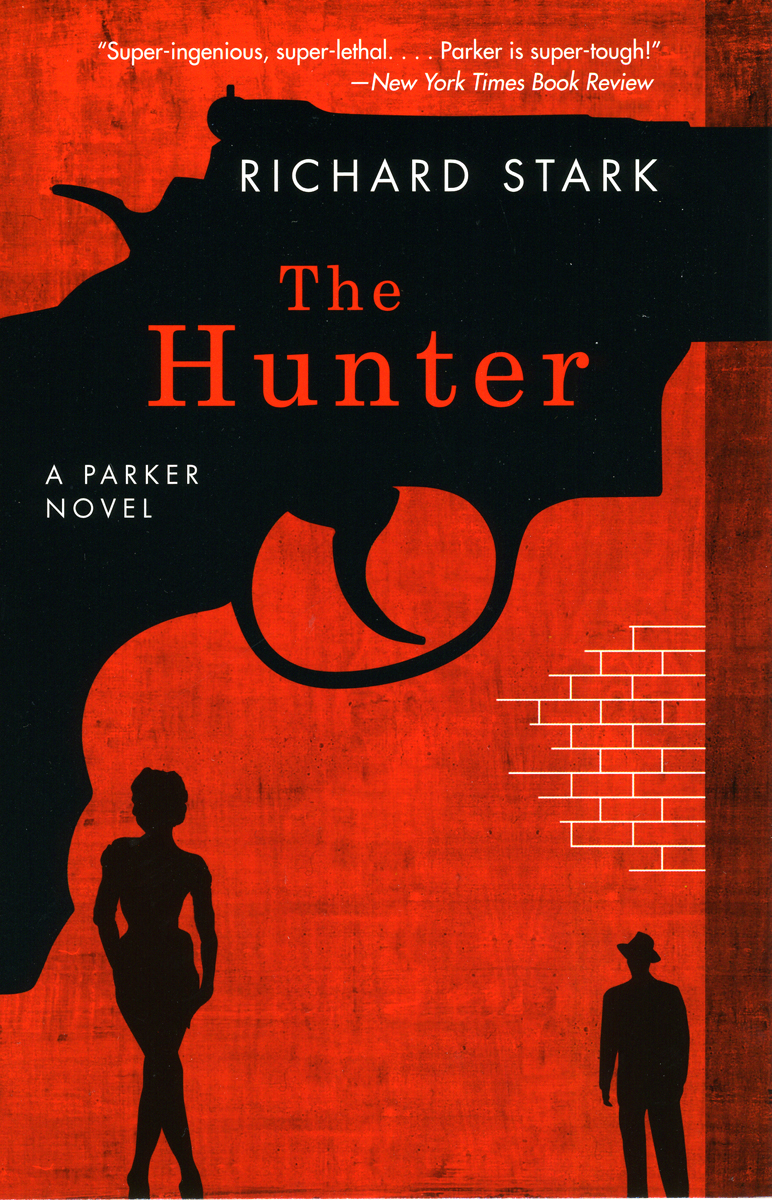
Under his own name, Westlake is probably best known as a writer of light caper novels featuring Dortmunder, but among fans of the hard-boiled crime genre, Westlake, and Stark (and Parker) carry great weight, and are rivaled in respect and acclaim perhaps only by Raymond Chandler. These books are crime fiction at its best, hardest, most pitiless and unsympathetic. Parker is a thief, professional and brutal. He's not the "one good thief", the kind of clever con-man you root for because he's smart and honorable in his own way, and besides everyone around him is far worse -- doing things like throwing old ladies at babies, distracting the police by setting fire to pandas, that sort of thing. No, Parker could probably be safely referred to as a scumbag, and you read these books because you know Westlake isn't going to blink. You know Westlake won't betray Parker.

Anyway, that's what I'm told. I've actually never read any of these novels. Oh, I've read Westlake before, and I think he's sensational (I particularly recommend The Hook and The Axe -- despite the titles, these are unconnected apart from certain thematic similarities), but I've never cracked any of the books upon which the bulk of his reputation is built. That's because they've almost all been out of print for the entire time I've been aware of them (which is a long time), and second-hand copies of the early books in the series can sell on Amazon for anywhere between thirty to seventy bucks. It's been frustrating, but I figured I could wait, all the while picking up the rare cheap Parker novel whenever I ran across one.

I look at this Monday as the day I can finally think of myself as a true connoisseur of the crime genre. I've been reading deep into the genre for many years, but I've always felt like a guy who walked around claiming to know more than a thing or two about a little writer you may have heard of by the name of Shakespeare, all the while concealing the shameful fact that I'd never read Hamlet (though I had seen those two movies they made from Hamlet, the ones starring Mel Gibson and Lee Marvin).

Okay, yes, I could have read any of the five or six Parker novels I've been fortunate enough to stumble across over the years (like Butcher's Moon -- $75 on Amazon, last I checked, bought by me for a buck at a thrift store in Nag's Head, NC), and reading the books out of order is a practice that has even been sanctioned by Booker Prize-winning Irish author John Banville, who, incidentally, recommends starting with The Jugger. But while I'm currently reading John D. MacDonald's Travis McGee series out of order, and finding that in this case the practice seems to be working out fine, I could never bring myself to dive into the middle of the Parker books like that. These are, supposedly, the best the genre has to offer, after all. The experience has to be as pure as I can make it.

So mark your calendars. Or just put a note on your fridge that says "Monday: Stark books. Also buy meat". Or whatever else it is you need to buy that day, I don't know. I'm not you. But anyway...Westlake. Stark. Parker. Monday. 'Twill be a great day.

PS - This post was supposed to mainly be about lesser known crime novels and writers that I wanted to bring to everyone's attention (while possibly taking a few pot-shots at those writers I feel are wildly overrated, George P. Pelecanos!), and now look what happened? It all plum got away from me. So I guess I'll have something to write about tomorrow. Take that, bloggers who at this particular moment are fresh out of ideas!

Followers