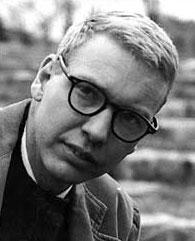
As always with Overshadowed, spoilers are in effect.
Go into just about any pool hall in the country, especially those frequented by casual players, and I'll bet you that you'll see the above image, enlarged, framed and hanging on the wall. That's because in 1961, Paul Newman played Fast Eddie Felson in Robert Rossen's film
The Hustler, and by virtue of being Paul Newman (which is not, by any means, to say Newman is the only thing the film has going for it) every man of a certain age across America who wasn't already devoted to the game of pool suddenly decided that maybe picking up a cue stick could be worth their time. If you learned how to play pool, and could play it well, you could make money. You could show your superiority over other men. You could take on a pose of world-weariness. You could be a man. The culture of pool hustling obviously already existed, but Rossen's film, and Newman's incredibly skilled and seductive performance, turned it into a fad. Of course, most fads -- frisbees, Pokemon -- don't require the level of practice and accomplishment that a person needs to really take part in serious pool, so the vast majority of the people who put their quarters on the table after seeing
The Hustler suddenly found themselves not living the life of Eddie Felson or Minnesota Fats, but, instead, merely discovered that they were the owner of a brand new hobby. Because once you've picked up the habit of shooting pool, you don't just drop it. You don't leave it behind when the next fad comes along. You might not be any good, but it's a damn good game to play. Even at the level of rank amateur, when shooting good pool -- good for
them, anyway -- a person can still feel that "
Nothing could be so clear or so simple or so excellent to do."
.That line's not from the film, and Paul Newman and Robert Rossen didn't create Felson or the film from scratch. The line is from the 1959 novel of the same name, by Walter Tevis.
The Hustler was Tevis's first novel, and he would only publish five more, and one collection of stories, before he passed away in 1984 at the age of 56. Curiously, four of his seven books are science fiction (including the collection), and three were adapted to the screen:
The Hustler,
The Color of Money, and, of all things,
The Man Who Fell to Earth. Focusing only on the first two, then it goes without saying that Tevis created not one, but two of the most enduring and iconic characters in post-War American fiction. There's Fast Eddie, of course, but also Minnesota Fats, a character given such presence by Jackie Gleason in the film that a professional pool hustler by the name of
Rudolf Wanderone claimed, disingenuously but with the apparent aid of Willie Mosconi -- pool great and technical adviser on the film -- that the character was
based on him (of course, this claim was made not after the novel came out, but in 1961, after the film was released). But the character of Fast Eddie Felson casts a big enough shadow over our culture that Tevis should be remembered for that alone. Yet, back where I'm from, there's a pool hall (two now, actually) called "Fast Eddie's", and I feel confident that if you were to walk in there and ask any ten people if they're a fan of Walter Tevis, ten out of ten times the response would be "Walter Who-vis?" Such is the power of cinema.
.Another odd facet of the
Hustler phenomenon is how the the story seems to want to dissuade the fakers, those who don't come by the lifestyle honestly. Actually, the film seems to want to dissuade everybody -- more on that later -- but even the novel, in delineating what it say

s are the two kinds of hustlers, says: "
The small-time men -- the scufflers, musclers, dollar jumpers -- prey in nibbles: on unwary but seldom wealthy drunks; schoolboys who aspire to what they take to be manhood; middle-aged men who aspire to what they take to be youthfulness... In other words, that means you. Still, everybody wants to be the best at something.
.Not that I need to tell you this, but the basic story of both the novel and the film is as follows: Eddie Felson, from Oakland, has just arrived in Chicago with his friend and financial backer Charlie (Myron McCormick in the film). Charlie is content with the profitable hustles they've been pulling up to this point, an example of which is beautifully illustrated in the first scene of the film, and the third chapter of the novel: pretending to be two traveling salesman, Charlie and Eddie go into a bar and start shooting pool. Eddie's no good sober, and even worse drunk, which is what he's steadily becoming. But he makes one amazing shot to win a game, and bets a skeptical Charlie that he can do it again. He fails, and wants to bet again. Charlie tells him to save his money, but the bartender wants in, even when the bet has been greatly increased. And, what do you know, Eddie makes the shot. Back in the car, Charlie takes his cut, and off they go. That's what Charlie wants. But Eddie believes that he's the best hustler in the country, or good enough to be though of as one of the best, and he wants to go to Chicago to prove it. Specifically, he wants to go to a particular pool hall (called Bennington's in the novel, and Ames in the film, which is just one of a number of apparently meaningless small changes) where many of the best hustlers congregate. In both versions of the story, he winds up playing Minnesota Fats at straight pool. He loses at first, but then he finds his groove, and at one point he finds himself ahead $18,000. Charlie wants him to quit now, but Eddie says the game isn't over until Fats says it is. From the novel:
.He said it very slowly, tasting the words thickly as they came on. "I'm the best you ever seen, Fats." That was it. It was very simple... He had known it, of course, all along, for years. But now it was clear, so simple that no one...could mistake it. "I'm the best. Even if you beat me, I'm the best."... Somewhere in Eddie, deep in him, a weight was being lifted away. And, deeper still, there was a tiny, distant voice, a thin, anguished cry that said to him, sighing, You don't have to win. For hours there had been the weight, pressing on him, trying to break him and now these words, this fine and deep and true revelation, had come and were taking the weight from him. The weight of responsibility. And the small steel knife of fear.
So, naturally, Eddie -- who is by now also quite drunk on JTS Brown bourbon -- winds up losing. Same thing in both the novel and the film, but the film has already, at this point, made one very big change. When Fats starts losing, he tells one of the on-lookers to get him some whiskey, and, specifically, to get it from Johnny's. In the film, that's a signal to bring back Bert Gordon (George C. Scott, to my mind every bit as good here as Newman, though no one ever seems to talk about him). In the novel, Fats is his own financial backer, but in the film, when he's losing badly, he needs Bert to come in and stake him, which he does. This is where Bert and Eddie first meet, while in the book, though we learn Bert was watching them play, he doesn't actually appear in the book until almost halfway through..
After losing, a beaten-down Eddie leaves Charlie and meets Sarah (Piper Laurie in the film), an alcoholic student for whom Eddie feels an odd attraction. They end up living together, and quietly and gloomily fall in love, although maybe not in so many words. And Sarah and Bert are at the heart of the differences between the novel in the film. First, in the novel, Bert is a pretty unlikable guy, but in the film he's positively Satanic, and in the novel Sarah is...Sarah is what? In

the film, she tells Eddie stories: she says she got the money she lives off from a former rich lover, and has a limp due to an injury sustained in a car accident, before later coming clean and admitting that the money comes from her father, and the limp comes from childhood polio. In the novel, she's up-front -- because why wouldn't she be? -- about both right from the beginning. On screen, she also wants to be Eddie's conscience. When Eddie has taken Bert on as his backer, she travels with them to Louisville, where Bert wants to set him up in a high stakes game against a rich loser named Findlay (Murray Hamilton).
.In the book, she doesn't go with them to Louisville. She never even
meets Bert. Which, if you're familiar with the story, should tell you something else about where the film goes its own way, but first, here's what happens in the novel when Sarah finds out how Eddie earns his living:
."But why pool? Couldn't you do something else?".
"Like what?"....."Don't be cute about it," she said. "You know what I'm driving at. You could...sell insurance, something like that.".He looked at her for a moment, wondering whether he should take her to bed, work up a little action. "No," he said. "What I do I like fine."....."I've heard that pool can be a dirty game," she said......He walked back into the living room and, not looking at Sarah, looked instead at the [clown painting in the living room]. The clown looked back, sad and mean, holding the wooden staff. His fingers were painted in only sketchily, but they were graceful and sure of themselves. The clown was, apparently, unhappy, but was not to be pushed around a good, solid clown and a figure to be respected. Eddie stretched again, his back to Sarah, still looking at the picture. "Yes, it's dirty...Anyway you look at it, it's dirty.".Sarah, in the novel, doesn't understand why Eddie does what he does. It seems frivolous to her, and, after he gets his thumbs broken by some guys who catch him hustling them, dangerous.
And, when he tells her he's going to Louisville for a week, she sees it as a wedge between them. She's a desperatly, unhappy woman, and Eddie has raised her hopes, but maybe he doesn't care the way she thinks he does.
.
Eddie can also be fairly cruel. Interestingly, in the film, she asks a question of Eddie when she first invites him back to her place -- "
Why me?" -- that she doesn't ask in the novel, but the novel may actually provide the answer, or at least actually
say the answer, that the film doesn't. Towards the end, Eddie and Sarah have a blow-out about his trip to Louisville, and he calls her a "born loser". Which is what Bert calls him when he first broaches to Eddie the idea of becoming his backer. At the time Bert says that, and when Eddie and Sarah first meet, that's what Eddie is. But in the novel, he's about to go to Louisville to beat Findlay and make enough money to get a new game with Fats, which Eddie will also win. He's not a loser anymore, so he's going to leave Sarah behind (although he does say she can come along, he doesn't make the offer until he sees how upset she is). It's also interesting that in this argument, Eddie essentially calls Sarah a whore, which is what Bert calls her (also essentially) in the film. And many of Sarah's retorts in this scene in the novel are, in the film, actually delivered by her to Bert -- the idea that he wants to take his opponents' pride as well as their money, and so on. The climactic showdown between Piper Laurie's Sarah and George C. Scott's Bert in the film is, in the novel, actually had by Sarah and Eddie. And
this is the argument that, in the film, leads to Sarah's suicide!
.
Which, in the novel, never happens. The above argument, cruel as it is, is the evidence we need to know that these two kids will never be able to make it work. In the novel, after winning in Kentucky, Eddie goes back to her and buys her a very nice watch. He tells her -- again, rather cruelly, but at least unintentionally so, this time -- that he almost bought her a ring ("
What kind of ring?" "
What kind do you think?"). They have an expensive but melancholy dinner, and part ways. Then he goes to Bennington's to beat Minnesota Fats.
.Meanwhile, over in the film, Sarah is in Louisville, trying to be Eddie's conscience, and get him to pick the right side in the class war she sees waging around her. Not just a class-war, I suppose, although notice the way Mur

ray Hamilton, the rich Mr. Findlay, looks at her with amused contempt when he sees her passing through his opulent home during a cocktail party. Everyone treats her like a whore, like trash, and she begs Eddie to rise above it. Eddie can't walk away from his past defeats, and snaps at her, talks to her like she means nothing. So she decides that, if everyone is going to treat her like a whore, then that's what she'll be. Bert, who has made it clear that he doesn't want her around, unless she's willing to have sex with him (then she should go, of course), pays her off from the money Eddie just won off of Findlay. They're in her hotel room, and she says, "
Leave it on the dresser. Isn't that how it's usually done?" Bert agrees that it is. Then she agrees to have sex with Bert, and afterwards goes into the bathroom and kills herself.
.(I think this is a great film, but watching it again, I really don't believe that Sarah would have sex with Bert. I believe that, under the circumstances, she would kill herself -- she was really bad off before Eddie met her, and now she's been stomped and spit on -- but I don't think she'd lower herself to have sex with a roach like Bert, even if she did only do it to make a point.)
Anyway, after all that, the novel's final pool game seems like a bit of an anticlimax, or it does if you come to the novel after being very familiar with the film, as I've done. The stakes just seem so much lower. I think the essence of these differences lie in the different approaches Tevis and Rossen take to pool itself. I've heard it said of the film that it isn't really "about" pool, that pool is incidental. And at one point, Newman's Felson, in describing his love of the game to Sarah, says that "anything can be great". Maybe Rossen felt that way, and that's why Sarah's character goes in such a different direction in his version. He wanted to expose what Sarah refers to as the "perverted, twisted, crippled" side of this kind of lifestyle, the disregard for basic humanity that is necessary to hustle someone, the pursuit of money at almost any cost. So maybe Rossen doesn't care about pool, and as far as he's concerned it could have been any game or sport. But The Hustler is about pool because Tevis's novel is about pool, and Tevis did care about that game. He couldn't have just slid poker in there as a substitute. His love of the game, reserved as it might be, is stamped on every page. The book is about a game and a unique lifestyle and the people who inhabit that lifestyle. And that translates to the film, whether Rossen or anyone else wants it or cares that it's there. Rossen wants the story to be universal, but Tevis knows that not everything worth talking about applies to everybody. In its way, Rossen's film is as good as Tevis's novel, which is very good indeed, but he should know that there's no shame in making a movie that's actually about what it pretends to be about. After all, when Eddie finally beats Fats, he doesn't beat him at tennis:
And Fats' one victory did not affect Eddie, for Eddie was in a place now where he could not be affected, where he felt that nothing Fats could do could touch him... Eddie Felson, with the ball bearings in his elbow, with eyes for the green and the colored balls...with geometrical rolls and falling, lovely spinning, with whiffs and clicks and tap-tap-taps, with scraping of chalk, and the fingers embracing the polished shaft, fingers on felt, the ever and always ready arena, the long, bright rectangle. The rectangle of lovely, mystical green, the color of money.

 Last night, I was up late and I fell asleep while watching Vidal Raski’s The Sinful Dwarf. The Sinful Dwarf, a notorious, sleazy, apparently Danish-British co-production, is about a destitute British couple who take a cheap room in a boarding house run by an ex-cabaret singer and her depraved son Olaf, the titular sinful dwarf. The story involves kidnapping and heroin-assisted sex slavery, and various forms of rape – which I suppose is redundant – and the whole thing is really sort of objectively nasty and unappealing. And I fell asleep during it. If the watching of The Sinful Dwarf is going to be stopped before its natural conclusion, one would assume this would come about because the “stop” button on the remote had been frantically mashed down in disgust. But no, in my case, I just dozed. Here I thought I was going to watching something truly appalling, and instead the most horrible moments are obscured by camera trickery! Yawn.
 But regardless. My experience with The Sinful Dwarf (I finished watching it this morning, you’ll be relieved to hear) was only highlighted by the fact that I realized I watched a lot of exploitation films this weekend, to the near exclusion of any other kind of film. Again, I don’t think much of this, nor am I the kind of person who would try to explain the existence of a film like The Sinful Dwarf by saying “Well, Vietnam.” What does strike me about my recent viewing habits is the variety of both types of film and of my personal motives for watching them, as well as how closely those films met expectations, or were even interested in meeting them. Take A Boy and His Dog, for instance, L. Q. Jones’s adaptation of Harlan Ellison’s classic science fiction novella. The fact that A Boy and His Dog is often referred to as an “exploitation film” makes me think that it’s just possible that the definition of “exploitation film” is an "R-rated genre film that was made back when they used to make films called 'exploitation films'.” Because A Boy and His Dog is simply an excellent piece of science fiction that has a little nudity and a little violence. Jones doesn’t slather his film with either. See also William Lustig’s Maniac Cop – this one is made by the same guy who made Maniac, a true exploitation film, and yet it plays like a straight suspense/horror film. A film about a possibly supernatural, undead New York cop hacking up fellow cops and innocent citizens, it’s actually remarkably unbloody. Films like Maniac Cop supposedly exist to sate the public’s desire for viscera, but this one doesn’t really do that – it didn’t do it for me, okay? – and further doesn’t actually want to. It’s an exploitation film only based on genre and budget. There aren’t even any boobs in it!
 At the same time that civil rights and Vietnam were forcing independent filmmakers to make violent movies, Hollywood studios developed their own brand of exploitation film known as the “disaster movie.” And currently I find this to be the most interesting, if far from the best, type. I was watching Robert Wise’s The Hindenburg, you see, and as I read the credits I took note of the list of famous names – somewhat shorter than those in other disaster movies, but long enough – and found myself thinking things like “Hm, René Auberjonois…I wonder how he dies in this.” Because that’s the exploitation thrill of the disaster movie: watching movie stars and famous character actors get crushed or burned alive or drowned. If anything, disaster movies are maybe a bit less respectable than…well, not than The Sinful Dwarf, but Maniac Cop, at least, because disaster movies, with their A list stars (George C. Scott and Anne Bancroft in this case) and big budgets (and, in Robert Wise, even sometimes Oscar-winning directors) they try to pretend that you’re watching for more high-minded reasons. It doesn’t even have to be very high-minded; wanting to watching stuff blow up is less uncomfortably low-brow than wanting to watch Robert Wagner burn to death.
 And then when a disaster movie fails to provide what the genre surreptitiously promises, the viewer’s shameful desires are exposed. Because you know how René Auberjonois dies in The Hindenburg? He doesn’t! Nor does Burgess Meredith or Charles Durning or Anne Bancroft. Plus, those famous actors who are shown across are done so artfully – once the zeppelin ignites, Wise switches the film, inexplicably, to black and white (because 1937 was in black and white maybe?), and I guess because The Hindenburg is a highly fictionalized account of a true disaster, all the lowdown thrills are leeched away because now we have to feel bad. Yet for a serious-minded disaster film, The Hindenburg is curiously, or maybe not so curiously, inert – you can practically see George C. Scott cashing his check – and while Robert Wise’s The Hindenburg beats Mark Robson’s Earthquake in the Disaster Movie Directed by Someone Who Once Stabbed Val Lewton in the Back and Helped Drive Him Into an Early Grave Sweepstakes*, it’s also occasionally laughable (when it’s not being inert, I mean), such as at the end when still photos of all the characters are shown, and a narrator provides their names and then says either “Dead” or “Survived” – the list ends with a photo of a dog and the audience-relaxing announcement “Survived.”