Thursday, March 18, 2021

Devastaytio'n

My band Devastayt'd has a new EP, which includes our newest single "Witch's Beer," please click the link to buy and Spread the Devastayt'ion!!!

Also if you want our LP, THIS FILTHY EARTH, we have a lot of CDs left -- a surprising number, I would argue, we toured and everything -- so just go to the website and use the coupon code IMDEVASTAYTD to get 87% off both.GET DEVASTAYT'D!!!!!!!!!!!!!


Saturday, January 16, 2021

Pisces

Hello folks. Hey, if you'd like to hear my shitty voice through your computer's speakers, or the speakers of your hand-held device, then please click over to Blake Howard's One Heat Minute podcast site, specifically to the page devoted to "Zodiac Chronicle", his new 24-part series on David Fincher's 2007 masterpiece Zodiac. In the new episode, I and many more qualified guests talk about the early parts of the film, with the Lake Berryessa murder taking center stage. And you know what, I might appear on future episodes as well! But even if I don't, you should listen to each and every episode, because Blake and his guests know what's what.

Thursday, December 31, 2020

The Collective Failure is Complete: The Books of 2020

Hi! What a great year it's been, for literally everybody! So here we go again, my list of the best books I read over the last twelve months. The body of the post highlights my favorites (in no particular order, except for the last few, which are my extra-special favorites), and after that is the complete list. As ever, just because I didn't highlight it, that doesn't mean I didn't like it. It's just that one must draw the line somewhere. Onward!


The League of Frightened Men by Rex Stout - Only my second Nero Wolfe mystery, but surely not my last. The most purely entertaining novel I read all year.


Frankenstein in Baghdad by Ahmed Saadawi - A strange, complex novel that is at once about what it seems to be about, but also a look at daily life in modern Baghdad (marred by occasionally clumsy translation).


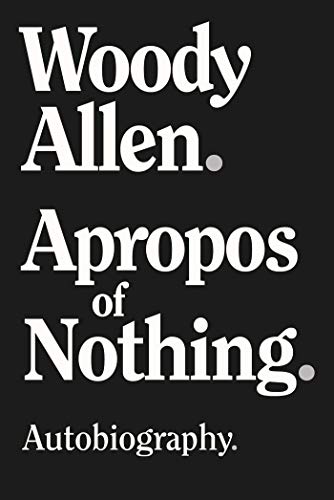
Apropos of Nothing by Woody Allen - Wrote about it here.


Doting by Henry Green - Not one likable character, which is perfectly all right. Repetitive, which is the idea.


McCabe by Edmund Naughton - Basis for the Altman film, good enough that I bought two other obscure Edmund Naughton novels.


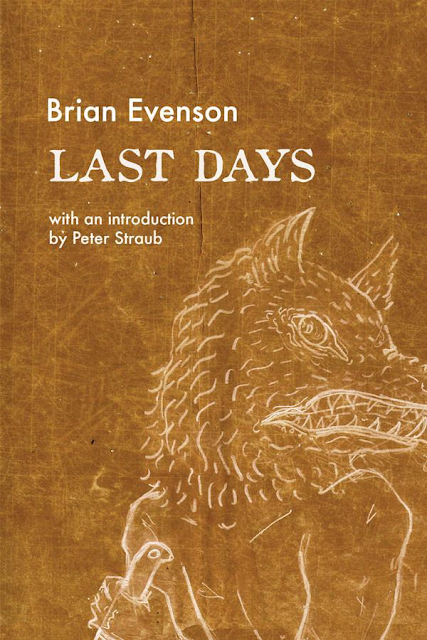
Last Days by Brian Evenson - About a sort of dismemberment cult. A cerebral, queasy, a horror novel for our times.


Eltonsbrody by Edgar Mittelholzer - This pioneer (so I'm told) of West Indian literature also dabbled in horror fiction. This one's very much imperfect, but the horror itself is both blood-curdling and cruel.


Platform by Michel Houellebecq - This novel about terrorism and sex tourism doesn't give a fuck to a quite extraordinary degree.


Deception by Philip Roth - A sort of meta-novel about a man and a woman, told entirely through dialogue. It's maybe no surprise that my favorite parts were when Roth takes a flamethrower to certain political hypocrisies.


Levels of Life by Julian Barnes - Novel, history, memoir of grief, all in one slim volume. One of the most terrifying books I've ever read.


Cotton Comes to Harlem by Chester Himes - Maybe the best in the series since The Real Cool Killers, although I got the order mixed up and accidentally skipped The Heat's On. So grain of salt, etc.


Fullalove by Gordon Burn - One of the most savage novels I've ever encountered, so bleak that I almost wish I'd never read it. It makes tabloid journalism seem kind of sleazy, actually.


Amongst Women by John McGahern - Sad in a way that made me want only happiness for everybody, including the person who caused the most unhappiness.


Revival by Stephen King - As black as Pet Sematary, horror in its purest form. Bleak. I mean, bleak. One of his best.

The Changeling by Joy Williams - One of the strangest, eeriest novels I've read, primal and insane, exuberantly sad, chilling and free.


Watson's Apology by Beryl Bainbridge - A novel based on the true-life murder of a woman by her husband in Victorian London. Almost queasily empathetic. 


A Mother's Kisses by Bruce Jay Friedman - A quite funny novel about a kid in New York, his loony parents, summer camp, and the like. I really should read more books like this.


Made Men: The Story of Goodfellas by Glenn Kenny - Rich, encyclopedic, funny, unique. It made me want to immediately rewatch a film I've seen dozens of times. Now do Casino.


The Player by Michael Tolkin - Speaking of novels that are the basis for Robert Altman films, this one is sharper, more disturbing, and better than that movie.


Can't and Won't by Lydia Davis - Lots of stories featuring seafood. Good ones, too. One story, not one of the seafood ones, made me cry. Maybe two other books have done that to me in my entire life.


Love by Roddy Doyle - I absolutely raced through this. One of the best novels about the titular emotion I've read. And just when I thought he'd gone as far he could go with his premise but with too much book left, Doyle writes an ending for the ages.


Antkind by Charlie Kaufman - Gloriously funny, completely devastating. A great novel.


The Right Stuff by Tom Wolfe - Wrote about it here.


Assumption by Percival Everett - This compelling, bleak crime novel ends on such a note of strange horror that I had to think back on the small strangenesses i'd noticed earlier in the book and wonder "what have I been reading?" Unforgettable.


Inside Story by Martin Amis - One of Amis's great books, up there with London Fields and Money and Time's Arrow and The Zone of Interest, this strange, intimate epic is part novel (but which parts?) and part memoir (but which parts?), focusing on his relationships with Saul Bellow, Philip Larkin, and Christopher Hitchens, and the deaths of each of them. I don't want to talk about it anymore.

McCabe by Edmund Naughton
Platform by Michel Houellebecq
The Whitsun Weddings by Philip Larkin
Doppelgänger by Dasa Drndic 
Sphere by Michael Crichton
Bereavements by Richard Lortz
Levels of Life by Julian Barnes
Learning to Swim by Graham Swift
The Gallery by John Horne Burns
The Breakout by Donald E. Westlake
The Falconer by Alice Thompson
Burning Secret by Stefan Zweig
Frankenstein in Baghdad by Ahmed Saadawi
Doting by Henry Green
Curious Toys by Elizabeth Hand
Equal Danger by Leonardo Sciascia
By Grand Central Station I Sat Down and Wept by Elizabeth Smart
Apropos of Nothing by Woody Allen
Last Days by Brian Evenson
Deception by Philip Roth
The Getaway by Jim Thompson
Small Crimes by Dave Zeltserman
Here We Are by Graham Swift
Michael Kohlhaas by Heinrich von Kleist
Cotton Comes to Harlem by Chester Himes
Sisters by a River by Barbara Comyns
Shirley by Susan Scarf Merrell
The League of Frightened Men by Rex Stout
Eltonsbrody by Edgar Mittelholzer
A Mother's Kisses by Bruce Jay Friedman
Assumption by Percival Everett
The Animal Factory by Edward Bunker
A Night at the Movies by Robert Coover
White Chappell, Scarlet Tracings by Iain Sinclair
The Chain by Adrian McKinty
After Claude by Iris Owens
The Underground Railroad by Colson Whitehead
Foe by Iain Reid
Weather by Jenny Offill
Lanny by Max Porter
Bleeding Edge by Thomas Pynchon
Antkind by Charlie Kaufman
God Save the Child by Robert B. Parker
A Diet of Treacle by Lawrence Block
Can't and Won't by Lydia Davis
The Player by Michael Tolkin
Kiss of the Wolf by Jim Shepard
Cows by Matthew Stokoe
The Changeling by Joy Williams
The Giant Rat of Sumatra by Richard L. Boyer
Revival by Stephen King
Made in Miami by Charles Willeford
Nobody Runs Forever by Donald E. Westlake
Down and Out in Paris and London by George Orwell
Ask the Parrot by Donald E. Westlake
Watson's Apology by Beryl Bainbridge
Tales of Muffled Oars by Magnus Mills
Dirty Money by Donald E. Westlake
The Chemistry of Tears by Peter Carey
Amongst Women by John McGahern
The Last Kind Words Saloon by Larry McMurtry
Made Men: The Story of Goodfellas by Glenn Kenny
The Right Stuff by Tom Wolfe
Erasure by Percival Everett
My Work is Not Yet Done by Thomas Ligotti
Love by Roddy Doyle
The Less Deceived by Philip Larkin
Fullalove by Gordon Burn
The Silence by Don DeLillo
Inside Story by Martin Amis
Ma Rainey's Black Bottom by August Wilson
A Severed Head by Iris Murdoch
Interior Chinatown by Charles Yu
Mr. Paradise by Elmore Leonard
The Dead Look On by Gerald Kersh
The Last by Hanna Jameson
Appointment in Samarra by John O'Hara

Thursday, November 19, 2020

Ending Up With What You See

Inside the Shocking Custody Case Court Documents that Shed Light ...
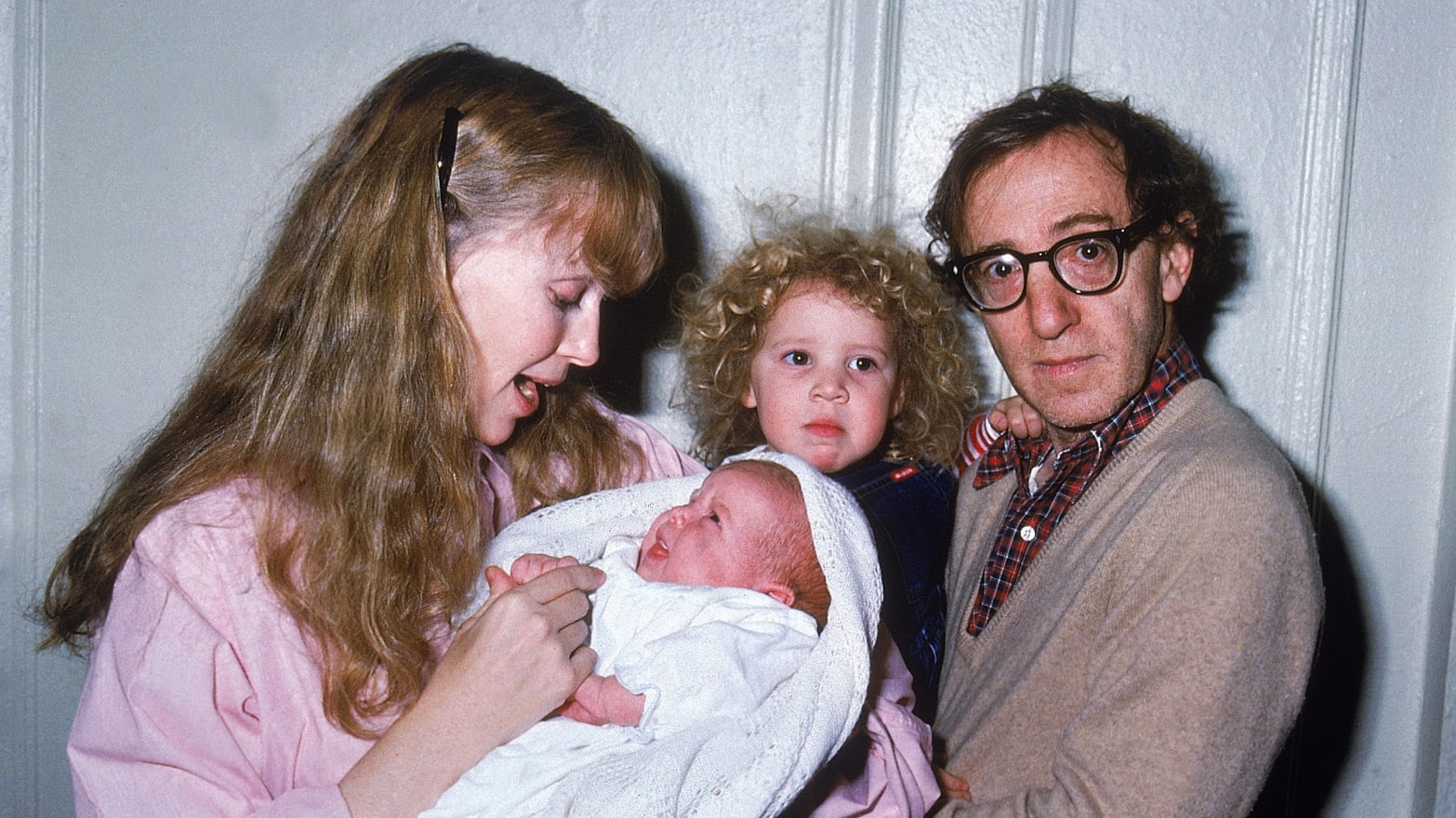
About halfway through his new autobiography Apropos of Nothing, Woody Allen makes a reference to the scandal involving him, his ex-girlfriend Mia Farrow, Farrow’s adopted daughter Soon-Yi Previn, now married to Allen, and Dylan Farrow, the adopted daughter of Allen and Farrow. Farrow, during their vitriolic split and custody battle, accused Allen of sexually molesting Dylan when she was 7 years old. After bringing it up, he says parenthetically: “(And I hope it’s not the reason you bought the book).” Speaking for myself, as a fan of the films of Woody Allen since I was a kid, I can say that it’s certainly not the only reason I bought the book, but let’s be honest here. The Woody Allen scandal, and specifically the molestation accusation, has defined Allen’s life and career for most people more than any of his films currently do. The number of people who would still publicly count themselves as Woody Allen fans has dwindled — if everybody else takes his guilt as a given, who needs the hassle? Indeed, the book was originally supposed to be published in March by Grand Central Publishing, until there were protests by employees of Hachette Book Group, who own Grand Central, that same month, leading Hachette to cancel it. But less than a month later, the book was picked up by Arcade Publishing and was finally published on March 23. And while the scandal does take up a large chunk of its latter half, there is a whole lot more going on here.

This is an odd book. Making the reasonable decision to begin at the beginning, describing his parents’ lives before his birth and then chronicling his childhood — which he at different times describes as “perfect” and “beautiful,” making it all the more perplexing to him that he should be so grim, pessimistic and misanthropic, even at a young age — as a good athlete obsessed with magic, New Orleans jazz, movies, comedy and crime (when he was a young man, his dad witnessed a mob hit, and Herbert Asbury’s The Gangs of New York was Allen’s favorite book as a kid), Allen then spends most of the book jumping around in time like someone who is constantly being distracted by his own speeding trains of thought. For example, on page 122, Allen mentions Jean Doumanian, his best friend for many years and, with her boyfriend, the financial backer of many of his films, before they had a devastating falling-out about money. Allen writes, “I will tell the story of me and Jean as I go along, and it is a strange one." Then, starting just six pages later, he suddenly tells the whole story. Whatever happened to “as I go along”? Doumanian is rarely mentioned over the course of the subsequent 260 pages, except when Allen and she were together at some event or on a trip. Frankly, I find this aspect of Apropos of Nothing charming, and even fun. It certainly keeps the book from falling into tedium borne out of a strict adherence to chronology. In any case, my guess is that because Allen has always had complete control of his films, he demanded, and got, the same for this book. I wonder if an editor did anything more than accept Allen’s manuscript, read it and then hand it back to him.

Apropos of Nothing is always very funny, as you might expect. In the fascinating Woody Allen on Woody Allen, a series of interviews conducted by Stig Björkman, I remember Allen dismissing any compliment regarding his comedic gifts by saying it always came easy to him. In Apropos of Nothing, he doubles down on that assertion (which seems indisputable). After sending in jokes to New York society columnists and getting published, he was hired as a gag writer for unfunny celebrities: “And so, I went to work five days a week and knocked out about 50 gags a day. It sounds like a feat but if you can do it, it’s no big deal. The subway ride was about 35 minutes, during which I wrote about 20 gags. The rest in the office.” A nice gig, if you’re good at it.

Allen rarely praises his own talent, except when it comes to comedy. He thinks, or proclaims to think, almost nothing of his abilities as a filmmaker, but almost seems unable to avoid the fact that he was born funny and is happy to point out how rare this is (among others, he praises Diane Keaton, Elaine May and his sometime collaborator Marshall Brickman as “authentically funny”). He rarely has anything good to say about his talents as a director, to such a relentless extent that the reader might wish he would give it a rest (I did). While talking to him about Allen recently, my friend Glenn Kenny described this facet of Allen’s personality as “self-serving self-effacement,” which strikes me as exactly right. There comes a point when it’s hard to believe he’s being sincere. This, I imagine, is one of the reasons so many people have objected to the book, although it would take at most a distant second place to Allen’s insistence on describing every woman he ever met as “sexy,” or words to that effect. It’s constant, and depending on your threshold, eventually sort of off-putting (though it’s hard to imagine thinking this is the worst offense described in the book). The truth is, there is a disingenuousness to Apropos of Nothing (very late in the book, Allen describes his lifestyle as “middle class,” a description about which I am dubious), but when the reader, meaning me, reaches the long section about the custody battles with Mia Farrow and the accusation of child molestation, one might begin to understand why Allen is desperate to present himself as a regular, every-day guy. Maureen Callahan, in her barely-a-review, called the book “bitter.” You don’t say.

Apropos of Nothing eBook: Allen, Woody: Kindle Store - Amazon.com

How to approach this? For this bit, it’s hard to know, without sounding less like a critic and more like an advocate. But as Woody Allen might say, at various points in and throughout this part of Apropos of Nothing, see what you think: After months and months of investigation following Mia Farrow’s original accusation, both New York State Child Welfare and the Child Sexual Abuse Clinic at the Yale-New Haven Hospital in Connecticut not only cleared Allen of any wrongdoing, but also determined that no sexual abuse had been perpetrated against Dylan Farrow. This is public record, and in the book, Allen — inexplicably “bitter” according to some — quotes from these reports extensively. He provides much more evidence, including first-person testimonies from both Soon-Yi Previn and Moses Farrow regarding how the Mia Farrow household operated (Soon-Yi says that, among other abuses, Mia Farrow hit her in the head with a phone), as well as housekeepers and nannies.

(One of the many things that can be added to this is the fact that Andre Previn's ex-wife Dory, a singer-songwriter, once wrote a song called "Daddy in the Attic," the lyrics of which describe a situation that somewhat resembles the story Mia Farrow has pitched all these years. The song was released in 1970, the year Andre Previn's marriage to Dory ended, and his marriage to Mia Farrow began.)
Nevertheless, Apropos of Nothing had to be canceled by Hachette for giving voice to a sexual predator.

Following this section, Allen, rather awkwardly, rewinds in order to briefly describe all of the films he made from Husbands and Wives to A Rainy Day in New York (still not distributed in the United States because of the second wave of awareness of the scandal that came following the #MeToo movement). This is probably the least illuminating part of the book, because he blows through most movies at a rapid pace, boringly complimenting everyone he worked with; though he takes some time to cock a snoot at the actors he worked with during this period who later disowned him. He writes of Timothée Chalamet, who acted in A Rainy Day in New York:

Timothée afterward publicly stated he regretted working with me and was giving the money to charity, but he swore to my sister he needed to do that as he was up for an Oscar for Call Me by Your Name, and he and his agent felt he had a better chance of winning if he denounced me, so he did. Anyhow, I didn’t regret working with him, and I’m not giving any of my money back.

I find this funny, and fair, but it will earn him no new supporters (nor will the sentence “I liked Alan Dershowitz”). But Allen says throughout this section that during the whole time of the original tabloid explosion, he expected common sense to take over. Now that it hasn’t, he believes this book will make no difference whatsoever. The reaction to Apropos of Nothing so far bears this out. And it’s not as though I think Allen escapes the book unscathed: His rebuttal to Mariel Hemingway’s account that he left her family’s home early after he had been invited for the weekend because she, age 18, refused to travel with him to Paris strikes me as not exactly believable. (He claims he couldn’t stand sharing a bathroom with her father and so booked an earlier flight.) And he’s especially weird about his second wife, Louise Lasser, who suffered from bipolar disorder, and whose sexually euphoric highs he writes about as though they were just fun sexy games, rather than part of her illness.

In short, Woody Allen is, from what I can tell, more messed up than he thinks. But being an asshole isn’t the same thing as being a monster.


Sunday, November 8, 2020

Trebek

I wrote a short tribute to Alex Trebek for The Bulwark. Please give it a read.

Friday, October 30, 2020

Oh God!

For Halloween, and for Bulwark Online, I wrote a piece about 1973's The Wicker Man, one of the great horror films, with a special focus on the character of Sgt. Howie, as played by the brilliant Edward Woodward. Check it out, is all I ask.

Friday, October 23, 2020

There is a Demon That Lives in the Air

Good afternoon! If you'd like to read a new piece by me, might I recommend clicking this link which will take you to my debut piece for The Bulwark. In it, I discuss the three Rights Stuff: Tom Wolfe's book, Philip Kaufman's 1983 film adaptation, and the pretty lousy new Disney+ miniseries (or as much of it as I was able to see before filing the piece). Enjoy it, why can't you??

Followers