Thursday, February 26, 2009

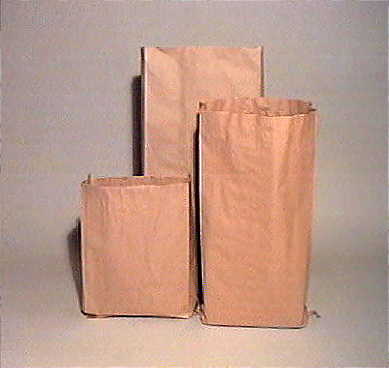
On Bags

The immense historical and social importance of the invention of the conveyance device we now know as the "bag" cannot possibly be overstated, so I don't know why anybody would even bother trying. You'll only look like a fool if you do. I was talking to this one guy not too long ago, and he said, "You know what I think? That bags aren't that big a deal. Think about it: who needs them, after all?" My outrage was such that I contemplated striking him about the face, but I knew that he was a surgeon, and needed his eyes to see. Were it not for his choice of profession, I would have blinded him with my fists.

And I would have had historical fact on the side of my physical aggression. Consider: the first bag, as we now know them, was mass produced in 1943 by Uncle Grampa's Item Holders, Inc. Prior to this, human beings had to carry around everything they wished to take with them in their bare hands, like monkeys. In 1942, the number of items dropped by people walking to and from the grocery store, bank, or neighborhood clothier had skyrocketed. The entire hardware store industry was on the brink of collapse, because potential buyers would look at the vast array of shovels, hammers, plows and various other heavy items, and just say "Fuck it. I'm not carrying that shit home."

Similarily, the war effort was failing, probably because you just can't store or transport ammunition in boxes. It simply doesn't work. Boxes are cube-shaped, so the bullets would be packed like sardines in orderly rows. However, bullets, much like fine wine, need to breathe in order to be effective, and you're just not going to get that with a box. Our soldiers would be over there in Germany, with a Ratzi lined up in their sites, and when he pulled the trigger what would he get? A whistling sound and a puff of smoke in his face! Embarrassing, to say the least. Luckily, our boys were also armed with knives, but an absence of well-aired ammunition still slowed things down considerably.

Then one day, in early 1943, a man named Daniel P. Roosevelt-Lindbergh (no relation to either) was carrying a box of marmalade to his car (which were so rickety and badly made in those days that they would often collapse under the weight of even an empty box, which, in fairness, were made of scrap iron salvaged from sunken U-boats), and he thought, "This is such bullshit. I gotta throw out my back for goddamn marmalade? I don't even like marmalade! Jam has that shit beat all to hell!" So he angrily, but with a sense of purpose, threw the box off of a nearby cliff, took his car off its kick-stand, lit his engine from a book of matches, unfolded the steering wheel, and "drove" home. All the while, holding on to that sense of purpose he'd felt before, because Daniel Roosevelt-Lindbergh had some inventing to do.

What he invented was the "bag". Initially dubbed the "Roosevelt-Lindbergh Cloth-Woven Hold-All", Roosevelt-Lindbergh's prototype was basically just a bunch curtains that he'd nailed together. When he showed it to his wife, he said, "Honeybear, you'll never have to use your hands again, other than to carry this thing I just made." Upon hearing the news, Mrs. Roosevelt-Lindbergh wept openly and without shame.

After weeks of successful field-testing, Roosevelt-Lindbergh realized that he'd actually invented something, so he took his "hold-all" to the headquarters of Uncle Grampa's Item Holders (who previously focused their attention on manufacturing the much-hated box, tweezers, and those claw-dealies you use to move logs in the fireplace. "Log-movers", I guess). Bringing with him a variety of canned goods in order to show Uncle Grampa's marketing team how the hold-all worked, Roosevelt-Lindbergh's presentation was an immense success. The people at Uncle Grampa were so taken with the invention, in fact, that they offered Roosevelt-Lindbergh a one-time payment of a handful of dried peas for the rights to manufacture, produce and sell the hold-all. Upon receiving this offer, Roosevelt-Lindbergh is said to have asked, "Is that pretty good? I mean, is that a lot to get paid for something like this?" To which the head of Uncle Grampa's acquisition team replied, "It's so much that I'm probably going to get fired just for offering it to you." "Then I accept!" cried Roosevelt-Lindbergh, grabbing the dried peas and fleeing the building.

One of the first things the Uncle Grampa marketing team realized was that "Roosevelt-Lindbergh's Cloth-Woven Hold-All" was a shit name, and they promptly went about thinking up a better one. After kicking around a few ideas, on a whim someone took out a dictionary and looked up the word "bag". Reading the definition -- "a flexible container with a single opening" -- they all collectively realized that they had all just literally made history.

Posters went up across the country proclaiming the bag as "A Terrific New World-Wide Sensation!!" and "An Astonishing New Item, Available for Purchase!!" One of the most famous and popular ads went directly to the heart of our nation's involvement in World War II (and helped turn the tide of the conflict towards an Allied victory). It featured a young red-headed boy with freckles carrying a giant bag full of war bonds. Lurking behind the bushes are Tojo and Hitler, their faces etched with fear and anger. The ad copy says: "Would You Like to Help Defeat the Axis Menace? YOU CAN!! Carry a Bag with You!!"

And so we now live in a world where bags are plentiful, and those miserable fucking boxes are all but forgotten. Old women can now carry their perfume and Boggle games and thousands of cigarettes with them easily, without fear that they will lose a single item along their journey. Young children can effortlessly transport their Football Cards and swimming whistles. Even insane homeless people have a place to store their tin foil and imaginary pets. So thank you, Daniel P. Roosevelt-Lindbergh, for the better world you have made for us. And knowing what you accomplished, I bet those dried peas tasted extra sweet.

Tuesday, February 24, 2009

Sunday, February 22, 2009

A Night of Pain - Salo

[I no longer stand by this lazy bullshit]

One thing I neglected to mention in my review of Inside is that the film was, in fact, disgusting and unpleasant, not only morally and philosophically, as I concluded, but on its own terms, to boot. So good job, Inside, because that's what A Night of Pain is all about, after all. But I was feeling kind of depressed after watching Inside, and, with two-thirds of my triple feature behind me, it was midnight. Could I, indeed dare I, continue on with the film that is widely considered to be the most disgusting and disturbing film of all time? Did I have it in me? What was the point of all this, anyway? I smoked a cigarette and then put in the DVD.
Part Three: Oh My Dear Sweet Lord...
So: eating poop. Why do we do it? Who does it benefit? Are we really a stronger nation because of it, as so many people claim? But no...I'm getting ahead of myself.
Pier Paolo Pasolini's Salo needs no introduction, even for those who've never seen it -- I'd never seen it before this past Friday night (Saturday morning, really), and I certainly didn't need anyone to tell me what the deal was. It's the movie you don't want to sit through, but of course you sort of do, because you want to be one of the people who can take it, and for a while there you would have also been one of the few who was able to get their hands on it, because it wasn't available on home video, and arthouse theaters who would show a print of it weren't what you might call common. Then Criterion had to come along and ruin that part of it, so now anyone with a Netflix account can put it in their queue. All that's left to accomplish is the working up of enough nerve to actually have it mailed to you.
Another thing Salo doesn't need in a write-up like this is a plot summary, because there is no plot to be summarized. Here's what happens: in World War II Italy, a group of rich fascists round up a bunch of local youths (some of whom are their own children, unless I'm much mistaken) and proceed over the next several days to rape, torture, humiliate and murder them. Every night, one of two women tells everyone stories of their sexually disgusting pasts to fuel the imaginations of the fascists, although one gets the sense that's not really necessary.
Anyway, that's pretty much it. So where does that leave us? With rape, torture, humiliation and murder. And poo-eating, of course, which is obviously just an example of the aforementioned torture and humiliation. But that scene -- well, two scenes, really, but the second scene makes the first one look like the bit in Defending Your Life when Albert Brooks is eating the greatest omelette he's ever tasted -- is the moment in Salo. It's the shower scene from Psycho, the "I'm mad as hell" speech from Network, Anita Ekberg in the fountain in La Dolce Vita, the billiard scene in Le Cercle Rouge, or the part where that one chick gets hit by a bus in Final Destination. Despite the fact that there are quite a few other images from Salo that those who've seen the film most likely wish they'd never been exposed to, it's the moment where everyone has poop for dinner that has most earned, if that's the word, this film its place in history.
And it's a repulsive scene, all right. It was even worse, in fact, than I'd always expected it would be, although if there is a graphic poop-eating scene that exists in some other film which would somehow be less bad and more tolerable than this one, I can't imagine what it might look like. Anyway, at one point -- I won't describe it -- I raised my hand as though to block the offending portion of the screen from my view, but I didn't go through with it. Because that would be cheating, I guess. So I watched it all, and I hated doing so at the time, but now, on reflection, I can very easily shrug it off. I think I can do this because, you know, they weren't really eating poop. I don't know what they were eating, and I wouldn't even want to eat that, but it's ultimately just a special effect that carries with it no real meaning beyond the initial disgusting shock.
.
That's really how I feel about the majority of the film. Unlike Inside, I will admit that I was able to sense an intelligence behind the camera, although let's be honest about that: is that just because this film was made by Pasolini, and Inside wasn't? If Pasolini weren't Pasolini, and this had been the only film he'd made, would I have sensed an intelligence at work, or simply a man trying very hard to shock me? Because like Inside, I was almost completely unmoved by this film. It registered as a high-minded grotesque show-off, and the ideas that make it so high-minded are simple enough to fit on the back of a postcard. Because Fascism and money pervert everything, you see. Having a great time in Italy (not really, LOL!). See you when I get back. Etc.
The most effective part of the film, for me, is the end sequence, when the fascist guards are executing all of their remaining captives. We see all of this from a distance, as the leaders of this atrocity watch it all through binoculars from the country house where the majority of the film takes place. The violence is sadistic, but the sadism is just one element of the sequence. Everything is more or less casual and largely free of the kind of ceremony that has surrounded most of the film (though there is a bit, as each of the fascist leaders have a turn with the binoculars, handing them off to the next in line). And then there's the film's enigmatic final moment, which involves two of the guards not participating in the execution deciding to dance together -- which highlights the ambivalent and corrupt sexuality of the rest of the film, in a way -- and ends with one guard asking the other, "What is your girlfriend's name?" The other responds, "Marguerite." The end.
Now, however, I have to make a confession, which, among other things, might explain the disjointed quality that I suspect is a feature of this post. About halfway through Salo, I got really tired. I wasn't so much bored by the film -- though I honestly don't think there's a hell of a lot to latch onto in it, outside of that last section -- as I was just crashing from a week at work and over four hours of straight, punishing movie-watching. And so the truth is that a great deal of the dialogue in this film -- the perverse philosophical conversations of the fascists, primarily -- completely blew right by me. Now, I felt at the time that the point of each of these scenes was the same, and can be summarized like this: "These guys sure are wrong about everything they are saying." But I don't know that for sure, because I was too tired to focus on any of it. "When's that poop scene coming??" my fuzzy brain kept saying. And when the poop scene had come and gone, my thinking ran along these lines: "Man, that poop scene sure was gross. Before that I thought that maybe I wanted a snack or something, but now I don't even want to. Some of those guys weren't even being forced to eat the poop! That bad guys were eating it on purpose! That is so messed up. Oh shit, they're about to rape somebody again." Which should give you some idea of the immense power of the poop-eating scene, but should also indicate to you that I wasn't really firing on all cylinders by that point. I even called it a night with a half hour to go, and finished watching the film the next morning, a fact which probably explains whatever clarity (not much, probably) I brought to my reading of the ending.
So perhaps there is much I didn't get about Pasolini's final film. Maybe it's impossible for me to appreciate and understand the film without watching it a second time. Which is a shame, since I will never do that, but whatever ignorance I'll retain about Salo for the remainder of my life is something I think I'm quite comfortable with.
Poop.

Saturday, February 21, 2009

A Night of Pain - Inside

After I finished watching The Piano Teacher (an experience you can read about here), I felt pretty good about my little project (which you can also read about in that previous link -- I'm not going over that whole business again). The movie was certainly disturbing, which, for whatever reason, is what I was looking for, but it was also a good film. And The Piano Teacher was actually the film I was least interested in, out of the three, so I figured things were looking up. I wouldn't mind being disturbed by shocking material if the shocks were delivered honestly and in good faith by the filmmakers, by which I mean, the shocking material is present in the film because it can't not be there. The next film I planned to watch, a French horror film called Inside, had a premise that certainly lent itself to that idea; a film based on the same idea that was not shocking was approaching the material from a very curious angle indeed, so I felt, as I made myself a peanut butter and jelly sandwich during intermission, that as much as I didn't want to see what I knew Inside was going to show me, at least the film had a better than even chance of being sincere. Little did I know.

Part Two: Far Beyond Merely Annoyed

I have a distinct memory of buying my wife a present one night back in 2004 (I can't remember the occasion), stopping off at a nearby bar for a quick beer before heading home, and seeing on the overhead TV a news report about a pregnant woman named Bobbie Jo Stinnett who had been murdered, and had her baby cut from her womb, by a walking nightmare named Lisa Montgomery. Other than the kind of nebulous horror that we all feel when we learn about new ways in which human beings torture and destroy each other, I don't remember any of the thoughts that went through my mind, but I do know that at no point did I think, "Boy, I sure hope somebody makes a movie about this some day."

Ah, but that's why I don't get paid to make horror films, because apparently two people thought that very thing, and not only that, but they took the job upon themselves. I do not blame Alexandre Bustillo or Julien Maury (both directed, and Bustillo wrote the script) for making a film based on the Stinnett murder (or any other murder like it -- I don't actually know that the Stinnett killing was their specific inspiration, but obviously it was based on the actual existence of this type of crime). I'm a horror fan, and while my tastes in the genre don't typically run in this direction, the philosophy of approaching horror by examining genuine, Earth-bound abominations like this is a valid one. I can think of few things more grotesque and awful than what happened to Stinnett, and while I suppose the idea that there is any conceivable merit (it should be noted here that the use of the word "merit" in regards to the horror genre is frequently different from its use in any other context, but it still applies) in constructing a work of fiction out of that story is debatable, an argument in favor of the existence of a movie like Inside -- or like Inside in theory, rather than in actual fact -- can be made. Basically, if a work of art can deal almost exclusively with an act of madness and evil, and find the humanity of the victim, if not the evil (though if you can do both, more power to you), then the existence of that work of art is justified and valuable.

If, on the other hand, you and a buddy hear about a case like the Stinnett murder, and see only the possibility of extending the inherent sadism past the reality of the situation because you guys grew up watching slasher movies and really want to find a way to raise the bar of extreme violence and gore in horror films, then I believe you're playing a very low game, and your film is going to be blissfully free of the humanity needed to make any of the horror mean something. There won't even be any horror in your film; only guts.

Which route do you think Bustillo and Maury took? Put it like this: Inside is based on a real crime, or several similar crimes, which involved one murderer and one victim who was killed, and another victim who was essentially kidnapped (such a small word to describe what happened to Stinnett's baby). In telling a similar story, Inside somehow manages to find room for seven murder victims, the entrance of each into the story more contrived than the last, and the exit of each more outlandishly violent. Three of the victims are police officers who arrive at the home of the pregnant woman, played by Alysson Paradis, to follow up on a call she placed earlier about a strange woman trying to gain entrance to her home. I've never heard of cops traveling in threes like that, but maybe in France they do. In order to add to the pile of bodies, Bustillo and Maury also put a young criminal to the back seat of the squad car, who, when two of the cops run into trouble (one is stabbed in the eye by the Woman -- played by Beatrice Dalle -- and the other's head is blown in half), the third has to drag him into the house so he won't escape. The criminal is stabbed in the forehead with a pair of scissors, and the fate of the final cop is too grotesquely convoluted to go into here.

That's all this film is: enter victim, exit victim; enter victim, exit victim, and on and on until the film has gone on long enough that Bustillo and Maury can deliver the violently enforced birth scene they promised us, and then role credits. Inside is a slasher movie, nothing more, though it likes to behave as though it has something serious on its mind -- actually, I think it's less than a slasher movie, because on the whole slasher movies don't offend me like this one did. But it even has a moronic twist at the end, a twist that I suppose is meant to heighten the emotion of the story. The problem is, the twist means nothing, it adds nothing; no one even fucking reacts to the information. It's a cynical and amateurish bit of storytelling that is supposed to make the audience think, "Oh, so that's why!", but the filmmakers care for nothing else than splatting shit on the walls of their set, so they move past the twist in less than a minute, so they can reach the end of their miserable little garbage-heap of a film more quickly.

Out of a sense of fairness, I must point out that the final shot of Inside has a kind of infernal, nightmarish elegance too it, and the shot would have been almost breathtaking in a film that handled this material with more care, honesty and humanity. Placed at the end of this movie, however, I got the feeling that Bustillo and Maury simply thought -- as with the earlier shot of the cop's head exploding -- it looked cool. Fuck this movie.

But hey, Inside does run a brisk 80 minutes. So there you go.

A Night of Pain - The Piano Teacher


At roughly 8:30 pm on February 20, 2009 – a Friday, as I remember – I began to follow through on what turned out to be a fairly bad idea. Not a thoroughly horrible idea, fortunately, but still, all things considered, not a great one, either. The idea, as some of you may be aware, was to watch three movies, in a row, which, over the years, had each attained a level of infamy due to their unpleasant and shocking content. These films are considered to have an effect on the viewer not dissimilar to a kind of psychological assault. Even if the viewer ultimately considers these films to be good, he or she can’t exactly claim to be happy to have made the decision to watch them.

Some people, when faced with the opportunity to watch such films don’t hesitate to do so. I believe that some such people consider it a badge of honor to have these particular notches on their belts. “Oh, you haven’t seen that movie?” they like to be able to say. “Is it because you can’t handle watching live dogs fed into a trash compactor? It’s all fake, you know. Anyway, I didn’t have much problem with it, myself. Besides, as a film, it’s quite fascinating to see how the director constructs the mise en scene in such a way as to make the audience complicit in the action. For you see, in the cinema…” and so on until you want to throw your drink in their face.

Then again, some of them are simply curious, or fascinated by the grotesque. I know I am! And that curiosity and fascination, no matter how I try to distance myself from it, is what brought me here today, reasonably fresh from viewings of Michael Haneke’s The Piano Teacher, Alexandre Bustillo and Julien Maury’s Inside, and, the granddaddy of all such films, Pier Paolo Pasolini’s Salo, or the 120 Days of Sodom. I chose to watch the films in ascending order of infamy, which, by my calculations, put The Piano Teacher at the front of the line. And so, as I mentioned before, last night at 8:30, after a lovely dinner with my wife (who chose not to take part in this, and to retreat to the TV in our bedroom), I began.

Part One: Mild Discomfort

Or maybe not so mild, really, but I’m trying to build to a kind of crescendo by the end. You understand, I’m sure. But it’s true, the phrase “mild discomfort”, as applied to The Piano Teacher, doesn’t really cut it. Michael Haneke is actually something of a genius when it comes to making films that slide into the brains of the audience and start vigorously scratching. Apart from the weak pose of a film that is his overrated Funny Games, I have been absolutely riveted to the point of frozen existential terror (okay, that’s probably an exaggeration) by Cache’, Code Unknown, The Castle and, most especially, the brilliant The Seventh Continent. And now again here, with The Piano Teacher, whose titular character is played brilliantly by Isabelle Huppert.

The teacher’s name is Erika Kohut, and at the end of every day, which she spends teaching highly talented piano students, and training them for the big leagues, she goes home to her apartment, which she shares with her mother (Annie Girardot), who is quite critical of her daughter, and who seems to have something to do with the reserved and repressed woman Erika seems to be. Except that Erika isn’t really repressed, or maybe she was, and when she eventually fought through the repression, it was like a dam bursting, complete with all the resulting carnage.

The first time we realize something might be up, in a small way, is when she meets a young man named Walter (Benoit Magimel). He is something of a piano prodigy, and Erika clearly likes him (though she will eventually be the sole vote against him when he applies in front of a panel of music teachers for a place in Erika’s master class), or at least finds him fascinating. The bulk of their first conversation together, however, involves Erika talking about the details of the madness of Schubert and Schumann, her two favorite composers.
So, she’s interested in madness. Who isn’t? The problems, and the discomfort, begin when we start to see Erika away from her mother and students, which doesn’t really happen until about a third of the way into the film (this is one of the things that distinguishes this film from the next two in this triple feature). And the first thing we see her do, when completely left to her own devices, is go to a sex shop – if that relatively mild term is really the one I want here – and go into a booth where she feeds a machine coins so she can watch hardcore pornography (which Haneke shows us, too). Although Erika may take advantage of this service in the manner that we would all initially expect her to, we don’t see that. What we do see is Erika picking up the used tissues of the male customer who preceded her in this booth, and smell them. Watching that, I thought, “Finally! I’m uncomfortable! And I thought this project was going to be a bust!”

That action, paired with the hardcore images, made me think that I should probably prepare myself for anything and everything. Now, this film is much more than a series of shocking episodes, stacked one on top of the other, but in fairly short order we are treated to a scene where Erika retreats to her bathroom at home so that she can slice at her, ahm, area, with a razor blade, and another where she goes to a drive-in and walks around until she finds a couple having sex in the back seat of their car. While spying on them, she starts to urinate. The guy half of the couple having sex sees this and, as any of us would, gets very angry and yells at Erika until she runs off. I can understand the guys anger, but really, if you’re going to have sex in public, people are going to want to watch you while they pee. That’s always been part of the deal.

Eventually, Erika begins a…I guess you’d call it a relationship, with Walter, though it’s a relationship that holds a lot of frustration for the young man. By the end of the film, I had far less sympathy for him than I did when Erika first began her incredibly sadistic tease, because it turns out that he’s kind of a scumbag. But we don’t know that at first, and initially I could share his frustration at being strung along by Erika, until the scene where she finally, and meekly, shares with him a list of violently masochistic desires she has – she would like to punched a lot, for one thing – that would, one hopes, give any man pause. Except that it’s at this point that my sympathies more or less completely shifted to Erika, who up to this point had seemed cold and mean and frightening, because she suddenly becomes shy and fearful of rejection, not to mention deeply embarrassed by her own desires, yet hopeful that Walter will understand. Well, he doesn’t. And he’s not kind in letting her know that. This long series of scenes ends with the film’s biggest shock (even though it’s not graphic, it’s still a corker), one which devastates Erika and makes her desperation for Walter so great that she follows him to hockey practice and promises him everything he could want from her. Though he claims he’s disgusted by her, he’s willing to use her neediness to get sex from her, an act of vicious selfishness that leads to this charming bit of dialogue, delivered by Walter: “You should wash your mouth out more, not just when my cock makes you puke.”

Boy, how many times have I had to say that in my life!? Also, spoiler alert.

So, shocked I indeed was by the first film in my triple feature. But I was also – and not to change tones too suddenly, I hope – quite moved by Huppert, who, despite the film’s extreme subject matter, is actually amazingly quiet in her brilliance here. And Haneke shoots it all in his typically cold style, moving his camera to a distance just far enough back to allow us to see all the little details of Erika’s life, the things that sum her up, even though you still can’t really explain her.
--------------------------------------------------------------------------------------
End of Part One. This will not, as I previously claimed, be one long post, but rather three longish posts, because otherwise no one would finish. Plus, I would have run out of steam by the end, and my writing would have suffered, and nobody wants that. And let's not forget that by splitting this into three parts will raise my post count, which for some reason I seem to care about. Anyway, now we all have an opportunity to visit loved ones, maybe get something to eat, and ultimately regroup before settling down to deal with Inside. And boy do I ever have an opinion on that one. Stay tuned.

Friday, February 20, 2009

Prologue: In Which I Explain How I am Going to Hurt Myself

[UPDATE UPDATE: Ignore the update below this one.]

[UPDATE: A genuine, no-fooling triple feature is looking like a distinct possibility at the moment, so look for one long post on this madness some time on Saturday.]

Anyone who read this post knows the basic score: this weekend, I'm going to watch The Piano Teacher, Inside and Salo, or the 120 Days of Sodom, in that order, and record the experience here for posterity, or as evidence in case anything should happen to me. The only question that remains to be answered (well, other than "What the fuck!?") is "How exactly am I going to go about this?" And the answer is still pretty much "Search me, chief." At one point, I thought I might do that thing that's so popular these days, despite the fact that everyone seems to hate it, called "live-blogging". Here's an example of how that might have looked:

9:30 pm - I put The Piano Teacher into the DVD player. It is dark outside, and the wind is blowing. My cats are looking at me. The fat one wants his treats. Well, you're not getting any, because you pissed in my shoes again. Hey, I think my pizza's ready. I don't really want pizza, but egg salad takes too long to make. I should have just bought some, pre-made.

And etc. Since I've decided not to go this route, I think you'll agree that we've all dodged a bullet. But what options are left? Nothing too interesting, I'll tell you that much. I have to get started on this tonight, though, so here's what'll happen: I'm going to watch all three as fast as I can. A genuine triple feature is a possibility, depending on how long I can stay awake tonight. If I manage that, then on Saturday I'll write up the whole thing as one experience. If that doesn't pan out, which it more than likely won't, then I'll just end up writing three posts, one for each film, all going up between Friday night and Saturday afternoon. If I end up with three posts, I'll try to keep a kind of flow between them all -- for when the piece is eventually and inevitably collected for publication -- and if anyone doesn't happen to check in until the second or third post is up, or even if you all decide to wait until Monday, I'll provide links to the previous installments. Because scrolling down is a pain.

So that's it. Extremely simple and not worth the effort of writing this, really, but I did want anyone who was interested to know that this little project is still "on", as they say. So be on the lookout!

Wednesday, February 18, 2009

Underutilized

I seem to have, in my head, a growing list of actors and actresses who I believe have been ill-served by Hollywood. Not only Hollywood, really, but the American film industry as a whole. These are actors who get stuck playing one kind of role, or are stuck playing sidekicks or girlfriends to leads who aren't fit to buy them lunch. Most film lovers probably have a list like this, and when you're young you learn to take these people for granted. You know they'll pop up as the lead cop's partner who, two-thirds of the way into the film, is on his way to buy his handicapped daughter the video-game music-toy she's been asking for, and for which he's been saving, when all of a sudden a slumming John Malkovich shows up and pushes him off a cliff. And you learn not to care. And then you see that same guy who got pushed off a cliff in a movie about a guy who only wants justice, or is dying, or he wants justice before he dies, and he's great, and you think, "Well shit. I had no idea."

At the top of my own list is probably Jeff Daniels, so dead-on-the-money in The Squid and the Whale and The Purple Rose of Cairo (and the only interesting thing about 2 Days in the Valley, a film in which he played the main cop's partner, and a film which at least found an original way to write him out of the action, even while crippling itself in the process). I'd also include Jeff Goldblum and Delroy Lindo. Catherine Keener, as well, even though she does land some pretty decent roles from time to time. But the fact that Hollywood still casts her as the Wife or the Girlfriend just kills me.

Anyway. The point of all this is that recently I rewatched Gus Van Sant's hypnotic take on the Columbine massacre, Elephant. I hadn't seen the film in a long time, but one thing that always stuck with me was, as I used to think of him, That Guy Who Played that One Kid's Dad. You Know, the Drunk Guy. Turns out, it was Timothy Bottoms.


He technically has two scenes, but the second one is right near the end, and consists mainly of him walking on screen and asking his son a question. He nails that scene, mind you, and I'm not being sarcastic, but it's the first scene, where he's drunk at about eight in the morning and driving his son to school, that made me say the first time I saw the film, and again last weekend when I saw the film for a second time, "Well shit. I had no idea."

I didn't know it was Timothy Bottoms. I am not, I admit, that familiar with his body of work. But I knew his name, and watching him in that first scene, seeing how quietly he plays shame and humiliation and guilt as his son (a very good John McFarland) is forced to take control of the situation, I realized that Timothy Bottoms is a freaking damn good actor. He gets all the torment and denial of the character across while also giving one of the most genuine drunk performances I've ever seen. Drunk acting must be one of the toughest things for any actor to do, and I say that as a non-actor who can only assume that's the case because I almost never see an actor playing drunk who doesn't botch it, or at least overdo it to the point where you can see his wheels turning. Bottoms gets it absolutely right. That, and everything else I've mentioned, in just a couple of minutes of screen time.

Check out the film, if you haven't already seen it, because the whole thing is quite good, but at least rent it for Bottoms. He does brilliant work here, and attention should be paid.

Followers